
Articles By

-
News
New Siemens Research Turbine Commissioned at NREL
The U.S. Department of Energy’s (DOE) National Renewable Energy Laboratory (NREL) and Siemens Energy Inc. last week formally commissioned a new 2.3-MW Siemens wind turbine at NREL’s National Wind Technology Center. The turbine is the centerpiece of a multiyear project to study the performance and aerodynamics of a new class of large, land-based machines—in what will be the biggest government-industry research partnership for wind power generation ever undertaken in the U.S., NREL said.
-
General
Is ANWR drilling key to climate legislation?
By Kennedy Maize Washington, OCTOBER 21, 2009 — With prospects for a new international agreement on climate change (Kyoto II) in Copenhagen in December faltering, environmentalists in the U.S. may be facing a Hobson’s choice with the climate-energy legislation now before the U.S. Congress. The choice may be to agree to drilling for oil and […]
-
General
Nuke Notes: New names for the NRC and another, lame poll on public support for nuclear power
By Kennedy Maize Washington, OCTOBER 23, 2009 — The Obama administration is moving to get the U.S. Nuclear Regulatory Commission fully staffed, naming two Democrats, MIT nuclear scientist George Apostolakis and former Clinton administration Department of Energy nuclear chief Bill Magwood, to the commission That fills two vacancies on the five-member commission. At the same […]
-
News
Ariz. Governor: EPA Retrofit Rule for Coal Plant Could Gravely Impact State
Arizona’s Governor Jan Brewer last week warned that federal rules proposed by the Environmental Protection Agency (EPA) seeking to limit nitrogen oxide and particulate emissions by requiring costly technological retrofits at the coal-fired Navajo Generating Station (NGS) could threaten closure of the plant and impact jobs, power supplies, and water costs to the state’s citizens.
-
News
Mount Simon Sandstone Carbon Injection Test Is Successful, DOE Says
The Midwest Regional Carbon Sequestration Partnership (MRCSP), one of seven partnerships in the U.S. Department of Energy’s (DOE’s) Regional Carbon Sequestration Partnerships program, said today that it has successfully injected 1,000 metric tons of carbon dioxide (CO2) into the Mount Simon Sandstone, a deep saline formation that is spread out across much of the Midwest.
-
News
Congressional Study: Energy Costs Hide $120 Billion in Damages to Health, Environment
A new report from the National Academy of Sciences finds that in 2005, sulfur dioxide, nitrogen oxides, and particulate matter emitted by 406 coal-fired power plants—representing some 95% of the nation’s coal-fired generation—caused about $62 billion in “hidden” costs, or damages not reflected in market prices of electricity.
-
News
TVO: Start-up of Europe’s First EPR Postponed to Mid-2012
Start-up of Europe’s first EPR nuclear power plant, the Olkiluoto 3 under construction in Finland, has been postponed beyond June 2012 because civil construction is taking longer than was previously estimated, according plant owner Teollisuuden Voima Oyj (TVO). Finland’s nuclear regulatory agency has, meanwhile, called attention to “deficiencies” in the welding of the plant’s cooling system, potentially causing further delays.
-
News
Alstom, TransAlta Form Canadian Partnerships for Large-Scale CCS Demo
The Pioneer Project—a long-awaited large-scale carbon dioxide capture and storage (CCS) demonstration facility—last week got a boost as French industrial giant Alstom and Canada’s largest investor-owned power group, TransAlta, partnered with the governments of Canada and Alberta to build the plant at a coal-fired generation station in Canada.
-
News
New York PSC Approves Beacon Power’s 20-MW Flywheel Energy Storage Plant
Beacon Power Corp.—maker of a much-watched flywheel system that is designed to regulate grids using efficient energy storage—last week garnered the New York State Public Service Commission’s (PSC’s) approval for a proposed 20-MW flywheel frequency regulation plant in Stephentown, N.Y., as well as for the project’s overall financing.
-
News
Chamber of Commerce’s Climate Stance Subject of Elaborate Hoax
The U.S. Chamber of Commerce fell victim to serial hoaxers The Yes Men on Monday, when pranksters sent out a press release on the Chamber’s letterhead announcing that the business group of 3 million members had changed its views on climate change legislation and would be holding a press conference to talk about its new position. The hoax was only exposed midway through the fake press conference after it was interrupted by a real Chamber official.
-
News
Mexico Disbands State-Owned Utility for Inefficiencies, Financial Losses
The Mexican government over the weekend disbanded Luz y Fuerza del Centro, a state-owned power utility that distributes 30% the country’s power supply, and ordered the federal electricity commission to seize the utility’s operations because it was hemorrhaging money and the ensuing budget gap could threaten service to some 25 million customers.
-
News
FPL Prepares to Power Major PV Solar Plant as Ariz. CSP Plant Is Shelved
Florida Power & Light Co. (FPL) last week said that it will likely open its 90,000-panel photovoltaic (PV) solar facility later this month. The DeSoto Next Generation Solar Energy Center in Arcadia, Fla., project, which will overtake Nevada’s Nellis Solar Power Plant for the title of largest solar photovoltaic (PV) facility in the nation and in North America, will begin operation as several other large U.S. solar projects are being shelved.
-
News
Exelon Head: Cap and Trade Most Cost-Effective Way to Reduce Carbon Emissions
The cap-and-trade approach will best tackle global warming and sustain economic recovery because, though reducing carbon emissions will cost money, alternatives to cap and trade will cost more, Exelon Chair and CEO John W. Rowe reiterated on Tuesday in a keynote address at the PennFuture Southeast Global Warming Conference in Penn Valley, Pa.
-
News
Global CCS Forum Spurs Action from U.S., EU, Australia, UK, Norway, and Canada
In the wake of this week’s Carbon Sequestration Leadership Forum (CSLF) in London—a meeting attended by leaders from 22 countries to explore the best ways to accelerate commercialization of carbon capture and storage (CCS)—several significant announcements were made around the world.
-
News
Pleasant Prairie Chilled Ammonia Pilot Shows 90% Carbon Capture, Companies Say
The $8 million pilot project funded by 37 power companies from around the world to test Alstom’s advanced chilled ammonia process on a 1.7-MW flue slipstream at We Energies’ coal-fired Pleasant Prairie power plant in Wisconsin has demonstrated more than 90% carbon capture—or about 40 tons each day—sponsors said on Thursday.
-
News
Transmission Project to Link Three U.S. Grids and Aid Renewables
American Superconductor Corp. (AMCS) announced on Tuesday that its Superconductor Electricity Pipelines have been chosen for the Tres Amigas Project, the nation’s first renewable energy market hub. The Tres Amigas Project, introduced yesterday in Albuquerque by New Mexico Governor Bill Richardson, who was energy secretary in President Bill Clinton’s administration, focuses on uniting the three main U.S. power grids for the first time to enable faster adoption of renewable energy and increase the reliability of the U.S. grid.
-
General
How to Cherry-Pick Recent Climate Data
By Kennedy Maize For those of us who follow the ever-contentious global warming debate, one of the key areas of conflict is the recent climate record. Is the globe warming, cooling, or just puttering along. It’s a game that depends on where you start and how you aggregate the data. Each side accuses the other […]
-
General
Ohio Repeats Maryland’s ‘Take this Bulb and Shove It’ Fiasco
By Kennedy Maize In the words of shade-tree philosopher and New York Yankee Hall-of-Fame catcher Yogi Berra, “It’s deja vu all over again.” The Public Utilities Commission of Ohio has put on hold a plan by Akron-based FirstEnergy Corp. to send out compact fluorescent light bulbs to its customers, unbidden, and bill them for the […]
-
Commentary
Cracks in the Ivory Tower
Environmental researchers from Harvard and Tsinghua Universities released a new study, published as the cover story in the September 11 issue of Science, suggesting that China could meet its entire future electricity needs through wind power alone. Studies that focus on a single technology as the silver bullet that solves all of our energy problems often ignore the practical side of their solutions, leaving mistaken impressions in the public mind.
-
 O&M
O&MCondenser Tube Life-Cycle Economics
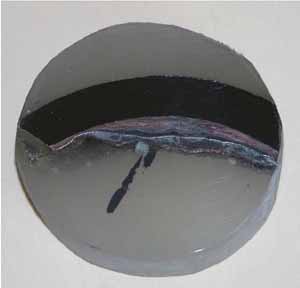
The decision to retube a heat exchanger or condenser begins with understanding why tubes are failing. Only when the “why” is understood can the economic replacement tube material be selected. We explore the most common tube material failure mechanisms and then illustrate how to perform a proper life-cycle analysis for that new set of condenser tubes your plant so desperately needs. In sum, there are many reasons to consider getting the copper out of your condenser.
-
Coal
Court Revives CO2 “Nuisance” Suit Against Utilities
In another major legal victory for states pressing for controls on industry emissions of carbon dioxide, a federal appeals court has reversed a lower court decision and ruled that eight states and the city of New York City could bring “nuisance” suits against five coal-burning utilities to curb greenhouse gas discharges that the states claim are causing damage to their natural resources.
-
Coal
EPA to Clamp Down on Coal Plant Wastewater
The Environmental Protection Agency announced it plans to “revise” existing, decades-old guidelines for water discharges of toxic metals from fossil fuel-fired power plants, saying a recently concluded EPA study focused mostly on wastewater discharges from coal-fired power plants uncovered elevated levels of toxic pollutants.
-
Coal
EPA Finalizes Greenhouse Gas Reporting Rules
In a major climate change rulemaking, the Environmental Protection Agency has issued final regulations that will require most large emitters of greenhouse gases in the U.S. to report their emissions beginning in 2010.
-
O&M
Texas Wind Boom Cutting into Fossil Generator Profits
Can wind turbines actually reduce the amount of fossil fuels consumed? A Wall Street Journal analysis concludes that ERCOT utilities will begin to feel the squeeze in their profits this year and to expect the amount of fossil fuels used to generate electricity to be reduced.
-
Commentary
Paving the Way for More Renewable Energy
President Obama has set an ambitious goal of doubling renewable energy production in the U.S. within three years, which would spur the development of a clean-tech economy and address the challenge of climate change. There is just one problem: even if we achieve the president’s goal of producing more renewable energy, we have no way of actually delivering that energy to where it’s needed.
-
Commentary
“There Is a New Sheriff in Town”—Get Ready for a More Aggressive OSHA
The Obama administration’s “new OSHA” has a simple message for U.S. industry. This message has been delivered loudly and clearly by both Secretary of Labor Hilda Solis and Acting Assistant Secretary for Occupational Safety and Health Jordan Barab. Their message: “There is a new sheriff in town.” And we all know what sheriffs do. They aggressively enforce the law. That is exactly what the new Occupational Safety and Health Administration intends to do.
-
 O&M
O&MZonal Combustion-Tuning Systems Improve Coal-Fired Boiler Performance
Coal-fired power plants that fire low-cost coals or that are equipped with combustion modifications for NOx controls are challenged with maintaining good combustion conditions while maximizing generation and minimizing emissions. In many cases, significant unit derates, availability losses, and an increase in unburned carbon levels can be attributed to poor combustion conditions that occur as a result of poorly controlled local air/fuel distribution within the boiler furnace. Fortunately, a new generation of combustion optimization technologies is available that uses burner air and fuel controls and spatially distributed combustion monitors to detect and correct local furnace air/fuel distribution imbalances.
-
General
Nuke Waste Confidence: A Confluence of Ironies
By Kennedy Maize Here’s an interesting set of ironies. The Republican majority on the U.S. Nuclear Regulatory Commission has taken a position that, at least formally, blocks new nuclear reactors in the U.S., while the sole Democrat on the commission, Chairman Greg Jaczko, widely viewed as opposed to the agenda of the nuclear industry, has […]
-
General
Don’t Let the Dim Bulbs Prevail in the Lighting Market
By Kennedy Maize In journalism, we call it “burying the lead.” That’s what the New York Times did in a Sept. 25 story headlined “Build a Better Bulb for a $10 Million Prize.” The story said that the U.S. Department of Energy is prepared to pay $10 million for development of an efficient, cost-effective replacement […]
-
News
Russian Report Finds Hydroelectric Plant Catastrophe Resulted from Negligence, Laxity
The catastrophe at the 6,400-MW Sayano-Shushenskaya hydroelectric plant that killed 75 workers in southern Siberia on Aug. 17 had a number of contributing causes, including design, operation, and repair drawbacks, an investigative report released last week by the Russian industrial safety regulator Rostekhnadzor said. But the agency also pointed fingers at six high-ranking officials, saying that the accident resulted from their “negligence, laxity, and a lack of engineering thinking.”