
Articles By

-
Finance
The Future of Renewable Energy Finance
Scaling back and outright expiration of government subsidies will make financing renewable energy projects more difficult in the future, according to experts at the law firm of Mintz Levin Cohn Ferris Glovsky and Popeo. But there will still be a greater appetite for renewables than there is supply, so it should still be possible to find the funds to build the projects.
-
News
Vermont Primed to Become First U.S. State to Ban Fracking
Vermont’s House last week voted 10–36 to give final passage to a bill that could make the state the first in the nation to ban the practice of hydraulic fracturing for natural gas.
-
Legal & Regulatory
Leveraging State Clean Energy Funds
Consider state clean energy funds as potential replacement funding sources for future clean energy projects.
-
News
Report: Solar Power’s Incentivization Is Similar to That of Other Energy Sources
A new report funded by the Solar Energy Industries Association (SEIA) that examines historical and current federal incentives in energy markets suggests that current solar industry incentives are consistent with previous development-stage energy sources subsidized by the U.S. government.
-
Supply Chains
End Game for Rare Earth Dispute?
The end of the long-running flap over access to markets for rare earth minerals may be in sight, driven by a combination of political and diplomatic pressure at high levels and the normal workings of the marketplace.

-
News
NRC’s Decommissioning Cost Formula Is Faulty, GAO Report Says
A new study from the Government Accountability Office (GAO) says the Nuclear Regulatory Commission (NRC) should reevaluate the formula with which it calculates nuclear reactor decommissioning costs. In an analysis of 12 of the nation’s 104 reactors, decommissioning costs calculated for five reactors were 76% less than what would be required, Congress’ investigative arm says.
-
HR
Power Industry Needs to Focus on Grooming the Next Generation of Leaders
The power industry has not done a good job grooming and mentoring the next generation of leaders and, as a result, is facing a leadership gap as the current generation approaches retirement, two executive search professionals told MANAGING POWER. While prospects for entry-level recruitment have improved, it will be five to 20 years before this cohort is ready to lead. In the near term, a renewed focus on grooming future leaders is critical.
-
News
Duke, Progress Agree to Curtail Merger Costs to Retail Customers
Duke Energy and Progress Energy customers would not shoulder charges for costs of about $450 million related to the utilities’ proposed $26 billion merger if the North Carolina Utilities Commission (NCUC) speedily approves the deal, according to an agreement between the companies and the state regulatory body that was disclosed Monday.
-
Business
Five Ways to Make Energy Real to Your Customers
Lack of customer participation—or outright customer resistance—is likely to kill at least one of your utility’s strategic initiatives. Perhaps it already has. But utilities can take a variety of easy steps to prevent the wounding or premature death of strategic initiatives such as smart meters, new rate and efficiency programs, or capital construction projects.
-
Commentary
Mergers: Are Promoters Ahead of Regulators?

Section 203 of the Federal Power Act requires certain mergers and acquisitions to be “consistent with the public interest.” Since its 1996 Merger Policy Statement, the Federal Energy Regulatory Commission has applied this standard by assessing a merger’s effect on competition, rates, and the effectiveness of regulation. Does its approach need updating?
-
Commentary
Evaluating CPV Warranties
Utility-scale solar generation projects require significant upfront expenditures on photovoltaic panels and other equipment. The success of such projects largely depends on whether the system performs as promised by the manufacturers. This puts a premium on properly evaluating and effectively negotiating equipment warranties.
-
Commentary
Workplace Drama: Listening Mistakes and Solutions
One of the most important communication skills for leaders and managers is listening. In your professional life, listening is at the heart of effective leadership, and in your personal life, listening is an act of love.
-
Legal & Regulatory
The Rebranding of Global Warming
Washington’s greenhouse gang has learned that global warming is a losing issue. They’re back with a new strategy.

-
Finance
Trend—M&A on the Move
Despite a quiet 2011, this year promises to be one of the biggest for power industry mergers in quite some time—if FERC lets it happen.
-
News
D.C. Circuit Hears Case Challenging NRC Inaction on DOE’s Yucca Application
A three-judge panel of the U.S. Court of Appeals for the District of Columbia heard oral arguments last week in a case that examines whether the Nuclear Regulatory Commission (NRC) should be required to continue the licensing process for the Yucca Mountain nuclear waste repository proposed for Nevada.
-
Coal
Wisconsin Public Service Proposes Installation of New Multi-Pollutant Control Technology
Integrys Energy Group subsidiary Wisconsin Public Service Corporation (WPS) on Monday filed for a Certificate of Authority (CA) from the Public Service Commission of Wisconsin (PSCW) to install Regenerative Activated Coke Technology (ReACT) at its 321-MW Weston 3 plant.
-
Wind
Gamesa Scraps U.S. Offshore Wind Prototype Project
Spanish wind turbine manufacturer Gamesa on Monday said it would start the permitting process for the installation of its first offshore prototype, the 50-Hz G128-5.0 MW at Arinaga Quay in Spain’s Gran Canary Island—not Cape Charles, Va., as it had initially proposed. The decision was driven by technical and wind resource considerations, offshore market trends, and investment return criteria, the firm said.
-
General
FERC Audit Slams NERC Practices
By Kennedy Maize Washington, D.C., 5 May 2012 — A Federal Energy Regulatory Commission financial audit finds that the North American Electric Reliability Corp. is failing to focus its work on the new, mandatory electric grid reliability powers Congress gave it in the 2005 Energy Policy Act. Instead, says the FERC staff audit released May […]
-
General
Wind Farms, Hot Air, and the Perils of Scientific Publishing
By Thomas W. Overton, JD The news blogosphere was briefly contorted earlier this week by a study published in Nature Climate Change that appeared (to some laymen, at least) to suggest that large-scale wind farms were contributing to global warming. Naturally, given the intersection of several hot-button issues (renewable energy and climate change), and the […]
-
News
Costly Canadian CCS Demonstration Project Is Latest to Have the Plug Pulled
Canadian energy firms TransAlta, Capital Power, and Enbridge last week scrapped plans for the much-watched Project Pioneer, a joint effort the companies were to undertake with the Canadian federal government and Province of Alberta to demonstrate commercial-scale viability of carbon capture and storage technology (CCS).
-
News
Duke, Indiana Consumer Groups Agree to Cap Edwardsport IGCC Project Costs at $2.6 B
Duke Energy and some of the Indiana’s key consumer groups on Friday reached a settlement agreement that resolves a disagreement concerning the utility’s consumer-paid cost overruns for its 618-MW integrated gasification combined cycle (IGCC) plant at Edwardsport, Ind. The $3.3 billion coal-fired plant is almost complete and on schedule to begin operations this fall.
-
News
ASCE: Nation’s Aging Grid Needs $566 B, Funding Gaps Could Prove Costly
The nation’s complex, patchwork system of regional and local power plants, power lines, and transformers is in the worst shape it has ever been, with 70% of transmission lines and power transformers aged more than 25 years, and 60% of the nation’s circuit breakers currently more than 30 years old, suggests new report from the American Society of Civil Engineers (ASCE). At least $566 billion will be needed to revitalize the grid through 2020, the group warns.
-
News
DOE, Japan Say Small-Scale Methane Hydrate Technology Tests Are Successful
Small-scale technology tests by the U.S. and Japan in the North Slope of Alaska have extracted a steady flow of natural gas from methane hydrates, the U.S. Department of Energy (DOE) said on Wednesday. If new research efforts to conduct long-term production tests in the Arctic and Gulf Coast are successful, they could unlock a “vast, entirely untapped resource” that would hold significant enormous potential for U.S. energy security, the agency said.
-
News
Southern California Blackout Set Off By Inadequate Planning, FERC and NERC Say
The events that left 2.7 million power customers in Southern California, Arizona, and Baja California in the dark on Sept. 8, 2011, stemmed from operating in an unsecured state due to inadequate planning, a lack of observability, and awareness of system operating conditions on the day of the event, the Federal Energy Regulatory Commission (FERC) and the North American Electric Reliability Corporation (NERC) concluded in a report released on Tuesday.
-
News
Progress Energy Files for Heightened Levy County Reactor Costs, Recovery for Crystal River Repairs
Costs for Progress Energy’s two news reactors proposed for Levy County have surged to between $19 and $24 billion, and the first unit could come online almost three years after initially planned, the company said in a statement on Monday. The North Carolina–based company had previously said the first unit at Levy would enter service in 2021 at an estimated cost of $17 billion to $22 billion.
-
News
EU Member States to Get More Time to Conduct Sound Nuclear Stress Tests
Member states of the European Union (EU) will get a few more months to complete tests on their 147 nuclear power plants, and a final stress test report will be completed this fall—not this summer as initially expected— before any new nuclear safety laws are proposed, EU Energy Commissioner Günther Oettinger said last week.
-
Legal & Regulatory
States Promote Clean Energy Programs
While the proposed federal renewable portfolio standards (RPS) continue to be caught in Washington gridlock, a number of states are aggressively enacting programs that promote renewable energy, such as wind and solar power.
-
 Coal
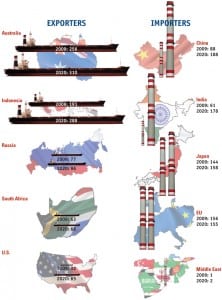
CoalTHE BIG PICTURE: Coal Demand Surges
Patterns of coal trade have been shifting in recent years as demand surges in Asian countries. Whereas Japan and the European Union (EU) have long been the world’s largest hard coal importers, China and India are now emerging as top importers. This surge has shifted the center of gravity in international coal trade to the […]
-
 Coal
CoalPartnership Develops Innovative CCP Project
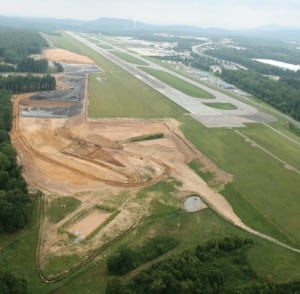
In 2009, the North Carolina Asheville Regional Airport Authority (Airport), with partners Progress Energy Carolinas Inc. and Charah Inc., began development of the Westside Development Fill Project (Westside Project), a long-term infrastructure strategy located in the southwest quadrant of the Airport’s property. The project included phased construction of a developable pad for general aviation and commercial use, a new taxiway running parallel to the existing runway, and a major expansion of the existing runway.
-
Commentary
Ensuring the Best Use of Federal Energy Subsidies
The U.S. uses a combination of direct expenditures, tax breaks, loan guarantees, and research funding to promote various energy goals. We could rely solely on the free market and avoid using federal subsidies, but we do not do that now and appear unlikely to do so in the future.