Demand for electricity from artificial intelligence (AI), data centers, industrial electrification and more is driving innovation in the power generation sector. Speed to power has become even more important, as companies seek ways to more quickly satisfy their hunger for power, without sacrificing efficiency and in some cases their clean energy goals.
Ensuring a supply of firm, deployable power, within ever-tighter timelines, has highlighted issues with equipment supply chains, particularly for gas turbines. The backlog of orders is large; delivery timelines no longer are measured in months, but in years. New turbine manufacturers are entering the market, with technologies designed for faster availability, and in scalable configurations to enable flexibility.
One of those companies is Arbor Energy, headquartered in El Segundo, California. The company, founded in 2022, has designed a modular, scalable power station that generates baseload electricity with zero operating emissions. The company said the core of its product “is a supercritical CO2 turbine system powered by advanced oxy-combustion.”
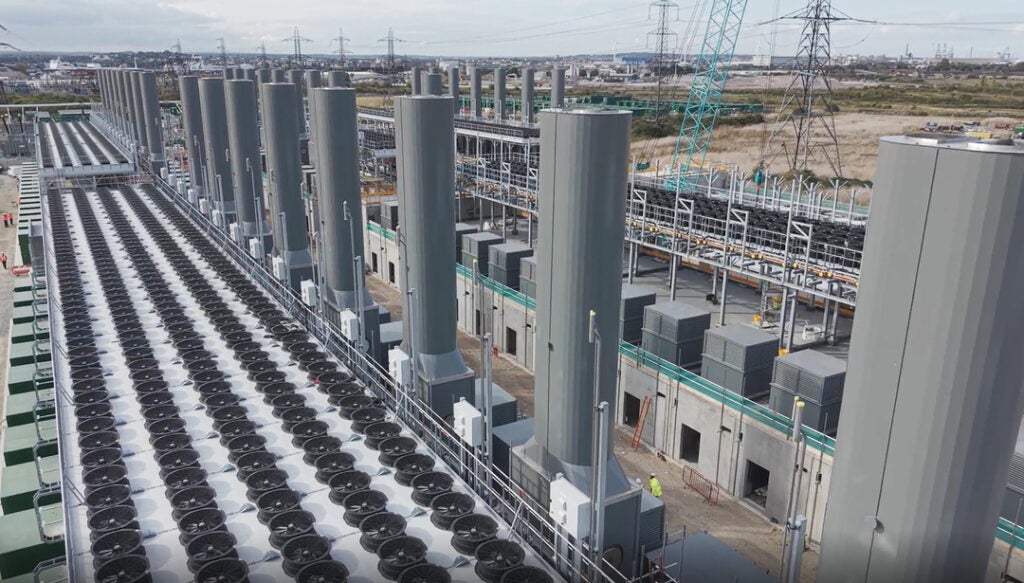
The group said its HALCYON technology is fuel-flexible by design, capable of running on fuels from natural gas to syngas. Arbor’s 25-MW turbines are designed to deliver firm power on shorter timelines than traditional large-frame units. The modular design enables gigawatt-scale deployment at a single site for large loads, such as data centers, or smaller installations for industrial power and grid firming.
Arbor’s system, using advanced manufacturing and a compact rocket engine-inspired powertrain, avoids the supply chain bottleneck of blades and vanes used by legacy original equipment manufacturers, which the company said is currently driving five-plus-year backlogs for traditional turbines.
Brad Hartwig, CEO and co-founder of Arbor, is a former SpaceX engineer. He has led the company’s transition from pilot to commercial development. Arbor recently raised a $55-million Series A to support deployment, and said it would use the funding to “complete demonstration of our 1-megawatt [MW] technology pilot ATLAS, while we further the design of HALCYON, our commercial 25-MW supercritical CO₂ [sCO2] power system.” The company said its first HALCYON turbine “is on track to come online by 2028. And by 2030, we aim to manufacture gigawatts’ worth of turbines in support of projects around the world.”

Hartwig recently provided POWER with details about Arbor’s work, and how the company’s turbine system can power future energy projects, including those supporting AI and data centers.
POWER: What sparked your interest in developing smaller-scale turbines for power generation?
Hartwig: Cheap, reliable, and abundant electricity unlocks innovations that serve humanity and the planet. As an engineer, it’s one of the most powerful levers to improve quality of life for a growing global population.
Smaller-scale turbines are how we address customer needs in the age of AI. Supercritical CO2 (sCO2) turbines operate at very high pressures, allowing them to produce far more power than similarly sized air-breathing gas turbines. We intentionally chose a lower nameplate capacity to enable phased deployment, system-level redundancy, and flexible operation, whether load-following or baseload. Even before the big turbine crunch, smaller units were better suited to a resource-constrained startup model.
We also saw an opportunity to apply lessons from SpaceX by building smaller, faster turbines to fill a growing mid-scale supply gap.
It only became more essential as load growth began outpacing traditional turbine production, exposing a structural inelasticity in the supply chain. Data center demand in particular is scaling at a remarkable rate, and large-frame turbines are effectively sold out through the early 2030s.
Most of the industry’s manufacturing depth is concentrated in 300- to 500-MW machines designed for centralized plants. But much of today’s energy growth is happening in roughly 100-MW increments through phased projects. A 1-GW data center campus may start with a few hundred megawatts and expand over time, and many industrial facilities simply do not require 500 MW.
POWER: How does your experience with SpaceX translate to the gas turbine market?
Hartwig: At SpaceX, our team worked on high-pressure, high-temperature turbomachinery. The sCO2 turbines we’re developing at Arbor have more in common with rocket engine turbopumps than traditional turbines because of the pressures involved. We are leveraging oxy-combustion to enable zero-emission operation, similar to how a rocket engine combusts fuel. Engine components must work in concert, requiring tight integration of instrumentation and control systems. The pump and turbine stages, combustion devices, housings, and controls overlap significantly with power turbine design. Conditions are extreme, the engineering and materials science are unforgiving, and failure is usually catastrophic. Gas turbines are no different.
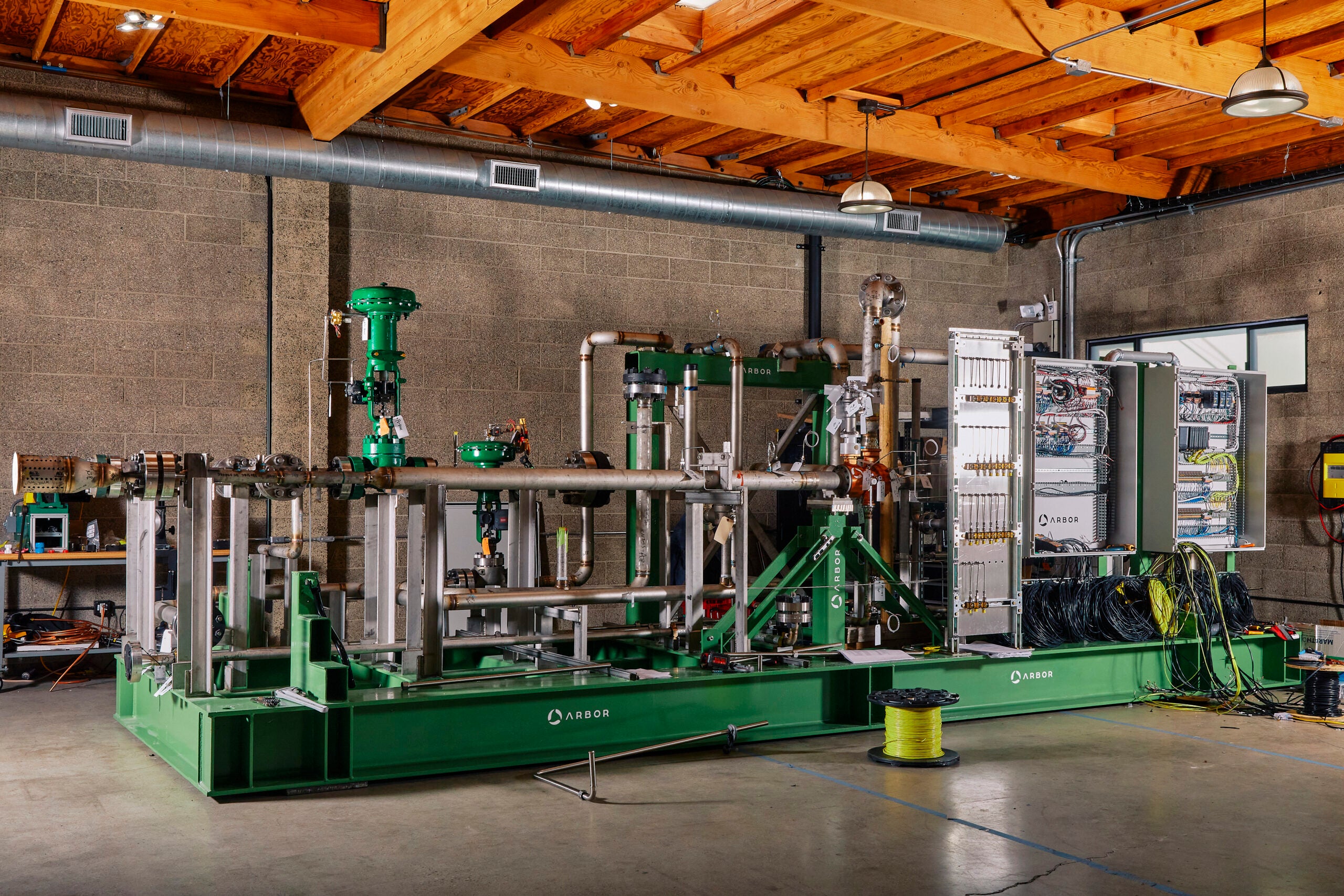
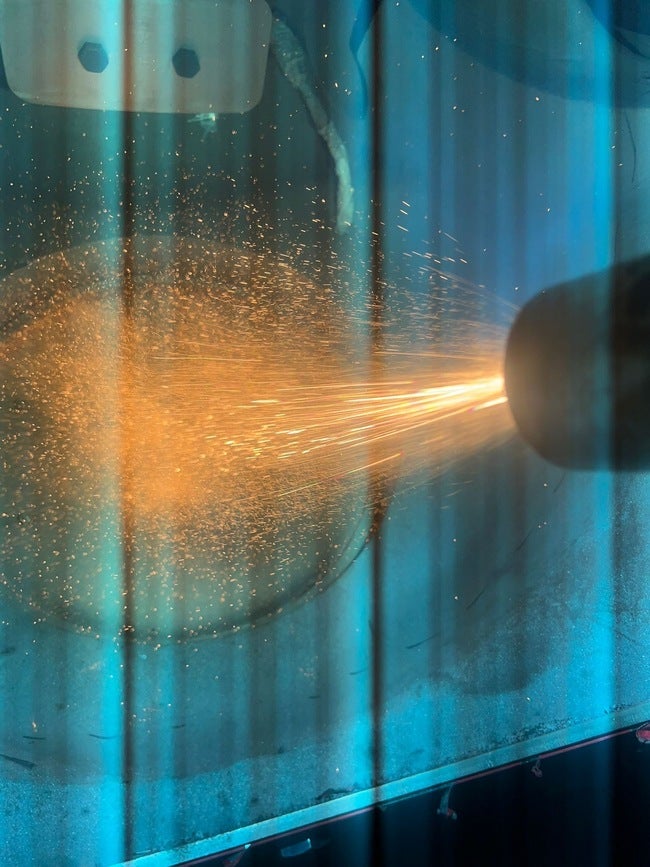
Beyond the technology itself, we’re bringing aerospace manufacturing methods into the power sector to improve performance and manufacturability. Additive manufacturing has advanced significantly in the past decade, and we’ve used it extensively to push design limits and improve performance, reliability, and manufacturability. Learning from the Raptor engine development program, we are reducing complexity, simplifying interfaces, and designing for ease of production from day one. We’re not just building a higher-performing machine, we’re designing it for mass production.
POWER: Supply chain issues for gas-fired turbines are well-known, with major manufacturers having a backlog of orders. Your company has said power procurement is a race against time. How can Arbor solve this issue?
Hartwig: There are a few bespoke components that are causing these backlogs, particularly heavy industrial castings, blades, and vanes. Turbine blades, for example, need to be incredibly strong while also having extreme resistance to temperature, corrosion, and creep. The only way to accomplish this for a traditional turbine is a long and complex fabrication process that yields a cored single-crystal metallic structure. This is a highly sophisticated, essentially artisanal process; attrition rates are high, and production elasticity is low. There are only a couple of shops in the world that can even produce these blades. For major turbine OEMs, expanding capacity requires years to stand up—and longer still to train the highly specialized labor required.
Arbor’s power system avoids this bottleneck altogether. Our sCO2 turbines are more compact and operate at higher pressure, but lower firing temperature. It’s a fundamentally different architecture that allows us to 3D-print turbines with integral cooling. This gives us a significantly more flexible and democratized supply chain. In practical terms, this means Arbor can offer capacity years sooner than waiting in today’s queue for traditional turbines.
POWER: Can you talk about the manufacturing process for your turbines?
Hartwig: We designed the turbine around manufacturability from day one. Major sections are assembled and validated independently before final integration. This modular approach maintains quality control and reduces integration risk.
For certain high-temperature components, we use additive manufacturing in Los Angeles. That allows us to consolidate multiple cast and machined parts into a single component with integrated cooling. Fewer parts mean fewer assembly steps and fewer tolerance stack-ups, which improves consistency across units.
As we scale, the emphasis is on repeatability. We limit customization and standardize interfaces so each unit can move through a defined production sequence with predictable outcomes.
POWER: What are the key elements of the HALCYON system? How important is it for the equipment to offer high-efficiency combustion with a supercritical CO₂ power cycle?
Hartwig: HALCYON is a mid-scale supercritical CO₂ turbine. Each modular unit delivers 25 MW; these can be linked together to produce 100 MW to 1 GW-plus of reliable, continuous output. The sCO2 cycle we’ve developed unlocks significant size and cost reductions while maintaining competitive performance.
Fuel flexibility was also a core design requirement. Hyperscalers want firm power that can align with evolving emission reduction goals. Utilities need assets that adapt to regional fuel constraints. We don’t want an energy investment today to lock operators into a single fuel path for the life of that asset, so we’re engineering the system to accommodate a variety of fuels.
By designing a single architecture that integrates an sCO2 closed-loop system with our unique turbomachinery, heat exchangers and combustion devices, we’ll deliver a turbine that operates on pipeline natural gas as well as lower-BTU fuels such as syngas from biomass or waste streams.
The objective is straightforward: give customers firm, low-cost capacity today with the flexibility to adapt as fuel economics and policy frameworks evolve.
POWER: Have you talked with any technology companies/hyperscalers about deploying Arbor units to provide power for their facilities?
Hartwig: We’ve been in active discussions with hyperscalers, data center developers, and the utilities that serve those loads. The consistent theme is timing. Projects are moving quickly, and long turbine procurement cycles are constraining deployment.
There’s also strong interest in phased capacity. A 25-MW module can offer unique redundancy for loads and enables incremental, staged delivery of gigawatts over time—better aligning with how campuses are funded and built.
Our plan is to quickly scale production to more than 1 GW per year by 2030. And that’s really just the beginning. The sustained—even accelerating—demand we see emerging in this segment means we don’t see power needs declining anytime soon. We will continue to ramp production to meet the world’s needs and advance energy abundance.
—Darrell Proctor is a senior editor for POWER.