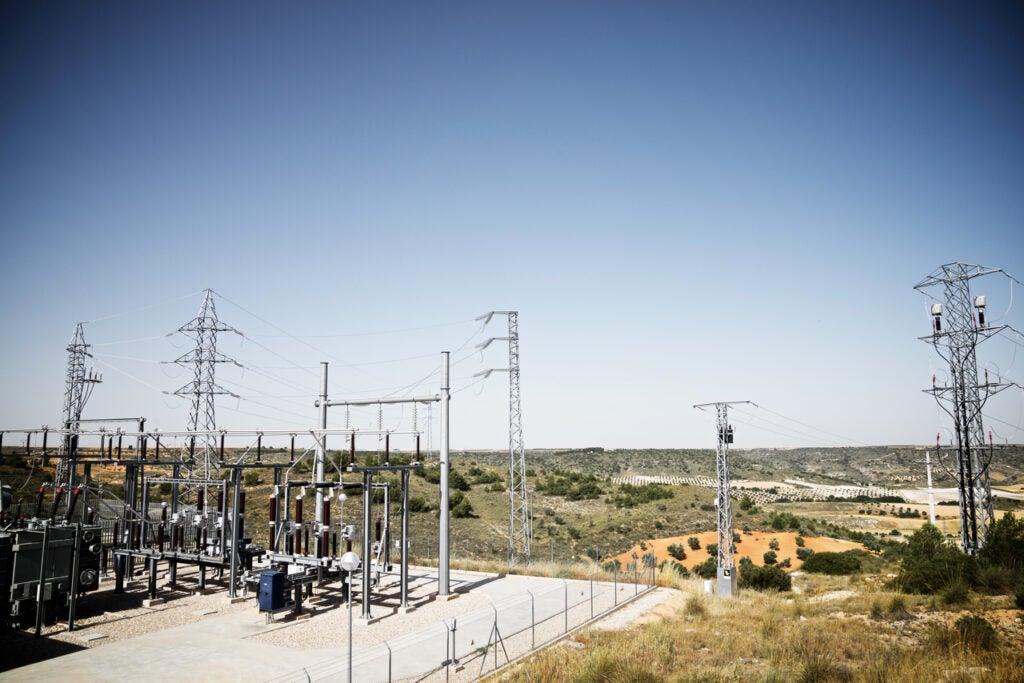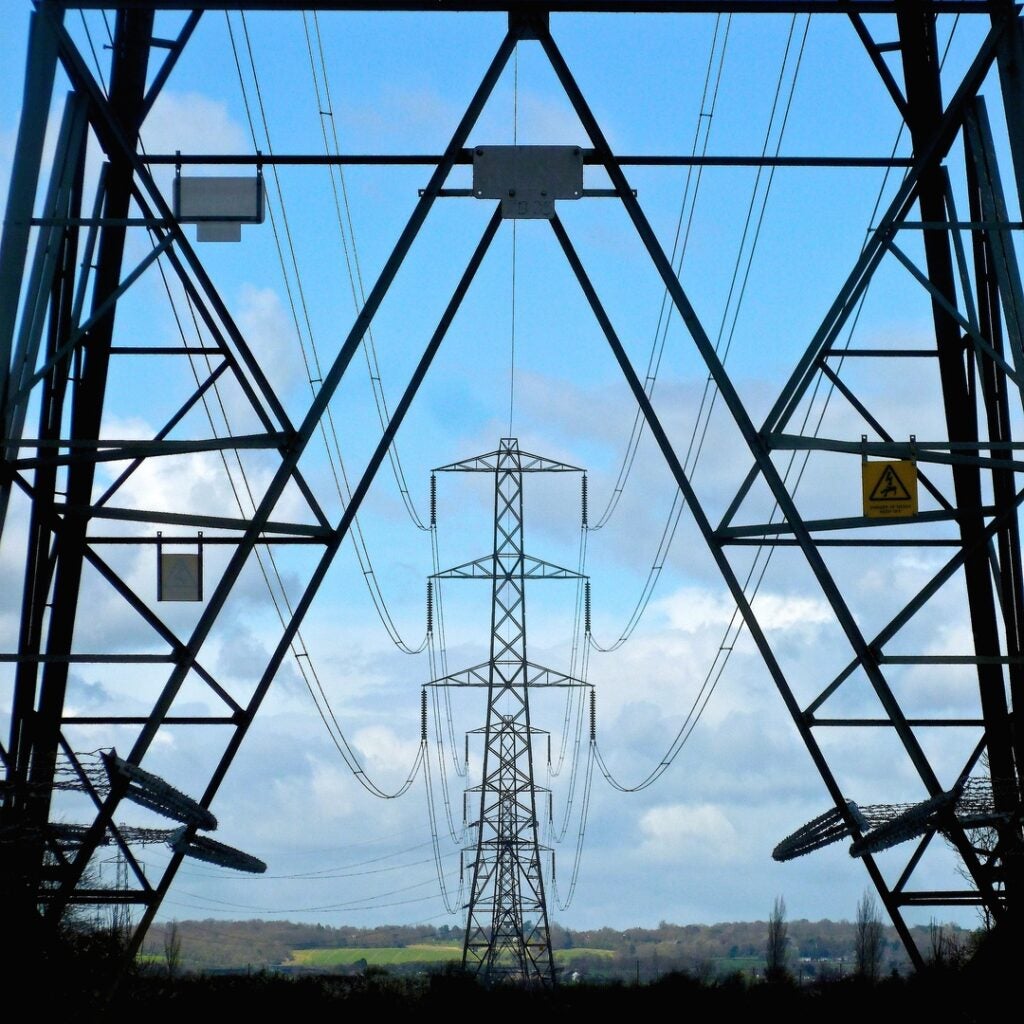
The challenge of upgrading how power is generated, along with needed improvements in electricity transmission and distribution, is being met in a variety of ways by an array of companies. POWER talks with many of these groups regularly; several participated in the Experience POWER and Data Center POWER eXchange events sponsored by POWER in Denver, Colorado, last fall, and many will join us again later this year at those summits in Washington, D.C.
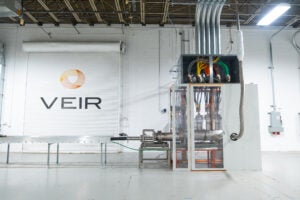
The POWER team is continuing discussions with companies bringing new technologies to market to solve some of the most pressing needs around data centers, power generation, and power grid expansion. VEIR, headquartered in Woburn, Massachusetts, is a superconducting power solutions company that says it’s “on a mission to deliver the power density necessary across the electricity value chain for global growth in capacity and grid resilience.” The company, founded in 2019, supports data centers, energy producers, and utilities in their efforts to rapidly accelerate growth in electric transmission capacity.
VEIR says it “works, partners, and innovates alongside organizations seeking modern power density solutions to modern power delivery challenges. Our superconducting power delivery solutions significantly expand capacity across the electricity value chain.” The company is known for its advanced conductors and cooling systems that support new data center construction, increase electricity transmission capacity, and remove power delivery bottlenecks. The company says it is “enabling better performing solutions with simpler designs.”
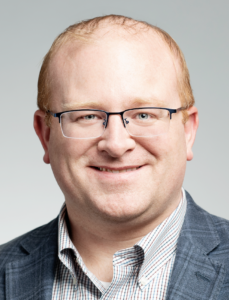
Tim Heidel, co-founder and CEO of VEIR, answered questions from POWER about the work his group is doing in support of the electric power sector. Dr. Heidel previously was a member of the investments team at Breakthrough Energy Ventures (BEV), the company founded by business magnate and Microsoft co-founder Bill Gates. Heidel also served as Deputy Chief Scientist at the National Rural Electric Cooperative Association (NRECA), where he helped lead NRECA’s research and development activities. He began his career as a Program Director at the Advanced Research Projects Agency-Energy (ARPA-E), where he managed a portfolio of more than 75 research projects. His focus at ARPA-E included new approaches for controlling and optimizing the transmission and delivery of electric power.
POWER: What are some of the challenges you see for the power grid and electric utilities due to increased demand for electricity from data centers?
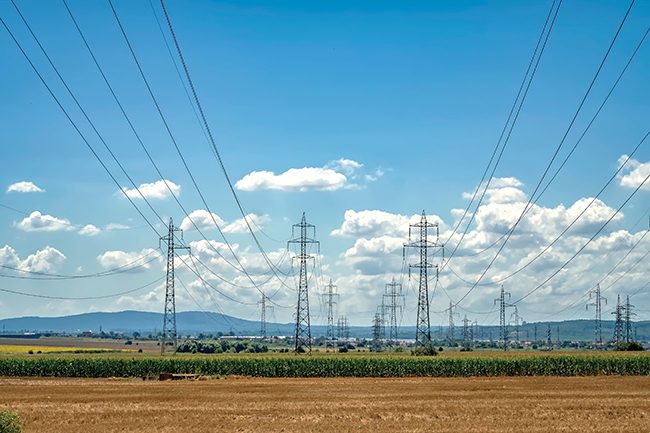
Heidel: Data centers are arriving with unprecedented power density and speed, and that is colliding with a grid that was not designed for rapid, concentrated growth. The practical result is congestion on existing lines, long interconnection queues, and a growing gap between where power can be generated and where it can be delivered reliably. Utilities are also navigating a tighter operating envelope. Even when generation exists, constrained transfer capacity can force curtailment, raise delivered power costs, and increase risk during peak conditions or contingency events. Finally, the pace mismatch matters. Data center development cycles are often measured in months, while major grid upgrades and permitting are measured in years. That mismatch is now a central planning and economic challenge.
POWER: How can these challenges be solved?
Heidel: We need a portfolio approach that is realistic on timelines. Near-term, the fastest wins often come from unlocking more capacity on existing corridors, substations, and rights-of-way, because building entirely new transmission routes is slow and difficult. In parallel, we need to modernize how we plan and execute upgrades: more standardized equipment, clearer pathways through permitting, and better proactive coordination on future scenarios across utilities, regulators, generation developers, and large loads. Longer-term, the solution is increasing end-to-end power delivery capacity: moving bulk power efficiently, then distributing it to high-density loads with equipment that can fit into constrained physical footprints while meeting utility-grade reliability and safety requirements.
POWER: How does VEIR help identify sites for new generation facilities? How difficult is it to find sites that are close to grid connection points with spare transfer capacity?
Heidel: VEIR is not a siting consultancy and we don’t select sites directly. We help our partners and customers expand the set of viable sites that can be evaluated by increasing transfer capacity where the grid is constrained. In many regions, the most limiting factor is an inability to move power through bottlenecked interfaces and into high-density load pockets. It is increasingly difficult to find sites with truly “spare” transfer capacity near interconnection points. That is why technologies that can relieve congestion, especially along existing rights-of-way, can materially change development economics and timelines. If you can add meaningful capacity without new towers or major visual impact, you can often accelerate what is otherwise stuck behind a multi-year transmission build.
POWER: When VEIR talks about “high-capacity, low-visual-impact transmission,” what does your company mean; how is that defined?
Heidel: VEIR exists to ensure power infrastructure keeps pace with modern ambition, so progress is never limited by outdated systems. High-capacity means materially increasing power transfer capability per corridor, per route mile, and per physical footprint. Low-visual-impact means doing that without adding tall, prominent, new overhead structures, widening rights-of-way, or introducing large new above-ground infrastructure that communities object to. Practically, we focus on solutions that can fit into constrained environments: existing corridors, underground routes, dense suburban and urban approaches, and locations where new overhead lines are unlikely to be permitted. The objective is to deliver transmission-scale capacity in places where conventional builds become socially, physically, or permitting constrained.
POWER: Who are VEIR’s customers, and what type of equipment are they looking for?
Heidel: Our customers include utilities and transmission owners who need capacity additions in constrained corridors, as well as OEMs (original equipment manufacturers), hyperscalers, data center designers, large-load developers, and industrial operators who need reliable, high-power delivery to sites where conventional equipment is too large, too slow to deploy, or both. They are looking for power delivery hardware that increases capacity without requiring entirely new rights-of-way. That includes advanced cable systems and the supporting cooling and controls infrastructure needed to operate them safely and reliably in real-world conditions.
POWER: Can you provide more detail into VEIR’s superconducting transmission line technology?
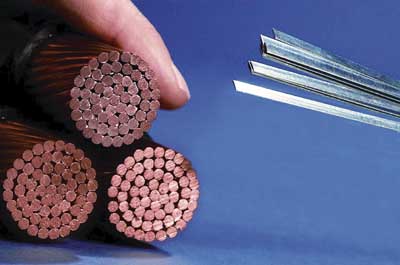
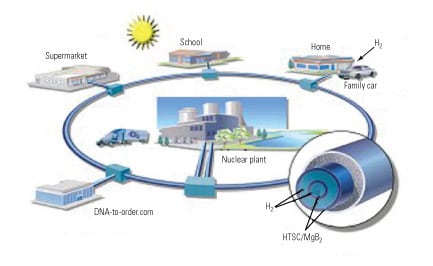
Heidel: VEIR builds power delivery systems based on high-temperature superconductors. When these special materials are in a superconducting state, electrical resistance drops dramatically, enabling very high-current density compared to conventional conductors. The practical benefit is significantly more power transfer capability in a much smaller, lighter form factor. Because superconductors operate at cryogenic temperatures, the cable system is paired with an integrated cooling architecture designed for continuous operation. We approach this as an engineered system: cable, cryogenics, monitoring, controls, and protection are designed to work together with utility and data center reliability targets. The goal is to create a credible pathway from demonstration to deployment: manufacturable cable designs, supply chain readiness, standards and safety alignment, and a clear operational model utilities and large customers can adopt. In short, by commercializing superconducting power as infrastructure, VEIR enables electricity to be delivered in fundamentally new ways, unlocking scale, reliability, and efficiency that legacy approaches cannot achieve through optimization alone.
POWER: What types of products is VEIR developing to solve critical bottlenecks in data center and industrial customer behind-the-meter applications at lower voltages?
Heidel: Behind the meter, the constraint is often physical as much as electrical: limited space for switchgear, busway, and feeders, plus aggressive timelines to energize. We are developing compact, high-capacity power delivery products that can move large amounts of power through tight footprints, from the point of interconnect through on-site distribution, without forcing a full site redesign. By enabling power to scale with demand, expansion plans move forward with confidence and speed, rather than being constrained by infrastructure limits. For data centers and industrial facilities, that can mean shorter, higher-capacity links between substations and load, high-density distribution elements that reduce copper and real estate requirements, and system designs intended to be deployed in modular phases as sites scale. The through line is the same: increase delivered capacity per square foot while maintaining reliability and operational clarity for the owner and operator.
—Darrell Proctor is a senior editor for POWER.