
PTC
-
 Legal & Regulatory
AI Boom Reshapes Power Landscape as Data Centers Drive Historic Demand Growth
The power industry was once considered slow-moving and perhaps even boring. That is no longer the case as technology has expanded and power demand projections skyrocket. New reports released by analysts at
-
 Legal & Regulatory
Planning for ‘Flip Dates’ in Tax Equity Partnerships
The U.S. government offers certain benefits to renewable energy projects, primarily in the form of tax credits and depreciation. But the reality is that a growing number of tax-equity partnerships are reaching the end of their lifespan, and the sponsors and tax-equity investors in these projects need to be preparing for the future. In fact, […]
-
 Hydrogen
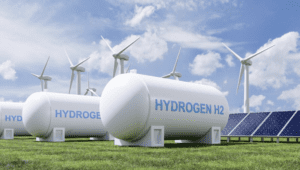
Treasury’s Proposed Clean Hydrogen PTC Rule Disappoints Power Industry
The Department of the Treasury has released proposed regulations and guidance defining a tax credit for the production of “clean hydrogen,” a significant supply-side incentive that is part of the Biden administration’s larger climate-driven policy framework. But though long-awaited, the measure has stirred up strong disappointment from the power industry. If finalized, the Treasury Department’s […]
-
Hydrogen
A Field Guide to Clean Hydrogen
Hydrogen is a key ingredient in any country’s future energy plans. In the U.S. the hydrogen sector is on the launch pad, ready for liftoff. However, its trajectory hinges on a critical question: what criteria will be used to define “clean hydrogen”? “Clean” is not synonymous with “green” when talking about hydrogen, although the terms […]
-
 Renewables
Interconnection Constraints Threaten Success of Clean Energy Projects
Power projects are filled with risk. One of the biggest risks today for clean energy developers involves interconnection constraints. And according to Sarp Ozkan, vice president of Commercial Product at
-
 News
NewsInflation Reduction Act Programs Could Establish the U.S. as a Market Leader in Hydrogen
For the growing U.S. hydrogen industry, the Inflation Reduction Act (IRA) is transformative. Today, nearly all hydrogen is produced from fossil fuels to be used as a chemical feedstock and for refining—emitting carbon dioxide in the process. Recently, thanks to state incentive programs, federal funds, and voluntary corporate commitments, clean hydrogen has been gaining ground […]
-
 Renewables
Wind and Solar Tax Credits Extended
Congress agreed on legislation that would extend the investment tax credit (ITC) for solar projects for two years and the production tax credit (PTC) for wind projects for one year. The full legislative package combines a $900 billion COVID-19 relief package and an omnibus spending bill for 2021 with tax extenders and energy policy changes. […]
-
 Wind
WindIRS Grants Wind and Solar Sectors Critical COVID-19 Reprieves
The U.S. Internal Revenue Service (IRS) has granted a one-year extension of the continuity safe harbor, providing much-needed relief for many wind developers, which, crippled by pandemic-related delays, were racing to complete projects before crucial tax incentives expired at the end of this year. In its May 27–issued Notice 2020-41, the IRS essentially modified prior […]
-
 News
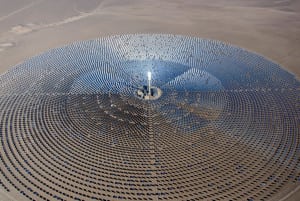
NewsMaximizing the Solar ITC Phaseout: Lessons from Wind
Every company invested in our nation’s clean energy transition is aware that 2019 is the last year that solar energy can take advantage of the 30% Investment Tax Credit (ITC) under Internal Revenue Code
-
 News
NewsBest Practices for Wind Project Partial Repowering
Partial wind project repowering enables owners to generate more energy from their sites, extend the life and improve the availability of their projects, and take advantage of extended renewable energy
-
 News
NewsWind Industry Prepares for Massive Expansion
Construction activity on wind projects across the U.S. surged to a record level of more than 20 GW in the third quarter of 2018, and about 35.1 GW of new wind capacity was under construction or in advanced development at the end of 2018, according to the American Wind Energy Association (AWEA). In 2018, the […]
-
 Legal & Regulatory
Losing Regulatory Approval Gamble, AEP Scraps $4.5B Wind Project
American Electric Power (AEP) has abandoned its mammoth $4.5 billion Wind Catcher project, one of its largest planned investments, and a key part of its strategy to tamp down carbon emissions by 2030. Under AEP subsidiary Southwestern Electric Power Co. (SWEPCO)’s proposed Wind Catcher project, AEP would have acquired a 2-GW wind farm—under construction in […]
-
 Legal & Regulatory
Wind Power Faces a Post-PTC ‘Valley of Death’
Wind power capacity in the U.S., whose explosive growth has tripled since 2008—even overtaking hydropower to become the nation’s largest source of renewable electricity—could face a period of stagnation once the production tax credit (PTC) is phased out in 2021. Analysts at WINDPOWER 2018 in Chicago last week called the period between 2021 and 2026 […]
-
 Renewables
House Proposed Tax Bill Ends Wind PTC, Extends Nuclear Credit
The U.S. House of Representatives on November 2 proposed a tax bill that would phase out the wind energy production tax credit (PTC), extend a tax credit for the nuclear power industry, add credits for geothermal and fuel cell programs, and end a tax credit for the purchase of electric vehicles. Wind energy proponents decried […]
-
 Renewables
Senate Votes to Restore Funding for Wind Energy Research and Development
The U.S. Senate passed an amendment on April 26 that would restore funding for wind energy research and development (R&D) in fiscal year 2017 to $96.4 million—the same amount funded this fiscal year. The amendment passed by a vote of 54–42 as part of Senate consideration of the Energy and Water Development and Related Agencies […]
-
 Legal & Regulatory
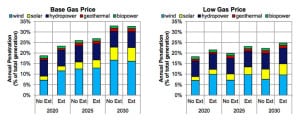
New Reports Say CPP and Renewable Tax Credits Have Big Implications for the Power Sector
New reports released this week see big growth in renewables from the recently extended federal tax credits, but big uncertainty due to the possible end of the Clean Power Plan (CPP). New York-based consulting firm Rhodium Group says investment plans in the power sector will be radically different if the Clean Power Plan doesn’t happen. […]
-
 O&M
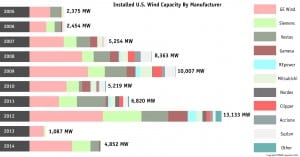
O&MDOE Report Highlights Triumph, Trouble for Wind Power Sector
U.S. wind power is becoming more widespread and costs are generally on the decline, but the sector is troubled by policy uncertainties, a new report from the Energy Department says. After a lackluster year in 2013, wind power capacity additions in the U.S. rebounded nearly 8% in 2014, driven by recent improvements in the […]
-
 Renewables
How the Power Sector Has Changed Since 2001
A new report from the Government Accountability Office (GAO) reveals surprising aspects about how federal subsidies for electricity have been distributed, how the power generation mix has shifted, and how consumption has transformed since 2001. The June 29–released report, “Generation Mix has Shifted, and Growth in Consumption has Slowed, Affecting System Operations and Prices,” responds […]
-
 Legal & Regulatory
Wind Is Mainstream, and Other Insights from WINDPOWER 2015
Wind is no longer a niche alternative energy industry, American Wind Energy Association (AWEA) CEO Tom Kiernan told attendees at WINDPOWER 2015. Despite policy hurdles, the wind sector has seen exponential growth and formidable cost reductions; it has the government’s endorsement for a low-carbon future; and it’s making up an ever-larger share of the nation’s […]
-
 Legal & Regulatory
State RPS Laws Threatened by Price Caps and Federal Tax Expirations
State renewable energy standards (RPSs) may be threatened by the expiration of federal tax credits, according to research from the Lawrence Berkeley National Lab (LBL). Lab scientist Galen Barbose, speaking at the annual meeting of the National Association of Regulatory Commissioners (NARUC) in San Francisco, presented the results of a joint study between LBL and […]
-
 Legal & Regulatory
Wind Production Tax Credit Expires with Uncertain Impact
The controversial federal production tax credit (PTC) bestowed on new wind farms of $0.023/kWh for the first 10 years of their operation expired on Tuesday, but the impact of that policy lapse isn’t immediately clear. Originally enacted in 1992, the federal renewable electricity PTC has been renewed and expanded numerous times—most recently by the American […]