
EPA
-
 News
NewsPower Sector Resources for Coronavirus Pandemic Response
As part of POWER magazine’s in-depth coverage of the COVID-19 pandemic, its editors are curating a list of resources that may provide actionable information helpful to anyone involved in the world’s vast bulk power systems. Please write to editor@powermag.com if you know of additional resources that should be added to this page. POWER Magazine’s Live […]
-
 News
NewsEPA Under Fire for COVID-19 Temporary Enforcement Directive
The Environmental Protection Agency’s (EPA’s) unprecedented temporary policy to relax enforcement of noncompliance with certain environmental rules in response to the COVID-19 pandemic has provoked an impassioned response from industry experts, environmental groups, and from the agency itself. As POWER reported, the EPA’s Office of Enforcement and Compliance Assurance (OECA) on March 26 adopted a […]
-
 COVID-19
EPA Relaxes Noncompliance Enforcement During COVID-19 Pandemic
Adopting a new temporary policy that gives it more “enforcement discretion,” the Environmental Protection Agency (EPA) said March 26 it does not expect to seek penalties for civil violations of the agency’s rules that result from the COVID-19 pandemic. The policy adopted Thursday addresses concerns that regulated facilities are facing potential worker shortages, travel restrictions, […]
-
 News
NewsEPA to Withdraw Federal Regional Haze Plan for Utah Based on New Analysis
Citing new technical information gleaned from a more modern modeling analysis, the Environmental Protection Agency (EPA) has proposed to withdraw a federal implementation plan (FIP) to control regional haze from four PacifiCorp coal-fired units in Utah and allow the state to revert to conditions set out in a 2015-submitted state implementation plan (SIP). The agency’s […]
-
 Nuclear
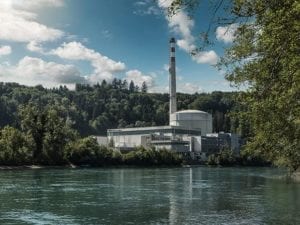
A Decade of Turmoil: How Nuclear and Coal Have Struggled to Survive
The past 10 years have been filled with trials and tribulations for both the nuclear and coal power industries. From accidents to plant closures there has been little to cheer about. Still, nuclear and coal power continue to provide reliable baseload generation to billions of customers around the globe. Here’s a look back at the […]
-
 News
NewsEPA Overrides Subpart D in Newly Proposed Federal Coal Ash Permitting Rule
Only “high hazard” CCR units will be subject to immediate compliance deadlines under a newly proposed Environmental Protection Agency (EPA) rule that revises federal permit requirements for the management of coal combustion residuals (CCRs) at power plants. If finalized, the rule will apply to all coal facilities in Indian country and the 48 U.S. states […]
-
 News
NewsEPA Reinterprets ‘Ambient Air,’ Further Tweaks New Source Review
The Environmental Protection Agency (EPA) has finalized a change to a long-standing policy interpreting “ambient air”—a foundational concept under the Clean Air Act that applies to all types of air pollution, from ground-level ozone, particulate matter, and greenhouse gases. While the agency framed the change as part of a suite of actions to reform New Source […]
-
News
EPA Proposes Revisions to Two Obama-Era Rules: Effluent Limitations Guidelines and Coal Ash
The Environmental Protection Agency (EPA) has issued long-awaited proposed revisions of two 2015 Obama-era rules that apply to effluent limitations guidelines (ELGs) for steam electric power plants and coal combustion residuals (CCR) management by electric utilities. The agency coordinated the release of the two related revisions, which apply overwhelmingly to coal-fired steam power plants, after […]
-
 Coal
CoalA New Technology for Bottom Ash Conversion Emerges
New environmental regulations have forced many coal power plant operators to consider alternative options for handling their boiler bottom ash. Although mechanical drag systems can often meet regulatory
-
 Coal
CoalRemoving Asbestos and Regulated Materials Key to Power Plant Decommissioning
Retiring and decommissioning coal power plants is becoming a more-frequent occurrence around the world. The job comes with many challenges, but projects in the U.S. and UK have proven that remediation and
-
News
EPA’s Final Regional Haze Guidance Highlights State Discretion, Flexibility
New guidance issued by the Environmental Protection Agency (EPA) on Aug. 20 to help states prepare for the second implementation period of the federal regional haze program puts emphasis on “discretion and flexibilities” they can use to comply with long-standing mandates to protect visibility in federal areas. While it is not binding, the EPA’s […]
-
 Gas
GasAlthough ‘Trump Digs Coal,’ His Administration Is Missing the Message
COMMENTARY At this point, one thing should be abundantly clear about the Trump administration’s theme on energy policy: the president will do whatever it takes to prop up coal, even if the market and the public choose otherwise. The Trump administration’s latest pro-coal gambit is the Environmental Protection Agency’s (EPA’s) so-called Affordable Clean Energy rule, […]
-
 News
News22 States, Environmental Groups Mount Legal Challenges to EPA ACE Rule
A coalition of 22 states and seven local governments on Aug. 13 filed a lawsuit against the Environmental Protection Agency (EPA) over its Affordable Clean Energy (ACE) rule, which the Trump administration finalized in June to replace the Obama administration’s legacy Clean Power Plan (CPP). Separately, 10 public interest groups filed a petition on Aug. […]
-
 News
NewsA Powerful Investment in Education, and the Community
A new coal-fired combined heat and power (CHP) plant at the University of Alaska-Fairbanks, replacing old boilers in place since the 1960s, improves the efficiency of the campus’ heating and cooling system
-
 News
NewsAEP Will Close 1,300-MW Indiana Coal Unit
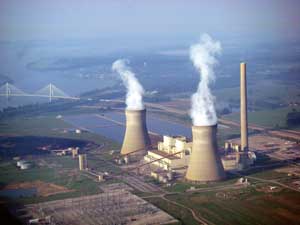
A federal judge in Ohio on July 18 approved American Electric Power’s (AEP’s) plan to close Unit 1 of its two-unit, 2,600-MW coal-fired Rockport Plant in Indiana. The modified consent decree approved by the U.S. District Court for the Southern District of Ohio on Thursday is the latest chapter in a long-running dispute among AEP, […]
-
 News
NewsWheeler: Keeping U.S. Coal Sector Alive Will Benefit ‘International Environmental Protection’
Coal power, which has seen a marked decline in the U.S., is necessary for reliability and energy affordability, and sustaining it could boost pollution technology exports and “improve lives while driving down emissions worldwide,” said Environmental Protection Agency (EPA) Administrator Andrew Wheeler in a speech last week. Wheeler made the remarks at a 90-minute event […]
-
 News
NewsEPA Urges States to Submit CCR Programs Even as Coal Ash Regulatory Overhaul Continues
The Environmental Protection Agency (EPA) on June 24 proposed to partially approve Georgia’s permit program for the disposal of coal combustion residuals (CCR). As it did so, it gave other states some advice: Follow Georgia’s lead and assume oversight of coal ash that power plants dispose within your borders. The preliminary approval marks another important […]
-
 News
NewsEPA Finalizes ACE Rule, Replaces Clean Power Plan
The Environmental Protection Agency (EPA) has issued a final Affordable Clean Energy (ACE) rule to formally replace the Obama administration’s controversial Clean Power Plan (CPP). Like the CPP, the June 19–issued final ACE rule will regulate greenhouse gases (GHGs), and it will be founded firmly on the agency’s 2009 Endangerment Finding. However, the ACE rule focuses […]
-
 Environmental
Illinois Passes Landmark Coal Ash Legislation
Illinois on May 27 became the third state in the nation to pass legislation requiring coal ash protections beyond federal requirements. The state’s House passed the Coal Ash Pollution Prevention Act (SB 9) in a 77-36 vote on Monday, only weeks after Senate passage of the bill in a 39-9 vote on May 9. The […]
-
News
[UPDATED] EPA Sets Schedules for Long List of Power Plant Regulatory Actions
The U.S. Environmental Protection Agency (EPA) will act on a spate of power plant rules over the next year, its newly released agenda of regulatory and deregulatory actions shows. The May 23-released “Spring 2019 Agenda of Regulatory and Deregulatory Actions” lists 35 new actions, along with 57 actions that it considers “deregulatory.” The list includes new […]
-
 News
NewsUtility Group Under Congressional Investigation Will Disband
A utility industry coalition that has often challenged stricter air pollution and climate rules for power generation said it will dissolve. The Utility Air Regulatory Group (UARG), which has been under investigation from the House Energy and Commerce Committee due to its relationship with the Environmental Protection Agency’s (EPA’s) top air policy official and his […]
-
 News
NewsEPA Will Issue Final Carbon Rules for Power Plants in June
The Environmental Protection Agency (EPA) plans to take final action to repeal the Clean Power Plan in June 2019, a federal court filing shows. The agency told the D.C. Circuit—in a May 6 status report—review of the Obama-era rule that sets the first carbon dioxide limits for existing power plants “continues to be a high […]
-
 News
NewsEnhanced Wastewater Treatment Technology for Ash Transport Water
Evolving environmental regulations have forced many coal power plant operators to re-evaluate how they handle water and ash. Many units have been retrofit with dry handling systems, but there are other
-
 News
NewsInside NET Power: Gas Power Goes Supercritical
A project to demonstrate a novel power cycle that promises to produce low-cost, reliable, and flexible power from natural gas—while generating no atmospheric emissions, and fully capturing carbon dioxide—is inching closer to commissioning. Its developers are now actively assessing siting for the first commercial-scale 300-MW NET Power facility. NET Power’s 50 MWth Demonstration Plant in La […]
-
News
Bipartisan Senators Urge EPA to Drop Proposed Changes to Mercury Rule
A bipartisan group of U.S. senators are urging the Environmental Protection Agency (EPA) to withdraw a proposed rule that they said could “lead to the undoing” of the Obama administration’s Mercury and Air Toxics Standards (MATS). In a March 18 letter to newly appointed EPA administrator Andrew Wheeler, the group led by Sens. Lamar Alexander […]
-
 News
NewsPower Companies Refute Findings of Widespread Coal Plant Groundwater Contamination
An estimated 91% of U.S. coal power plants that submitted groundwater monitoring data as required by the Environmental Protection Agency’s (EPA’s) 2015 Coal Combustion Residuals (CCR) rule have unsafe levels of one or more contaminants, a collaborative analysis of the monitoring data by several environmental groups suggests. The March 4 report is significant because power […]
-
 News
NewsAndrew Wheeler Confirmed as EPA Administrator
The Senate on February 28 officially confirmed Andrew Wheeler to be administrator at the Environmental Protection Agency (EPA) on a 52–47 vote, mostly along party lines. The nomination of Wheeler, a former coal lobbyist, was controversial, with many lawmakers and environmentalists criticizing his ties to the coal industry. Wheeler has held the role in an acting […]
-
News
EPA to Retain Primary NAAQS for Sulfur Dioxide
The Environmental Protection Agency (EPA) will refrain from amending the National Ambient Air Quality Standards (NAAQS) for sulfur dioxide (SO2), retaining a 2010 rule, which it said adequately protects public health. The agency on Feb. 25 said in a notice that a periodically required review of the primary—or health-based—rule concluded no revision was necessary. The […]
-
 News
NewsEnergy Secretary Should Use Discretionary Authority to Support Clean Coal Technologies
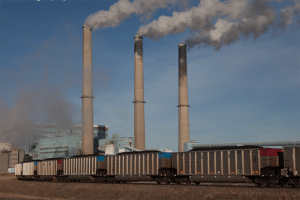
The threat to power grid resilience and reliability due to the continued retirement of coal-fired power plants has generated calls for immediate action. A severe weather event such as the “bomb cyclone” or
-
 News
NewsClean Air Act Issues Congress Could Grapple With in New Session
While the Republican-led U.S. House and Senate in the 115th Congress was mainly focused on reviewing, for modification or repeal, several environmental rules issued under the Clean Air Act (CAA), the new Democrat majority in the House could focus on a slew of different measures, a new report from the Congressional Research Service (CRS) suggests. […]