
POWER
-
 O&M
O&MPreventing Downtime by Picking the Best Switch Technology
Common fuel-handling problems in the power industry often result in production downtime, costing the owner perhaps up to $200,000 per hour. There are many areas within a coal-fired power plant where mishaps can cause stoppage of material flow. Here we discuss how to select the best switch technology to reduce the possibility of coal flow stoppages.
-
 Waste to Energy
Waste-to-Energy Technology Options Increase but Remain Underutilized
WTE technologies offer cost-effective, near-term solutions for producing baseload electric power, meeting renewable energy targets, and reducing greenhouse gas emissions in the U.S. and other countries. They also present opportunities for improving resource management practices, increasing energy security, enhancing environmental quality, and supporting climate policy goals around the world.
-
 Waste to Energy
Has Boiler MACT Improved the Future for Biomass Power?
The impact of recently released air emissions regulations has stirred heated debate about forced coal plant closures and the possibility of reduced grid reliability in some regions. Biomass power may be an unexpected beneficiary of the new rules.
-
 Nuclear
Happy Days for Nuclear Power?
The first license to construct a new nuclear power plant in the U.S. in 34 years was granted by the Nuclear Regulatory Commission on Feb. 9. Has the elusive nuclear renaissance finally begun?
-
 O&M
O&MIntelligent Control of FBC Boilers
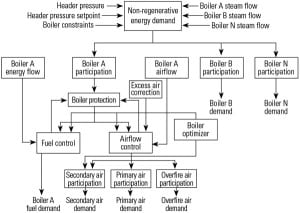
Optimizing combustion control is critical to reducing emissions and increasing plant operating efficiency, particularly for fluidized bed combustion (FBC) boiler plants burning biomass fuel that has unpredictable moisture content. The secret: measuring actual energy flow.
-
 Water
WaterPromoting Sustainable Water Usage in Power Generation
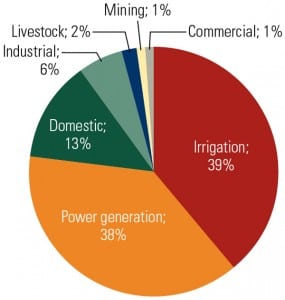
Growing concern about water usage by U.S. electric power generation is being prompted by a number of factors, including projected increases in power demand due to population growth, competing uses for water, and recent drought conditions in various parts of the country. Our overview presents diverse perspectives from industry experts about current and future challenges of balancing power generation needs with declining water availability.
-
Legal & Regulatory
Suing for (Pipeline) Safety
As a Valentine’s Day present to federal regulators, San Francisco City Attorney Dennis Herrera took the unusual step of suing the U.S. Pipeline and Hazardous Materials Safety Administration (PHMSA). The complaint alleges that the PHMSA has “abjectly failed to oversee the [California Public Utilities Commission’s (CPUC’s)] pipeline safety program or to ensure that federal pipeline safety standards are enforced.” The complaint chastises the PHMSA for “shirking that duty for over a decade, if not longer.”
-
 Water
WaterClever “Helper” Tower Solves Cooling Water Dilemma
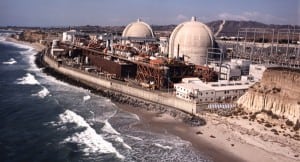
Gone are the days when ocean or river water for once-through cooling of a new power plant was assumed to be available. Today, more than 500 fossil-fueled and 38 nuclear plants use once-through cooling. However, regulators in several states are aggressively pushing what is essentially a ban on the use of once-through water cooling, forcing a conversion to closed-cycle cooling.
-
 News
NewsTechnology Trumps Policy
An energy policy should be the result of inclusive debate and a consensus approach to the means to leverage all of a country’s energy assets, including innovation and technology, to the advantage of its citizens. Current U.S. energy policy fails on all counts.
-
 Business
POWER Gets Social
Do you have professional insights to share with others in the industry—or questions for those with a particular expertise? Do you want to get news and information from POWER more than monthly or weekly? Then join POWER on these social media platforms.
-
 Nuclear
THE BIG PICTURE: Nuclear Aftershocks
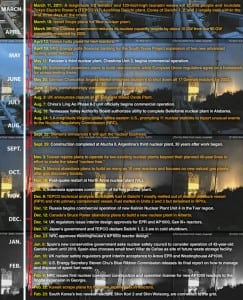
In the year following the Fukushima accident in Japan, the nuclear sector has seen several setbacks (text in orange) as well as major milestones (white).
-
 News
NewsRust-Preventative Weldable Primer
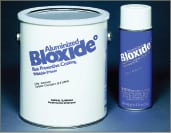
Tempil introduced BLOXIDE°, a rust-preventive weldable primer that provides protection from rust formation on edges prepared for welding. It also acts as an oxygen/oxide scavenger in the weld pool. This results in a clean X-ray quality weld. Steel sections having their prepared edges coated with BLOXIDE° can be stored outside in open yards for extended […]
-
 Nuclear
Less-Familiar Generation III+ Reactors Make Inroads
Following key regulatory approvals in the UK and U.S. of Westinghouse’s AP1000 and AREVA’s EPR Generation III+ reactor designs, France’s nuclear safety authority in February determined that the little-known ATMEA 1 reactor design met international safety criteria for Generation III+ reactors. The reactor is a 1,100-MW pressurized water reactor (PWR) developed and marketed by ATMEA, a 2007-created joint venture between France’s AREVA and Japan’s Mitsubishi Heavy Industries (MHI).
-
 News
NewsPatented Filter Medium for Core Cooling
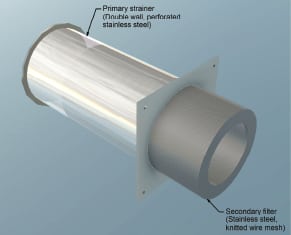
Multi-disciplined engineering and consulting firm ENERCON received patents for a filter medium for strainers used in nuclear reactor emergency core cooling systems (ECCS). ENERCON’s Debris Bypass Eliminator was developed in response to the Nuclear Regulatory Commission’s Generic Safety Issue, GSI-191, “Assessment of Debris Accumulation on PWR Sump Performance.” During long-term recirculation for cooling of the […]
-
 Solar
SolarLarge China Energy Storage Project Begins Operation
Chinese state entity State Grid Corp. of China (SGCC) and battery maker BYD in January said they had finished construction on what they call “the world’s largest battery energy storage station”—a project in Zhangbei, Hebei Province that combines 100 MW of wind and 40 MW of solar capacity, a smart power transmission system, and 36 MWh of energy storage in arrays “larger than a football field.”
-
 O&M
O&MEnhancing Plant Performance Through Formal Outage Planning and Execution
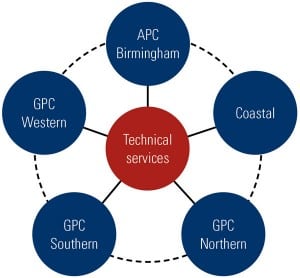
By thoroughly planning their outage strategies well in advance, Southern Company personnel are better able to achieve a number of important objectives, including improving unit economic performance, reducing unplanned maintenance outage hours, completing outages on time and within budget, and ensuring that outage workmanship is of the highest quality.
-
 Gas
GasMeeting LNG Demand with Floating Liquefaction Facilities
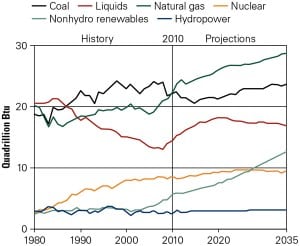
The past two years have seen a dramatic escalation of global natural gas liquefaction capacity.
-
 Coal
CoalVietnam Works Hard to Power Economic Growth
For the past 15 years, Vietnam has enjoyed enviable gross domestic product increases, averaging 7% annually. That kind of economic growth increases power demand, but financing new capacity remains a challenge. Reaching its ambitious capacity growth goals will require Vietnam to expand its financing and vendor base, attract foreign investment, and ensure future fuel supplies in a region thick with competition for those resources.
-
 Business
High-Temperature Superconductor Technology Stepped Up
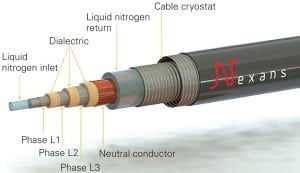
A new project planned by RWE and partners Nexans, the Karlsruhe Institute for Technology (KIT), and Jülich is poised to mark another milestone for high-temperature superconductor (HTS) cable technology, which transports electricity without losses when cooled down to about –200C (–392F).
-
 Business
Ensuring Resource Adequacy in Competitive Electricity Markets
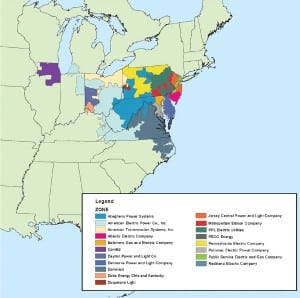
Planning for resource adequacy—something that was relatively simple in the context of vertically integrated utilities—continues to be a difficult issue in competitive electricity markets. Whereas state public utility commissions used to have exclusive authority to determine what generation needed to be built and when it was to be available, this responsibility has been assumed by RTO/ISOs in regions with competitive markets. Each region approaches resource planning differently, and each region faces unique problems.
-
 Gas
GasMHI Ships First Commercial J-Series Turbine
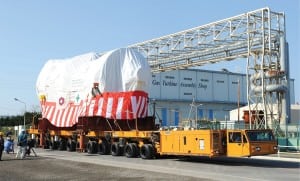
The first unit of Mitsubishi Heavy Industries’ (MHI’s) much-watched J-Series gas turbine, a technology MHI has been testing for a year, was shipped this December from its Takasago Machinery Works in Hyogo Prefecture, Japan, for commercial use at Himeji Unit 2, also in Hyogo, owned by Kansai Electric Power Co.
-
 Smart Grid
EEI Proposes Road Map for Electric Vehicle Integration
Several new models of plug-in electric vehicles will enter the market in 2012, joining the Nissan LEAF and Chevrolet Volt. The Edison Electric Institute has prepared four suggestions to help utilities smoothly handle the introduction of these vehicles to roads and grids.
-
 Solar
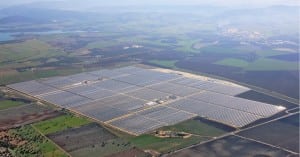
SolarSpain Inaugurates Two More Parabolic Trough Units
Two identical 50-MW parabolic trough plants with thermal storage in Cadiz, in the south of Spain, began operating this January.
-
 Business
Automating Crew Callouts
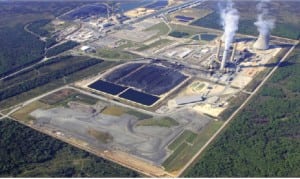
Progress Energy has adopted an emergency worker callout program that has eliminated manual dialing, improved work acceptance rates, and increased the speed of worker reporting. The standardized process also complies with union work rules that require equality in overtime opportunities, by seniority. The business case for automating the worker callout process is compelling.
-
 Gas
GasDesertec Ambitions Turn to Asia, Australia
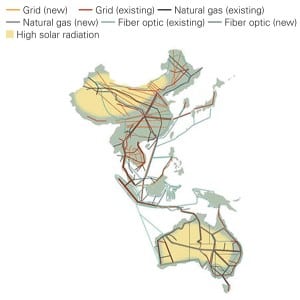
The ambitious Desertec project—a $9 billion initiative to develop, harness, and transmit 2,000 MW of renewable power from North Africa and the Middle East to Europe by 2050—has been trumped by a vaster concept that spans Asia and Australia.
-
 News
NewsCertified Zero Air Material for CEMS Reporting
Air Liquide introduced Scott brand 72.2 Certified ZAM (zero air material) to meet 40 CFR Part 75 regulations, which call for a continuous emission monitoring (CEM) system to be exposed to “zero air material” during testing protocols in order to qualify the accuracy of the instrument. Air Liquide achieves a balance between regulatory compliance certainty […]
-
Business
POWER Digest (March 2012)
RusHydro Inaugurates New Unit at Restored Sayano-Shushenskaya Hydropower Plant. RusHydro —a hydroelectricity company that is majority-owned by the Russian Federation—announced in mid-December that it had put its first brand new hydropower unit into commercial operation at its Sayano-Shushenskaya hydropower plant on the Yenisei River, near Sayanogorsk in the Republic of Khakassia. Following the catastrophic accident […]
-
 News
NewsFill-Level Measuring Device for Coal Mills
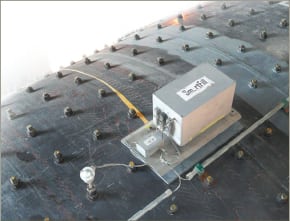
KIMA Echtzeitsysteme’s fill-level measuring device, used for ball mills in the cement industry for over seven years, has now been adapted and developed for use in coal mills. A new fill-level sensor enables reliable fill-level measurements, even with fluctuations in coal quality or moisture levels. Tested over a period of several months, the SmartFill for […]
-
 O&M
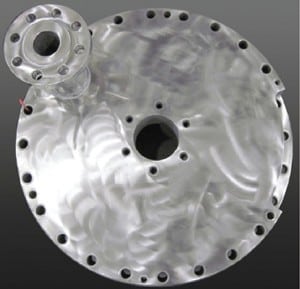
O&M7EA Conversion Saves Time and Money
ProEnergy Services (PES) was recently contracted to install six Frame 7 DLN1.0 dual-fuel assemblies in Venezuela. The problem: The lead time to purchase the conversion hardware from the original equipment manufacturer (OEM) would not meet the customer’s schedule. The only option was for PES to convert the fuel nozzles removed from a gas-only unit to a dual-fuel configuration, a process that had never before been attempted.
-
 News
NewsNew Capacitive Accelerometer Modules
Silicon Designs, a designer and manufacturer of highly rugged industrial-grade MEMS capacitive accelerometer chips and modules, has introduced a ±5 g model to its 2011 industry best-selling 2210 accelerometer series. The low-noise, single-axis model 2210-005 accelerometer module incorporates high-quality MEMS capacitive sensing elements. Sensing elements are packaged within a compact, lightweight, anodized epoxy-sealed aluminum housing […]