
Latest
-
 Coal
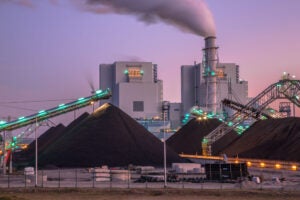
CoalSouth Korean Groups Backing New 1.25-GW Coal-Fired Power Plant in Alaska
A fact sheet published by the U.S. Dept. of the Interior notes a $1-billion agreement between Hyundai Heavy Industries Power Systems and developers of the proposed 1.25-GW Terra Energy Center, a new 1.25-GW coal-fired power plant in Alaska. Officials on March 16 said the Terra Energy Center would be the first new coal-fired station built in the U.S. in more than a decade.
-
 Geothermal
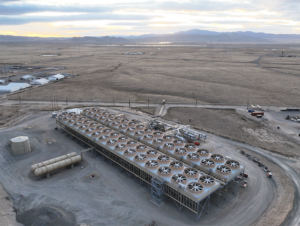
Fervo Energy Secures More Funding for Cape Station Geothermal Project
Geothermal energy group Fervo Energy, known as a pioneer of next-generation geothermal deployment, said it has successfully closed $421 million in non-recourse debt financing for the first phase of its flagship Cape Station development in Utah.
-
 Power
PowerConstellation to Sell 4.4 GW of PJM Gas Power Assets to LS Power for $5B in Regulatory Divestiture
Competitive generation giant Constellation Energy has agreed to sell approximately 4.4 GW of natural gas–fired generation capacity in PJM Interconnection to LS Power Equity Advisors for $5 billion, marking the largest single tranche of divestitures required to resolve antitrust and market-power concerns arising from Constellation’s $26.6 billion acquisition of Calpine Corporation. The deal, announced on […]
-
 Solar
SolarAvantus, Toyota Group Complete Construction of Texas Solar Power Project
U.S.-based clean energy group Avantus, along with Toyota Tsusho America (TAI), announced completion of the 159-MW Norton Solar Project in Runnels County, Texas. The companies on March 18 said TAI has entered into a long-term virtual power purchase agreement with Toyota Motor North America for the full output of the solar facility.
-
 Workforce
How a University and Industry Partner Are Building Tomorrow’s Power Workforce
The power industry is staring down a workforce crisis. An aging labor force is heading for the exits, new recruits aren’t arriving fast enough to replace them, and a historic wave of energy infrastructure investment is only widening the gap. Against that backdrop, a partnership between Stony Brook University and Haugland Group—an infrastructure services company […]
-
 Gas
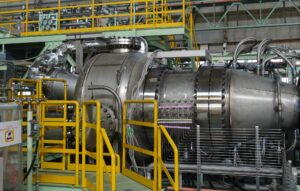
GasGE Vernova, IHI Achieve 100% Ammonia Combustion in F-Class Gas Turbine Test
GE Vernova and Japanese integrated heavy industry group IHI Corp. have demonstrated for the first time that full-scale combustor components for GE Vernova’s F-class gas turbines can operate on 100% ammonia at full-load conditions, clearing a critical technical barrier in their joint effort to decarbonize dispatchable power. The test was conducted at IHI’s Large-Scale Combustion […]
-
 Partner Content
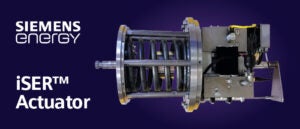
Modernize and Simplify Your Power Plant’s Hydraulic Control System
Sponsored by:
Across the power generation industry, operators are under increasing pressure to do more with less. Aging assets are being pushed to operate longer; maintenance windows are shrinking, and expectations for availability and safety are rising. With capital budgets under pressure, plant owners are looking closely at modernization opportunities that deliver measurable reliability improvements without adding […]
-
 Trends
The Frog Is Dead: North America’s Power Grid Faces Its Biggest Reckoning in a Generation
For much of the 21st century, the North American power sector drifted along on near-zero demand growth. Utilities retired aging coal plants, developers filled interconnection queues with wind and solar, and investors looked elsewhere for excitement. Then came the data center boom—and seemingly overnight, the industry found itself in a full-blown supply crisis. In a […]
-
 Nuclear
GE Vernova, Hitachi Exploring SMR Deployment in Southeast Asia
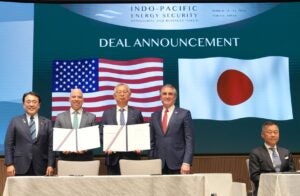
Energy giants GE Vernova and Hitachi said the companies have entered into a memorandum of understanding (MoU) as part of a plan to deploy the groups’ water-cooled BWRX-300 small modular reactor (SMR) in Southeast Asia.
-
 Commentary
Speed-to-Power: Energy Strategy in the Age of AI
As we move further into 2026, the global energy landscape is increasingly defined by divergence. Oil and natural gas fundamentals are separating, geopolitical volatility remains elevated, and across the industrial economy, execution speed is becoming the defining competitive variable.