
Latest
-
News
China Ends Subsidies for Domestic Wind Equipment Makers after U.S. Files WTO Complaint
China has formally revoked grants to Chinese wind turbine manufacturers that agreed to use key parts and components made in China rather than purchasing imports after the U.S. filed a complaint with the World Trade Organization (WTO), saying the subsidies were prohibited under international trade rules. The U.S. took action after the United Steelworkers (USW) last September filed a trade case alleging that China used “protectionist and predatory” practices to develop its renewable sector at the expense of production and job creation in the U.S.
-
News
AEP, Duke, TVA to Develop $275M High-Voltage Transmission Line
American Electric Power (AEP) and Duke Energy on Thursday said they would jointly develop a 55-mile, extra-high-voltage transmission project with the Tennessee Valley Authority (TVA) in Indiana and Kentucky.
-
News
House Subcommittee Votes to Restore Funds to Yucca Mountain
The U.S. House Energy and Water Appropriations subcommittee on Thursday passed a bill that restores $35 million to the development of the Yucca Mountain permanent nuclear waste repository in Nevada, including $10 million that goes to the Nuclear Regulatory Commission (NRC) to continue its license application.
-
News
DOE Offers $45.6M Loan Guarantee to 20-MW Nev. PV Project
The latest recipient of a conditional commitment for a $45.6 million federal loan guarantee from the Department of Energy (DOE) is Fotowatio Renewable Venture’s 20-MW alternating current (AC) photovoltaic (PV) solar generating facility.
-
News
GenOn Settles on Water Discharge Suit Filed Under Citizen Enforcement Provision
GenOn has reportedly reached a settlement agreement with environmental groups PennEnvironment and the Sierra Club in a case that alleges the Houston-based company continuously violated its Clean Water Act discharge permit and discharged more than three million gallons of wastewater a day from its 1,700-MW coal-fired Conemaugh Generating Station in Western Pennsylvania into the Conemaugh River.
-
News
Post-Combustion Carbon Capture Center Commissioned at National Test Center
The Department of Energy has commissioned a testing facility as part of its National Carbon Capture Center (NCCC) to enable research and development of post-combustion carbon dioxide capture technologies for coal-based power plants and to speed up their deployment.
-
News
Turning Gold into Lead
Despite California’s deep economic wounds, Governor Jerry Brown (D) last month signed a bill (SB 2X) that increased the state’s already ambitious renewables portfolio standard (RPS) goal from 20% to 33% by 2020. Together with the state’s Global Warming Solutions Act of 2006, which requires caps on greenhouse gas emissions starting next year, the new law will push up the price of electricity and further delay the Golden State’s economic recovery by permanently driving away irreplaceable businesses and manufacturing jobs.
-
 Hydro
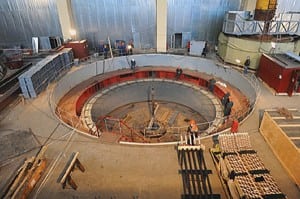
HydroSeven Charged in Siberian Hydropower Plant Accident
The Russian Investigative Committee has completed a probe into the August 2009 accident at the Sayano-Shushenskaya Hydro Power Plant in Siberia that killed 75 people. The committee has charged seven people—including the plant’s former head, Nikolai Nevolko, his deputies, and the plant’s former chief engineer, Andrei Mitrofanov—for violating safety rules. If found guilty, the officials could face five years in jail.
-
 Nuclear
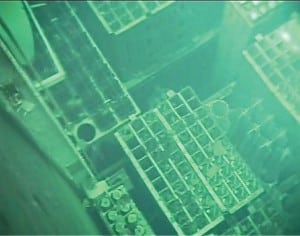
Recovery Efforts Continue at Fukushima Daiichi
In April, Japan’s Nuclear and Industrial Safety Agency provisionally raised the accident rating for three reactors at the crippled six-unit Daiichi nuclear plant in Fukushima Prefecture to Level 7—making it a “major accident” and putting it on par with the 1986 Chernobyl accident in the Ukraine. Recovery efforts continue at the nuclear plant with workers […]
-
 Nuclear
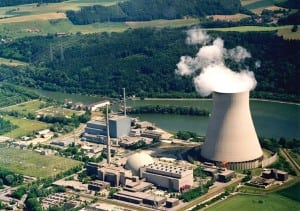
Germany Considers Accelerated Nuclear Exit on Fukushima Worries
In the wake of the devastating nuclear crisis afflicting the Fukushima Daiichi nuclear plant in Japan, Germany has embarked on an abrupt shift away from nuclear power, shutting down eight reactors for safety checks and ditching concerted efforts to keep nuclear power plants open in the long term. In mid-April, Chancellor Angela Merkel told reporters that leaders of Germany’s 16 states all want to “exit nuclear energy as soon as possible and make the switch to supplying via renewable energy.” The policy reversal has incited ardent opposition from the energy sector and industry.