
The U.S. Department of Energy (DOE) has launched the “Genesis Mission,” a national effort to build an integrated artificial intelligence (AI) platform across its 17 national laboratories. According to The White House, the initiative will “accelerate scientific discovery, strengthen national security, secure energy dominance, enhance workforce productivity, and multiply the return on taxpayer investment into research and development [R&D].” President Trump signed the executive order establishing the mission on Nov. 24, 2025, with the DOE announcing collaboration agreements with 24 organizations less than a month later on Dec. 18.
One of the Genesis Mission’s central ambitions is to “double the productivity and impact of American science and engineering within a decade”—a goal DOE leadership has compared in scale and urgency to other generational undertakings. “Throughout history, from the Manhattan Project to the Apollo mission, our nation’s brightest minds and industries have answered the call when their nation needed them,” U.S. Secretary of Energy Chris Wright said in a statement launching the mission on Nov. 24. “Today, the United States is calling on them once again.”
Building the American Science and Security Platform
At the heart of the Genesis Mission is the American Science and Security Platform, an integrated infrastructure that will connect the DOE’s 17 national laboratories, supercomputing resources, AI systems, and scientific instruments into what officials describe as potentially “the world’s most complex and powerful scientific instrument ever built.”
The platform will draw on approximately 40,000 DOE scientists, engineers, and technical staff, alongside private sector partners, and is designed to provide:
- High-performance computing resources, including national laboratory supercomputers and secure cloud-based AI computing environments.
- AI modeling and analysis frameworks, including autonomous agents capable of exploring design spaces and automating workflows.
- Domain-specific foundation models across multiple scientific disciplines.
- Secure access to federal scientific datasets—described in the executive order as “the world’s largest collection of such datasets.”
- Experimental and production tools enabling AI-augmented experimentation and manufacturing.
The executive order establishes an aggressive 270-day timeline for demonstrating initial operating capability of the platform for at least one national science and technology challenge.
Three Priority Areas
The Genesis Mission targets three broad challenge areas:
- American Energy Dominance. The initiative will apply AI to accelerate development of advanced nuclear power, fusion energy, and grid modernization technologies. The goal is delivering affordable, reliable, and secure energy for Americans while reducing dependence on foreign energy sources and supply chains.
- Advancing Discovery Science. Through investment and industry collaboration, the mission aims to build what the DOE calls “the quantum ecosystem that will power discoveries—and industries—for decades to come.” The executive order identifies six priority domains: advanced manufacturing, biotechnology, critical materials, nuclear fission and fusion energy, quantum information science, and semiconductors and microelectronics.
- Ensuring National Security. The DOE will develop advanced AI technologies for national security applications, deploy systems to ensure safety and reliability of the U.S. nuclear stockpile, and accelerate development of defense-ready materials.
Industry Collaboration Takes Shape
The Dec. 18 announcement formalized memorandums of understanding with 24 organizations spanning major technology companies, AI developers, and research organizations. Signatories include Amazon Web Services (AWS), Google, Microsoft, NVIDIA, OpenAI, Anthropic, IBM, Intel, AMD, and xAI, among others.
“Today’s announcement of 24 new research partnerships is only the beginning, as we deliver on President Trump’s mandate to bring the entire scientific community, including companies, universities, non-profits, and Federal agencies, into the Genesis Mission,” said Michael Kratsios, assistant to the President and director of The White House’s Office of Science and Technology Policy.
The DOE emphasized that products developed for the Genesis Mission will be “architecture-agnostic,” suggesting the department intends to avoid lock-in to any single technology provider’s ecosystem.
Dr. Darío Gil, DOE Under Secretary for Science and director of the Genesis Mission, said the platform would “uplift the entire U.S. R&D ecosystem.” Gil brings relevant experience to the role. He previously served as senior vice president and director of research with IBM. He was also a member of the President’s Council of Advisors on Science and Technology during the first Trump administration, where he chaired the Subcommittee on American Global Leadership in Industries of the Future, which covered AI, quantum information science, semiconductors, and related areas.
Early Implementation Underway
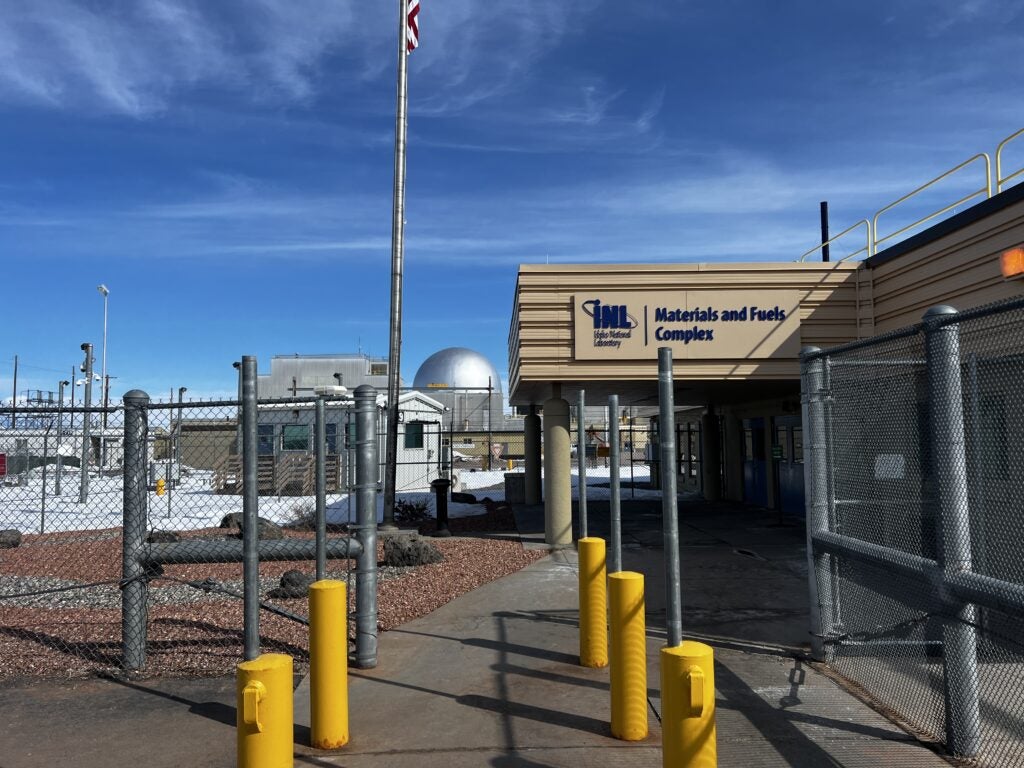
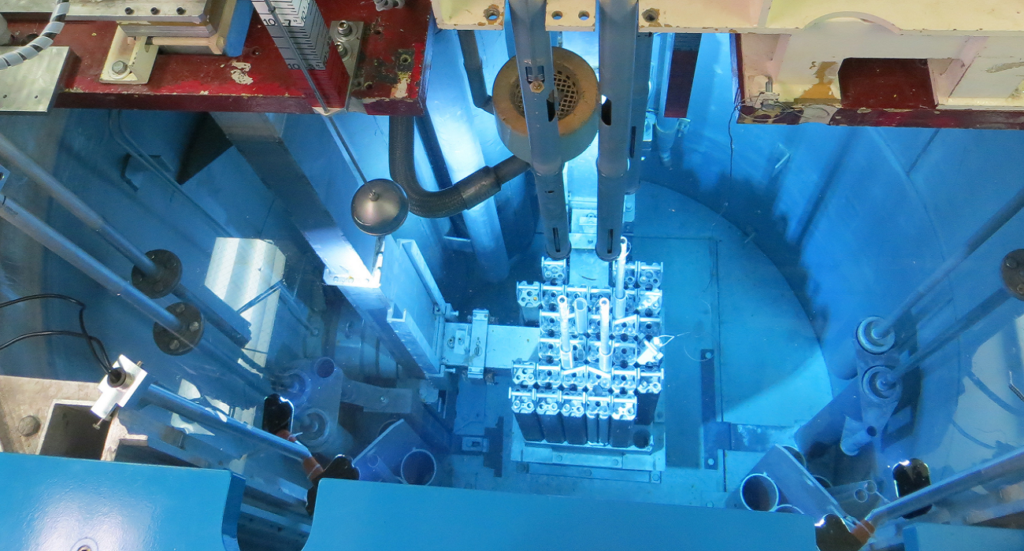
Some collaborations predating the formal Genesis Mission announcement are already demonstrating the initiative’s potential. Idaho National Laboratory (INL) and AWS announced a collaboration in July 2025 focused on accelerating development of advanced nuclear energy, including small modular reactors, using AI, cloud infrastructure, and digital twin technology.
According to a blog post by David Appel, vice president for Global Government, National Security, and Defense at AWS, INL has developed an initial prototype of an “AI-Powered Nuclear Reactor Design & Analysis Platform”—a cloud-native tool integrating specialized AI agents to assist engineers with complex nuclear engineering tasks, digital twin generation, and advanced simulation capabilities.
INL Director Dr. John Wagner was quoted as saying, “This collaboration with AWS is already changing how we approach nuclear innovation. With cloud-based AI at scale, we’ve already demonstrated capabilities that will lead to compressing design cycles that traditionally took years into months.” Wagner added that INL is “using these agentic AI capabilities today to accelerate the design and development process and advance autonomous reactor operations.”
Governance and Timeline
The executive order establishes a governance structure with the Secretary of Energy responsible for implementation within DOE, while the Assistant to the President for Science and Technology provides overall leadership and interagency coordination through the National Science and Technology Council. Key milestones mandated by the executive order include:
- 60 Days. Identify at least 20 science and technology challenges of national importance to be addressed through the mission.
- 90 Days. Identify federal computing, storage, and networking resources available to support the mission.
- 120 Days. Identify initial data and model assets, and develop a plan for incorporating datasets from federally funded research, other agencies, academia, and private-sector partners.
- 240 Days. Review capabilities across national laboratories and other participating federal research facilities for robotic laboratories and production facilities with the ability to engage in AI-directed experimentation and manufacturing.
- 270 Days. Demonstrate initial operating capability for at least one identified challenge.
The executive order does not specify funding levels, noting that implementation is subject to available appropriations. Annual reporting to the President is required beginning one year after the order’s signing.
Broader Policy Context
The Genesis Mission builds on several earlier Trump administration actions on AI policy, including the executive order “Removing Barriers to American Leadership in Artificial Intelligence” and “America’s AI Action Plan.” Officials have framed the initiative as essential to maintaining U.S. competitiveness against global rivals in the race for AI-driven technological leadership.
“The Genesis Mission represents the next great chapter and an unparalleled opportunity for America’s scientific and national security leadership,” said Brandon Williams, administrator of the National Nuclear Security Administration. “Under President Trump’s leadership, this mission will embody the very best of American ingenuity, turning science and innovation into security.”
The DOE continues to solicit industry interest through two open requests for information: “Partnerships for Transformational Artificial Intelligence Models” (open until Jan. 14, 2026) and “Transformational AI Capabilities for National Security” (open until Jan. 23, 2026).
—Aaron Larson is POWER’s executive editor.