
Wind
-
 Renewables
NREL Finds Greater Cycling from Renewable Penetration Does Not Significantly Increase Emissions
Much attention has been devoted recently to the increased cycling that is necessary in fossil plants as more renewable capacity is added to the grid, but data on the precise impacts has been slight. Now, a new study from the National Renewable Energy Laboratory (NREL) aims to correct that. The key findings: While cycling would increase […]
-
 Renewables
Groups: EIA Renewable Energy Data Doesn’t Reflect “Real World”
Nearly 100 renewable energy and environmental groups and businesses have asked the Energy Information Administration (EIA) to reevaluate renewable energy forecasts, alleging the agency’s projections don’t reflect “the current status and recent, real-world growth rates of renewables.” In a Sept. 10 letter to EIA Administrator Adam Sieminski, the coalition says the agency’s estimates in past […]
-
 Wind
WindDominion Wins Interior Dept.’s Federal Offshore Wind Auction
Dominion Virginia Power is the provisional winner of the Interior Department’s second competitive lease sale of federal land off the coast of Virginia to develop an offshore wind farm. The company bid $1.6 million to win the lease for 112,800 acres. In a statement on Wednesday, the Dominion subsidiary said it will use the land […]
-
 Renewables
The World’s Most Colossal Offshore Wind Farm Opens
The $2.9 billion London Array—the world’s biggest offshore wind farm—opened this July in the Outer Thames Estuary about 12 miles off the coasts of Kent and Essex. The 175-turbine installation is arranged
-
Gas
Hints of What’s Next from GE on the Technology Front
When Gary Leonard, General Electric’s global technology director for aero-thermal and mechanical systems technologies, spoke with POWER Contributing Editor Mark Axford at this year’s Gulf Coast Power
-
Renewables
NREL: Cost Gap for Wind and Solar Could Diminish without Subsidies in West by 2025
A new report from the National Renewable Energy Laboratory (NREL) suggests wind and solar generation could become cost-effective without federal subsidies if they are sited in the most productive locations. “It is too early to say how strong the post-2025 market for renewables will be or whether it will be primarily market-driven or policy-driven. In […]
-
 Renewables
RWE to Close 3.1 GW of Conventional Generation Across Europe on Profit Woes
Europe’s third-largest power provider on Tuesday announced it would take offline 3.1 GW of natural gas and coal power plants in Germany and the Netherlands, citing a “continuing boom in solar energy.” Echoing several European utilities, Germany-based RWE has underscored the declining profitability of fossil fuel–fired plants that it says is pegged to fundamental changes […]
-
Renewables
DOE: Wind Leads New U.S. Generation Additions in 2012
Wind power installations in 2012 represented a 43% majority of all new power capacity additions in the U.S. and accounted for $25 billion in U.S. investment, two new reports from the Department of Energy show. The Lawrence Berkeley National Laboratory (LBNL) released the “2012 Wind Technologies Market Report,” which details the latest trends in the […]
-
Wind
BOEM to Hold Wind Power Lease Sale for Area Offshore Virginia
The Bureau of Ocean Energy Management (BOEM) will hold its second competitive lease sale for renewable energy on the U.S. Outer Continental Shelf (OCS) offshore Virginia this September.
-
Coal
Comprehensive Diagram Charts Nation’s Energy Use and Waste
An updated energy flow chart released by the Lawrence Livermore National Laboratory (LLNL) that visually depicts the relative size of primary energy resources and end uses in the U.S., with fuels compared on a common energy unit basis, shows the nation consumed more natural gas and renewables but less coal in 2012.
-
Coal
EIA Projects Massive Growth for Renewables, Nuclear Power Through 2040
The U.S. Energy Information Administration’s (EIA’s) International Energy Outlook 2013 (IEO2013) released today projects that renewable energy and nuclear power will each increase 2.5% per year through 2040, but fossil fuels will continue to supply almost 80% of world energy use by 2040.
-
Coal
Binz to Be Nominated for FERC Chairman Position (Updated)
The Federal Energy Regulatory Commission (FERC) said on June 27 that President Barack Obama has announced his intent to nominate Ronald Binz as FERC commissioner. It had been widely anticipated that Binz would be named the new chair of the regulatory body.
-
Coal
Hawaii Power Companies to Deactivate Oil Plants, Ramp Up Renewables
Three Hawaiian power companies plan to deactivate a total of 226 MW of oil-fired generating units, convert remaining baseload plants to cycling duty, and substantially ramp up use of renewables by 2016.
-
 Solar
SolarPower Sector Laments Europe’s Uncertain Future Energy Policy
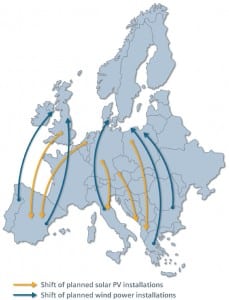
Energy policy in the European Union (EU) is in upheaval as concerns mount over the impact of energy costs on the competitiveness of the power industry.
-
 Coal
CoalIndonesia: Energy Rich and Electricity Poor
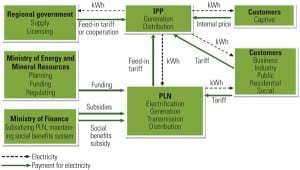
Even though it enjoys sizeable coal and natural gas reserves, Indonesia struggles to provide electricity to its growing economy. Geography is its most obvious challenge. Others include evolving international markets and an energy sector that remains highly politicized.
-
 Coal
CoalGas-Electric Integration “Swamps” All Other Issues
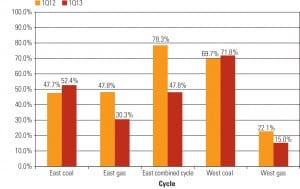
Panelists at the ELECTRIC POWER 2013 Keynote and Roundtable Discussion in Chicago in May were consumed by the need to ensure future reliability by more closely integrating the gas and electricity markets. Acknowledged less directly were distortions created by renewable energy subsidies and mandates, onerous regulations affecting coal, and “irreversible” demand destruction caused by the success of energy efficiency and demand management programs. The elephant in the room was the continued demise of electricity markets.
-
Wind
Wind Resources Face Market and Policy Headwinds
Natural gas prices and low wholesale electricity prices are creating headwinds for large-scale renewable projects such as wind.
-
Coal
Reactions to Obama’s Climate Action Plan Swift and Varied
Amid the deluge of reactions to President Obama’s June 25 speech announcing wide-ranging executive actions to curb carbon emissions and prepare for climate change effects were some unexpected statements.
-
Gas
IEA: Renewable Generation Could Surpass Global Natural Gas Share, Double Nuclear by 2016
Driven by the booming growth of generation from hydro, wind, and solar photovoltaics (PV), generation from renewables on a terawatt-hour basis is set to surpass that from natural gas and double nuclear’s share by 2016, becoming the world’s second-most important global electricity source after coal, according to a new report from the International Energy Agency (IEA).
-
Coal
Your Guide to the White House Climate Action Plan
President Obama’s highly anticipated Climate Action Plan (CAP) released today outlines a wide variety of executive actions founded on three pillars: slashing U.S. carbon pollution through stringent rules for new and existing power plants while doubling renewables deployment and promoting fuel switching from coal to natural gas; preparing the U.S. for impacts of climate change; and leading international efforts to combat global climate change.
-
Coal
Obama: Climate Strategy to Be Driven by Natural Gas, Renewables
President Barack Obama’s landmark speech on Tuesday outlining executive actions to combat and prepare for climate change backed the growth of natural gas and renewable power in lieu of carbon-heavy coal power, but he mentioned nuclear power only once—and only in the context of energy security.
-
Wind
Cape Wind Gets $200M Boost to Make Investment Decision This Year
Cape Wind, North America’s first offshore wind farm, got $200 million in conditional funding from a Danish pension fund on Tuesday to help it reach financial closure this year.
-
Solar
CORRECTED: Challenges to Order 1000 Filed in Federal Court as President Acts on Grid Modernization
Several power companies, state commissions, and trade groups have filed briefs with the U.S. Court of Appeals for the D.C. Circuit challenging parts of the Federal Energy Regulatory Commission’s (FERC’s) Order 1000, a rule they argue will lead to high costs for consumers and diminish the authority of state and regional regulators. Meanwhile last week, the White House issued a memo directing federal agencies to improve siting and permitting process to help modernize the nation’s grid.
-
Wind
Floating Offshore Wind Turbine Prototype Deployed Off Maine’s Coast
One of the first concrete-composite floating platform wind turbines in the U.S. was last week deployed off the coast of Castine, Maine. The project’s launch, led by the University of Maine (UMaine), is a milestone for a nation whose 4,000 GW of offshore wind energy potential lies in deep water—but has no grid-connected commercial offshore wind farms yet.
-
Wind
Another Offshore Wind Milestone: Interior Dept. Sets Auction of OCS Wind Leases
The Department of the Interior (DOI) Bureau of Ocean Energy Management (BOEM) will on July 31 put up for auction 164,750 acres offshore Rhode Island and Massachusetts for commercial wind energy leasing. The auction will be the first ever competitive lease sale for renewable energy on the U.S. Outer Continental Shelf (OCS) and it marks "the true beginning of an offshore wind market" in the U.S., experts said.
-
Coal
Australia’s New Energy Paradigm
Investments into Australia’s power sector enable the industry to meet the collective goal of becoming a cleaner, greener nation. Download the report.
-
Wind
North Dakota Wind Power Projects Could Add 686 MW of Capacity
Five companies have filed letters of intent with North Dakota’s Public Service Commission (PSC) outlining proposals to start construction this year on wind farms that would add almost 686 MW of wind power capacity.
-
Coal
WTO Body Confirms Ontario’s Local Content Rules for Renewables Are Discriminatory
Domestic content requirements that require some generators to source up to 60% of equipment from the Canadian province of Ontario under its feed-in-tariff (FIT) program are inconsistent with international trade rules, officials from the World Trade Organization’s (WTO’s) highest court said on Monday.
-
Coal
Hearing Panelists Assess Grid Reliability Challenges Posed by Nat. Gas, Renewables
Panelists at a House hearing today refuted varied claims concerning if and how increased natural gas and renewables generation pose widespread challenges to the reliability of the electric grid. Some pointed to ineffective rules in the restructured wholesale power market and the failure of conventional power plants as being more of a threat to grid reliability.
-
Wind
Gas Power Needs Wind Generation Too, Says Study
Gas-fired power is due to serve an important role in supporting intermittent renewable generation in the coming decades. But a new study suggests wind power may be able to return the favor—as a valuable hedging resource.