Waste to Energy
-
Commentary
Biogas: An Alternative Energy Source
Most professionals in the energy industry know about biomass; fewer of us are conversant with biogas. This commentary explains the basics of biogas, with a focus on its current use and future potential as a source of electrical power.
-
Waste to Energy
Waste Tire Power Generating Facility to Be Shuttered on CAA Violations
A 20-MW facility in Ford Heights, Ill., that burns waste tires to produce power is to be shut down to resolve allegations by the Environmental Protection Agency (EPA) of Clean Air Act violations.
-
Coal
Murkowski’s Energy Blueprint Presses All Measures for OPEC Oil Independence
An energy blueprint released on Monday by Sen. Lisa Murkowski (R-Alaska), the ranking minority member of the Senate Energy and Natural Resources Committee, calls for complete independence from OPEC oil by 2020.
-
Hydro
Report: U.S. Has Lost Edge in Global Renewables Race
Once a world leader in innovation and manufacturing of clean energy technologies, the U.S. now faces significant competitive challenges from Europe and Asia, and it lags behind other nations on measures that include renewables deployment, manufacturing, and innovation, a new report suggests.
-
Hydro
FERC Proposes Reforms to Diminish Barriers to Small Generator Interconnection
The Federal Energy Regulatory Commission (FERC) on Thursday proposed four reforms intended to reduce the time and cost to process transmission interconnection requests from generating facilities of 20 MW or smaller. The reforms would boost reliability by increasing energy supply and remove hurdles in the development of new renewable power sources, FERC said.
-
Coal
Virginia Moves to Repeal Incentives for Renewable Power
An agreement reached between the Virginia Attorney General’s office, Dominion Virginia Power, and Appalachian Power proposes to reduce financial incentives associated with the utilities’ generation of renewables and construction of new fossil fuel–fired power plants.
-
Waste to Energy
World’s Largest Biomass CFB Plant Goes Online
A 200-MW biomass power plant in Polaniec, Poland, that is owned by GDF Suez and began operations in November is being billed as the largest in the world to use a circulating fluidized bed (CFB) boiler.
-
Coal
Report: Fuel for Power Generation to Lead Energy Growth Through 2040
Fuel for power generation will account for about 55% of demand-related energy growth through 2040, ExxonMobil forecasts in its freshly released annual energy forecast. Like several other forecasters, the Irving, Texas–based oil and gas company also predicts that natural gas will emerge as the leading source of electricity generation by 2040. Among key findings in […]
-
 Waste to Energy
Vanadium Flow Battery Juices Onion Plant
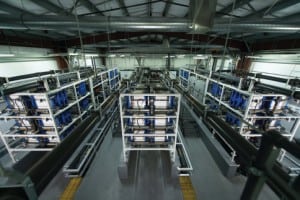
An emerging flow battery technology got a major boost earlier this year when Gills Onions, one of the largest fresh-cut onion processing plants in the world—began operating a 3.6-MWh vanadium redox battery (VRB) energy storage system (ESS).
-
 Waste to Energy
Largest Wastewater Treatment Fuel Cell Plant Goes Online
In October, Canadian biogas power producer Anaergia opened a 2.8-MW fuel cell system powered by cleaned and conditioned wastewater biosolids at a municipal water treatment facility in Ontario, Calif.
-
 Waste to Energy
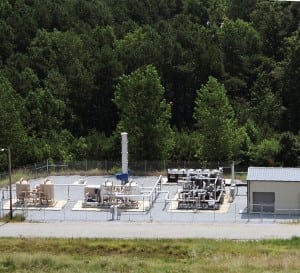
TOP PLANT: Coca-Cola/Mas Energy Trigeneration Facility, Atlanta, Georgia
By taking a waste product and converting it into a fuel source, the 6.5-MW Coca-Cola/Mas Energy Facility became the first U.S. operational trigeneration project fueled by landfill gas. Since March, the new system has provided electricity, steam, and chilled water to the adjacent Coca-Cola Syrup Plant, satisfying most of the plant’s energy requirements and reducing its long-term energy costs.
-
 Hydro
HydroRenewable Energy Development Thrives During China’s 12th Five-Year Plan
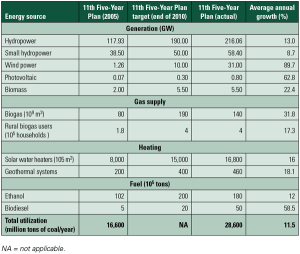
China’s 12th Five-Year Plan calls for expanding the use of renewable energy in all forms throughout the country. From solar and wind to biomass gas and briquettes, China has a true “all of the above” renewable energy policy.
-
Hydro
Hawaii’s Largest Wind Project Online as State Struggles to Integrate Renewables
On Monday, as First Wind announced its 69-MW Kawailoa Wind Project had gone into commercial operations on Oahu, other news underscored the difficulty the island state faces in trying to substitute renewables for expensive, imported fossil fuels.
-
History
FuelCell Energy Claims Largest Order in Industry’s History
FuelCell Energy Inc. on Monday announced an order from its South Korean partner, POSCO Energy, for 121.8 MW of fuel cell kits and services to be manufactured at the FuelCell Energy production facility in Torrington, Conn. The company said this represents the largest order for both its company and the fuel cell industry.
-
Hydro
Trend Shows Growth of Renewables on Contaminated Lands
Renewable energy projects installed on potentially contaminated lands, landfills, and mine sites have increased by 40% since 2008, a new list released last week by the Environmental Protection Agency (EPA) shows. Solar photovoltaic (PV) systems make up the bulk of about 184.7 MW installed at 60 sites in 25 U.S. states.
-
 Hydro
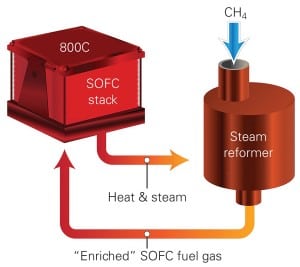
HydroMajor Developments for Solid Oxide Fuel Cells
Solid oxide fuel cells (SOFCs), which oxidize a fuel to produce electricity, have received much attention of late for the technology’s myriad benefits, including high efficiency, long-term stability, fuel flexibility, and low carbon emissions—all at a relatively low cost.
-
 Waste to Energy
Marmaduke Award: Combined Solar Technologies’ Hybrid Plant: Using Wastewater and Olive Pits to Produce Clean Water and Clean Energy
Combined Solar Technologies (CST) has designed, built, owns, and operates a water purification system located at the Musco Family Olive Co. facility in Tracy, Calif., that burns olive pits to purify highly saline wastewater through a distillation process while also producing electric power. For its pioneering approach, CST is the winner of POWER’s 2012 Marmaduke Award for excellence in plant problem-solving. The award is named for Marmaduke Surfaceblow, the fictional marine engineer and plant troubleshooter par excellence, whose exploits were chronicled in POWER beginning in 1948.
-
 Coal
CoalSafety Implications of Coal and Biomass Fuel Mixes
Practically everyone would agree that the energy policy of the U.S. is in a great state of flux. Not since the introduction of commercial nuclear power some five decades ago has our country come to such an energy crossroads. No matter what your political ideology, no one can refute that conventional coal-fired power plants are being paralyzed by recent and potential U.S. Environmental Protection Agency (EPA) regulations designed to cut the nation’s reliance on coal.
-
 Hydro
HydroUtility Perspectives on Ramping Up Renewable Power
Panelists at ELECTRIC POWER discussed how U.S. utilities choose renewable power generation technologies based on their geographic locations, state requirements, economics, and other criteria—including reliability and federal regulations.
-
 Coal
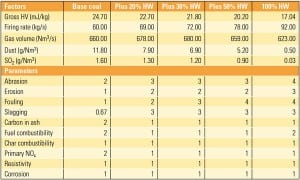
CoalNew Technologies Advance Biomass for Power Generation
As U.S. utilities seek to increase the percentage of carbon-neutral biomass used in their generation portfolios, they must deal with a number of complex challenges unique to this fuel source. Several breakthrough technologies are poised to help promote greater use of biomaterials.
-
Waste to Energy
Trash to Gas = Cash
Municipal landfills across the country have been quietly harnessing their methane emissions for years. But as the appetite for natural gas grows and the price of oil skyrockets, some creative sanitation departments are starting to make some real noise.
-
Legal & Regulatory
Can California’s Cap-and-Trade Program Turn Manure into Gold?
California’s Cap-and-Trade Program is the only cross-industry, market-based climate change regulatory program in the United States. This program may provide a good investment opportunity for dairy farmers, livestock owners, and others if the program’s Livestock Project protocol for offsets can get off the ground and maintain a viable price for greenhouse gas (GHG) allowances.
-
 Waste to Energy
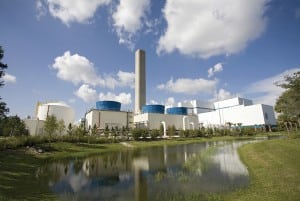
Waste-to-Energy Technology Options Increase but Remain Underutilized
WTE technologies offer cost-effective, near-term solutions for producing baseload electric power, meeting renewable energy targets, and reducing greenhouse gas emissions in the U.S. and other countries. They also present opportunities for improving resource management practices, increasing energy security, enhancing environmental quality, and supporting climate policy goals around the world.
-
 Waste to Energy
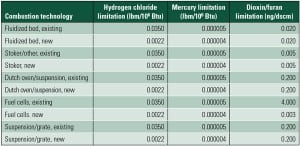
Has Boiler MACT Improved the Future for Biomass Power?
The impact of recently released air emissions regulations has stirred heated debate about forced coal plant closures and the possibility of reduced grid reliability in some regions. Biomass power may be an unexpected beneficiary of the new rules.
-
 Coal
CoalVietnam Works Hard to Power Economic Growth
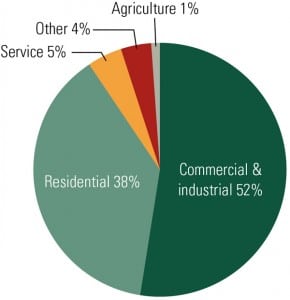
For the past 15 years, Vietnam has enjoyed enviable gross domestic product increases, averaging 7% annually. That kind of economic growth increases power demand, but financing new capacity remains a challenge. Reaching its ambitious capacity growth goals will require Vietnam to expand its financing and vendor base, attract foreign investment, and ensure future fuel supplies in a region thick with competition for those resources.
-
 Nuclear
The Big Picture: DOE Loan Guarantees
Of the $35.9 billion in loan guarantees awarded by the U.S. Department of Energy (DOE) since 2009, roughly $26.5 billion have financed nuclear and renewable power projects across the nation through the Section 1703 and 1705 loan guarantee programs.
-
Solar
The U.S. Military Gets Smart Grid
At home and abroad, U.S. military microgrid and smart grid projects are driven by energy security concerns. The pace of such projects, however, can be slow, and the potential for civilian grids to benefit from lessons learned and technologies developed for these important installations may be limited.
-
 Waste to Energy
The Big Picture: Big Biomass
The world’s biomass power facilities, not counting those in the pulp and paper industry, average just 18 MWe to 20 MWe. In the U.S., passage of the Public Utility Regulatory Policies Act of 1978 ignited development of many existing biomass plants. Greenhouse gas rules and renewable policies around the world have kindled a new generation of much larger biomass facilities. New announcements routinely are for plants 50 MW or larger, presumably to leverage economies of scale.
-
 Waste to Energy
Does Cow Power Pay Off?
Since a 2008 University of Texas-Austin study showed that converting farm animal droppings into renewable power could generate enough power to meet up to 3% of North America’s consumption, interest in cow power has been piling up.