Waste to Energy
-
 Renewables
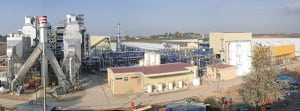
Termosolar Borges, Les Borges Blanques, Spain
You can’t spell C-S-P without S-P-A-I-N. Though there are now many nations with concentrating solar power (CSP) plants in operation, and nations with larger ones than Spain possesses, it’s difficult to
-
 Renewables
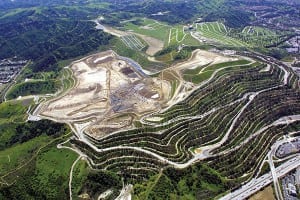
The Clean and Dirty of Landfill Gas Power
Despite its apparent environmental benefits and strong government backing, generating power from landfill gas hasn’t gained traction for a variety of reasons in the U.S. Will the Clean Power Plan bolster this “dirty” renewable power source? For the U.S. Environmental Protection Agency (EPA), the only clean thing about landfills—those engineered dumps that entomb America’s infinite […]
-
 Renewables
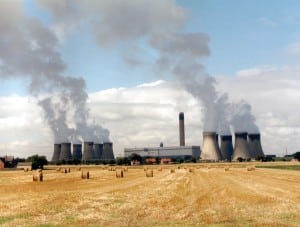
U.S. Senators: Biomass Should Not Be Compliance Method for Clean Power Plan
Biomass combustion should not be an approved compliance method under the Clean Power Plant because burning trees is not carbon neutral, both senators from Massachusetts told the Environmental Protection Agency (EPA) on Friday. In a letter to EPA Administrator Gina McCarthy, Sens. Ed Markey (D-Mass.) and Elizabeth Warren (D-Mass) said that treating bioenergy as having […]
-
 Waste to Energy
A Smoke-Ring Blowing Power Plant. April Fools? You Tell Us.
Copenhagen could inaugurate, as early as 2017, a new combined heat and power plant that features a roof-wide artificial ski slope open to the public and blasts smoke rings through a 124-meter chimney. The $611 million Amager Bakke plant is owned by five Danish municipalities and is being built by the Copenhagen-based waste management company Amager […]
-
 Gas
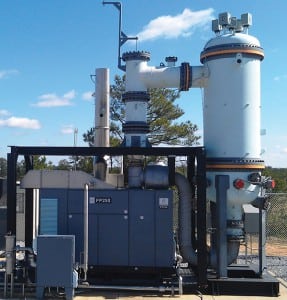
GasU.S., Netherlands Harness Waste Gases for Distributed Generation
Methane emissions are garnering increasing attention because of their potential impact on the climate. Though far less methane is released to the atmosphere than carbon dioxide, methane has 20 to 25 times the
-
 Renewables
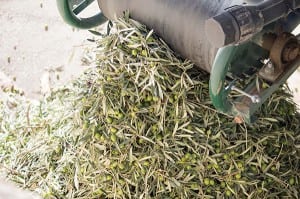
Pilot Launched to Convert Olive Oil Waste to Power
A pilot plant in Andalucía, Spain, built by a consortium of multinational European partners, is converting toxic waste from olive oil production into electricity using an innovative three-part process
-
 Renewables
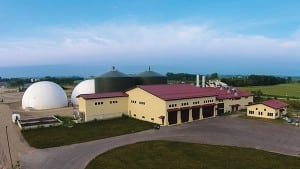
Top Plant: Hometown BioEnergy, Le Sueur, Minnesota
We’ve all heard the phrase “one man’s trash is another man’s treasure.” Hometown BioEnergy (HTBE) offers a case in point. The plant uses vegetable-processing waste and livestock manure in an
-
 Legal & Regulatory
EPA’s Proposed Revisions to Ozone Standards to Cost up to $15B Annually
The Environmental Protection Agency (EPA) on Wednesday proposed to revise the national ambient air quality standards (NAAQS) for ground-level ozone to a range of 65 to 70 parts per billion (ppb) and sought comments on a level as strict as 60 ppb. The proposed level applies to primary (health-based) and secondary (welfare-based) ozone standards, but […]
-
 Renewables
B&W to Spin Off Power Generation from Nuclear Business
On Nov. 5, The Babcock & Wilcox Co. (B&W) announced that its board of directors has unanimously approved a plan for the tax-free spin-off of the company’s power generation business to B&W’s shareholders, in the process forming two independently traded companies. In its third-quarter earnings call the following day, company executives emphasized that the two […]
-
 Legal & Regulatory
Southeast Asia’s Energy Juggernaut
Consensus is that the locus of world energy demand has shifted away from the U.S. and Europe to Asia, driven by the soaring economies of the 10 countries that make up the Association of Southeast Asian Nations
-
 Renewables
Treating WTE Plant Flue Gases with Sodium Bicarbonate
Sodium bicarbonate is an adsorbent that has been used for a relatively short time in industrial flue gas treatment (FGT) processes. This additive is especially interesting for operators of smaller
-
 Renewables
Utility Biomass Use: Turning Over a New Leaf?
If there is one truth to the power industry, it is that environmental regulations will only proceed down one path—that of stricter limits. Although legislatures and courts may argue over the issue for years
-
 Renewables
DOE to Open $4B More in Loan Guarantees for Renewables, Energy Efficiency Projects
The Department of Energy (DOE) plans to make an additional $4 billion in loan guarantees available to help commercialize U.S. renewable energy and energy efficiency technologies that avoid, reduce, or sequester greenhouse gases. The DOE on Wednesday issued a draft loan guarantee solicitation under Title XVII of the Energy Policy Act of 2005 (through Section […]
-
 Legal & Regulatory
Obama in SOTU: “All-of-the-Above” Energy Strategy Is Working
President Obama spoke briefly about energy in his State of the Union address on Tuesday night, though he declared at the outset: “The all-of-the-above energy strategy I announced a few years ago is working, and today, America is closer to energy independence than we’ve been in decades.” That statement rejected recently expressed concerns from 18 […]
-
 Waste to Energy
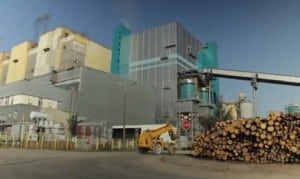
Polaniec Green Unit, Polaniec, Poland
Owner/operator: GDF SUEZ Energy Poland Historically, Poland has relied heavily on coal for electricity generation. International Energy Agency statistics show that coal generation accounted for 86.5% of total
-
 Renewables
CORRECTED: Germany Raises Renewables Levy by 20%
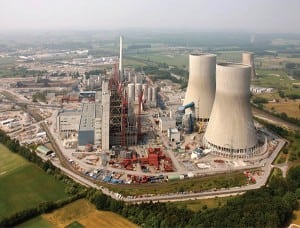
Germany’s levy to promote renewables under the 2008 Renewable Energy Act (EEG) will climb to €0.624/kWh in 2014—a 20% increase that represents nearly a fifth of residential electricity bills. The measure
-
 Hydro
HydroSenate Bills Kick Up New Efforts to Establish Federal Renewable Mandate
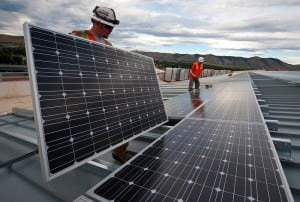
Legislative efforts to establish a federal renewable electricity standard (RES) kicked up last week with the separate introduction of two bills by Senate Democrats. Sens. Tom Udall (D-N.M.), Mark Udall (D-Colo.), and Ben Cardin (D-Md.) on Oct. 29 introduced the Renewable Electricity Standard Act of 2013 (S.1595), a bill that would create a national standard of 25% renewable energy […]
-
 Renewables
Germany’s National Election Sheds Little Light on Energiewende Future
A federation of Germany’s biggest companies last week called for urgent reforms to the country’s renewable energy strategy within the first 100 days of Chancellor Angela Merkel’s newly elected government, including abolishing feed-in-tariffs (FITs) that they say have sent power prices in the country soaring. Key points of the 19-page reform proposal submitted by the […]
-
 Renewables
Groups: EIA Renewable Energy Data Doesn’t Reflect “Real World”
Nearly 100 renewable energy and environmental groups and businesses have asked the Energy Information Administration (EIA) to reevaluate renewable energy forecasts, alleging the agency’s projections don’t reflect “the current status and recent, real-world growth rates of renewables.” In a Sept. 10 letter to EIA Administrator Adam Sieminski, the coalition says the agency’s estimates in past […]
-
Coal
Hawaii Power Companies to Deactivate Oil Plants, Ramp Up Renewables
Three Hawaiian power companies plan to deactivate a total of 226 MW of oil-fired generating units, convert remaining baseload plants to cycling duty, and substantially ramp up use of renewables by 2016.
-
 Coal
CoalIndonesia: Energy Rich and Electricity Poor
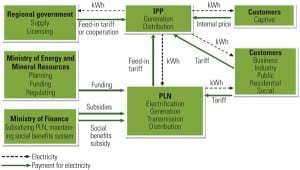
Even though it enjoys sizeable coal and natural gas reserves, Indonesia struggles to provide electricity to its growing economy. Geography is its most obvious challenge. Others include evolving international markets and an energy sector that remains highly politicized.
-
Coal
Reactions to Obama’s Climate Action Plan Swift and Varied
Amid the deluge of reactions to President Obama’s June 25 speech announcing wide-ranging executive actions to curb carbon emissions and prepare for climate change effects were some unexpected statements.
-
Gas
IEA: Renewable Generation Could Surpass Global Natural Gas Share, Double Nuclear by 2016
Driven by the booming growth of generation from hydro, wind, and solar photovoltaics (PV), generation from renewables on a terawatt-hour basis is set to surpass that from natural gas and double nuclear’s share by 2016, becoming the world’s second-most important global electricity source after coal, according to a new report from the International Energy Agency (IEA).
-
Coal
Hearing Panelists Assess Grid Reliability Challenges Posed by Nat. Gas, Renewables
Panelists at a House hearing today refuted varied claims concerning if and how increased natural gas and renewables generation pose widespread challenges to the reliability of the electric grid. Some pointed to ineffective rules in the restructured wholesale power market and the failure of conventional power plants as being more of a threat to grid reliability.
-
Hydro
Report: Global Renewable Investments in 2012 Tumble 11% as Market Shifts from West to East
Public and private investment in solar, wind, and other renewables worldwide declined 11% in 2012 from an adjusted 2011 record of $302 billion, a new survey from Pew Charitable Trusts shows. Yet the global renewable sector still registered a record 88 GW of new nameplate capacity last year, and China reclaimed the lead in global renewables investments from the U.S., it says.
-
Coal
Lawmakers Push for Financing Parity for Renewable Projects
Bipartisan legislation introduced on Wednesday by a bicameral group of lawmakers seeks to give renewable energy project investors access to an existing corporate structure whose tax benefits are now only available to investors in fossil fuel–based energy projects.
-
Renewables
The Spotlight on a Mexican Success Story
Energy demand in Mexico, according to the Secretary of Energy (SENER), will increase by approximately 4% each year for the next ten years, and with it the potential for private sector growth in the industry. Download the report.
-
 Waste to Energy
Expanded Honolulu WTE Plant Delivers Triple Benefits for Oahu
Covanta Energy and the City and County of Honolulu recently completed a $300 million expansion of a 20-year-old waste-to-energy (WTE) facility. The plant is now capable of processing up to 3,000 tons of municipal refuse daily, recycling all the metals, and generating up to 90 MW—enough to supply nearly 10% of Oahu’s electricity.
-
 Waste to Energy
Why Aren’t Construction and Demolition Wastes Considered Biomass Fuel?
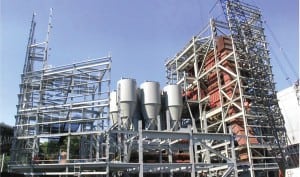
You may be surprised to learn that even with the increased demand for biomass fuels for power generation, construction and demolition fuel is classified as solid waste, not biomass. Reconsidering this designation is critical as U.S. environmental regulations tighten emission profiles for solid waste combustion units and renewable portfolio standards expand.