
Sustainability
-
 History
National Grid’s Evolution: Branching Out from Deep Roots
Rooted in the birth of the UK’s energy industry, National Grid’s operations have traversed critical periods of the energy industry’s tumultuous history. While it is today one of the world’s largest
-
 Sustainability
Consortium Exploring Ammonia Retrofit to GE Gas Turbines in Singapore
Singapore-based Sembcorp Industries, GE Vernova, and Japanese heavy industry firm IHI Corp. will jointly examine potentially retrofitting two GE 9F gas turbines at an 815-MW gas-fired combined cycle power plant in Singapore with ammonia capabilities. The companies on Oct. 25 revealed they signed a non-binding memorandum of understanding (MoU) to assess ammonia combustion capabilities at […]
-
 Interview
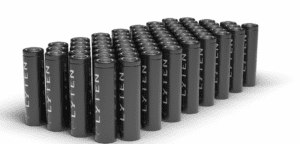
The POWER Interview: Transformative Technology Aims to Advance Decarbonization
Decarbonization of the U.S. power sector is bringing new technologies to the forefront, including an array of new battery types for energy storage, electric vehicles (EVs), and more. Lyten, a San Jose, California-based advanced materials manufacturer known for its Lyten 3D Graphene technology platform, along with other decarbonization materials, is moving forward with several projects. […]
-
 Commentary
AI Revolution Could Drive Clean Energy Future
Artificial intelligence (AI) is becoming a ubiquitous part of our lives, impacting much of what we do at work and home. AI’s growth trajectory is expected to skyrocket, with new potentials identified to help address and solve today’s challenges and tomorrow’s opportunities. AI advances have been remarkable, but so far relatively little attention has been […]
-
 Sustainability
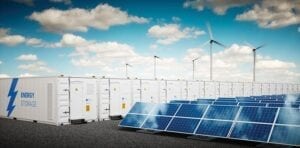
Five Key Transformations Required to Achieve Net-Zero in the U.S.
During President Biden’s first year in office, his administration published a document titled “The Long-Term Strategy of the United States: Pathways to Net-Zero Greenhouse Gas Emissions by 2050.” The document says all viable routes to net-zero involve five key transformations. They are: Decarbonize electricity. Electrify end uses and switch to other clean fuels. Cut energy […]
-
 Trends
Decommissioning Dilemmas: Navigating the End-of-Life Challenges in Clean Energy Sources
Planning, building, operating, or overhauling power plants has long been an emphasis in the power sector—and an important one, given that the creation of new power capacity plays an outsized role in
-
 Sustainability
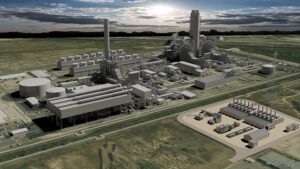
Engineering the Largest Post-Combustion Carbon Capture Plant
As part of the UK’s Humber Zero initiative, VPI Immingham’s gas-fired combined heat and power (CHP) plant will be home to the world’s largest post-combustion carbon capture facility. The Humber region is
-
 Commentary
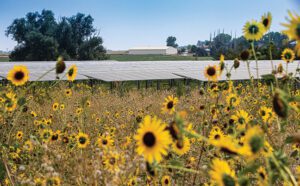
Equity in Energy: How Community Solar Is Involved
In the U.S., there has always been a direct correlation between the disparity in income and the distribution of renewable resources. Equity in energy refers to fairness in the distribution of energy, benefits, and burdens among different people and communities. It was designed to rectify historical inequalities, recognizing the need to create a fair and […]
Tagged in: -
 Legal & Regulatory
Environmental Justice: What It Is and Why It’s Important to Power Projects
The U.S. Department of Energy (DOE) defines environmental justice as: “The fair treatment and meaningful involvement of all people, regardless of race, color, national origin, or income, with respect to the development, implementation, and enforcement of environmental laws, regulations, and policies.” It says “fair treatment” means that no population bears a disproportionate share of negative […]
-
 Commentary
The Promise and Potential of Sustainable Fuels
In order to meet decarbonization goals and limit the impacts of climate change, national power systems need to reach 100% renewable power generation without delay. Renewables like solar and wind will be needed in vast amounts, alongside flexible technology solutions, such as engine power plants and energy storage, to balance the intermittency of these power […]
Tagged in: