
Plant Design
-
 Coal
CoalUsing an Optical PM CEMS with Wet FGD for MATS Compliance
Of the three ways to comply with the Mercury and Air Toxics Standards for particulate matter (PM) measurement, using an optical PM continuous emissions monitoring system (CEMS) also delivers valuable side benefits, especially for units using wet flue gas desulfurization (FGD). Editor’s Note: This issue was published before the June 29, 2015, ruling by the […]
-
 O&M
O&MContinuous Water Washing in Wet Electrostatic Precipitators Reduces Capital Cost in the Chinese Market
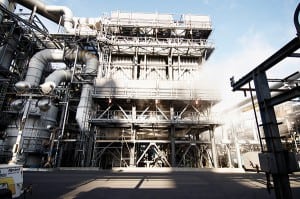
As the Chinese government lowers the particulate matter (PM2.5) limits to 5 mg/Nm3 or less in coal-fired power plants, wet electrostatic precipitators are one of the key environmental components utilities select to meet this requirement. Optimization of continuous water washing of electrodes allows lower-cost alloys to be used, reducing capital expenditures. Wet electrostatic precipitators (WESPs) […]
-
 Coal
CoalCanada’s SaskPower Opens Carbon Capture Test Facility
SaskPower, the Saskatchewan provincial utility that made history last year by developing the first full-scale post-combustion carbon capture retrofit for an operating coal-fired power plant, has taken the next step in fostering development of the technology. Its Carbon Capture Test Facility (CCTF) has officially been launched in Estevan, Saskatchewan. The June 18 launch was attended […]
-
 Plant Design
ARPA-E Announces $60 Million in New Funding
The Department of Energy’s (DOE’s) Advanced Research Projects Agency-Energy (ARPA-E) on May 14 announced $60 million in funding for 23 new projects to foster new technologies in dry cooling and fusion power. The Advanced Research In Dry cooling (ARID) initiative, one of ARPA-E’s newest projects, will provide $30 million to support 14 project teams developing […]
-
 Coal
CoalThe Carbon Capture and Storage R&D Frontier
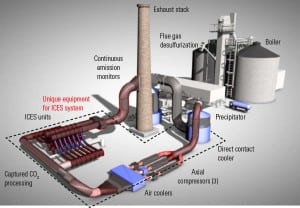
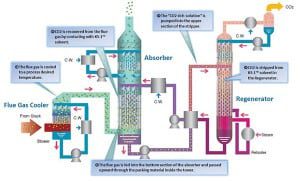
Given the costs and other concerns about currently available technologies for capturing and storing carbon dioxide from fossil-fueled power plants, interest in new technologies remains high. Here’s a look at some potentially promising approaches that are advancing the technology frontier. Frontiers represent the boundary between the known and the unknown. As researchers attempt to push […]
-
 Coal
CoalCCS Development, the Key to Coal Power’s Future, Is Slow
Advocates for the continued reliance on coal for baseload electricity cheered late last year when North America’s largest power-related carbon capture and sequestration (CCS) facility was commissioned. Since then, that pool of advocates is evaporating as prominent electricity industry decision-makers publicly distance themselves from coal and champion alternatives for a low- or no-carbon future. If […]
-
Commentary
In a Word, Storage
What turns a trend from trendy to established? In the energy industry it can be any number of things, from a technology breakthrough, to a new market, to forces of nature. The shale gas boom in the U.S. is the most well-known example of a technology trend that has changed the economics for all power […]
-
 O&M
O&MInnovative Pipe Conveyors: Effective, Efficient, and Environmentally Friendly
Transporting household and industrial waste as well as sewage sludge from a treatment plant to a power station can be a messy business. The utility company Linz AG found that a pipe conveyor system offered an optimal solution. The conveyor is not only highly energy efficient, but due to its closed design, it also allows […]
-
 Nuclear
China’s Hualong One Reactor Design Gets Argentine Boost
Argentina’s Ministry of Federal Planning in early February signed an agreement with the National Energy Administration of China and China National Nuclear Co. (CNNC) to build Argentina’s fourth nuclear reactor, an 800-MW CANDU design, on the site of the existing Atucha nuclear power plant. Under the agreement, Nucleoeléctrica Argentina—holder of the rights to Canadian CANDU […]
-
 Gas
GasAre Simple Cycles or Combined Cycles Better for Renewable Power Integration?
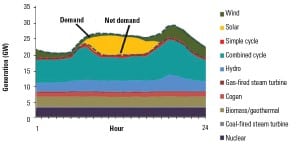
It’s been called “filling the duck pond,” and it’s the increasingly common challenge worldwide of balancing supply and demand when variable renewables are not feeding power to the grid. Gas-fired generation is often filling the pond, but the technology mix matters. The growing portfolio of renewable power generation around the world has made the selection […]
-
 Environmental
Save Power with Natural Cooling for Building Ventilation
With the final Clean Power Plan rule covering existing power plants scheduled for release this summer, and the amount of flexibility that has been afforded to the states to meet emissions targets, states have
-
 Gas
GasProtecting Steam Cycle Components During Low-Load Operation of Combined Cycle Gas Turbine Plants
Originally, the modern combined cycle gas turbine (CCGT) unit was developed to act as a largely baseload source of generation due to its high thermal efficiency and low initial capital cost. But as markets
-
 Renewables
New Zealand’s Geothermal Industry Is Poised for the Future
Contact Energy fully commissioned New Zealand’s largest geothermal power plant last year, nudging installed geothermal capacity to a shade over 1 GW. Nearly 80% of the country’s electricity is sourced from
-
 Renewables
ARPA-E Summit Takes the Pulse of Energy Technology Innovation
“The coolest thing on Earth” is, according to its new director, a young federal agency that has a unique focus on pushing technology frontiers and an “unblinking attention” to market realities. One thing you can say for sure about the energy world, said Dr. Ellen Williams (Figure 1), incoming director of ARPA-E (Advanced Research Projects […]
-
 Renewables
The Outlook for Small Hydropower in China
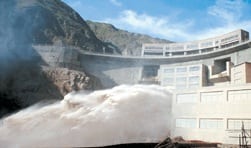
As the global electric power industry continues to develop clean, high-quality energy capacity for sustainable development, the position of small hydropower has changed. In the past few decades, small hydropower development in China has experienced positive momentum, but there are still problems to be solved. To solve these problems, various relationships within the small hydropower […]
-
 Instrumentation & Controls
Utilizing 3-D Virtual Reality Visualization for Efficient Power Projects and Training
The global power industry is becoming increasingly complex. Trends toward greater amounts of variable renewable energy are changing the requirements for conventional power plants. Energy market policies are
-
 Coal
CoalAlstom Reports Major Boost for Advanced Ultrasupercritical Technology
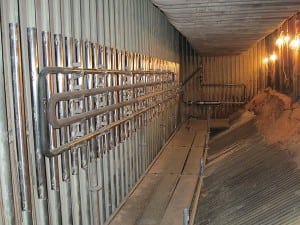
The trial operation of a steam loop for more than 17,000 hours at temperatures exceeding 760C (1,400F)—the highest ever tested at a pulverized coal plant—have wrapped up at Plant Barry Unit 4 in Alabama
-
Gas
Labor Crunch Complicates the Gas Turbine Arms Race
The rate of introduction of new gas turbine products has accelerated, and the speed of change creates challenges for engineering, procurement, and construction (EPC) contractors who are also coping with a
-
 Nuclear
Small Modular Reactors Speaking in Foreign Tongues
Almost a year ago, workers began pouring concrete for the basemat of the first small modular reactor (SMR) in the western hemisphere. Despite the hype over SMRs in the U.S., with hundreds of millions of
-
 O&M
O&MPoint Level Capacitance Switch for Fly Ash Hopper Measurement
If you’re the person tasked with controlling the level of fly ash in collection hoppers, you know how difficult the application can be. What at first looks like a simple measurement quickly proves to be much more demanding in actual execution. The first problem is the environment inside the collection hoppers, which is extremely challenging […]
-
 O&M
O&MGaining Control with Electraulic Actuators
Plant engineers at Eskom’s Majuba Power Station in South Africa have been continuously looking for ways to improve efficiency and reliability. The six-unit, 4,000-MW, supercritical coal-fired plant was experiencing an efficiency decrease of 5% to 7%, which plant engineers determined was caused by poor performance of the actuators on their condensate level control valves (CLCVs). […]
-
 Legal & Regulatory
World’s First Post-Combustion CCS Coal Unit Online in Canada
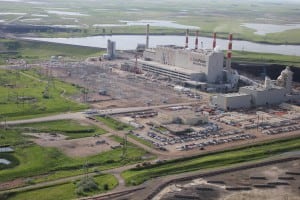
The first full-scale commercial post-combustion carbon capture and sequestration (CCS) project at an operating coal-fired power plant is now online in Estevan, Saskatchewan, roughly 10 miles north of the U.S. border. The heart of the $1.4 billion project at Boundary Dam Power Station is the rebuilt 110-MW Unit 3, originally commissioned in 1970. The project, […]
-
 Coal
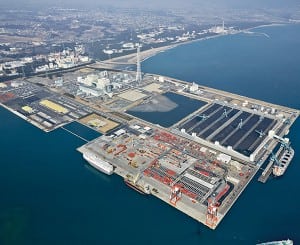
CoalHitachinaka Thermal Power Station Unit 2, Tokai, Ibaraki Prefecture, Japan
Bad weather, unforeseen setbacks, and even natural disasters are far from unheard of during power plant construction. But there may be no plant that experienced the sort of construction hardships that Tokyo
-
 Legal & Regulatory
EPA: Malfunctions Will No Longer Shield Plants from Emissions Penalties
Affirmative defense provisions can no longer insulate generators from monetary penalties for Clean Air Act violations that result from facility startup, shutdown, and equipment malfunction, the Environmental Protection Agency (EPA) has proposed. In a supplemental notice of proposed rulemaking (SNPR) published on Sept. 17 in the Federal Register, the agency proposes to revise its February […]
-
Plant Design
How to Design the Collector Pipe for Condensate Return Lines
While several methods exist for sizing collector pipes on steam lines, the results obtained from the various approaches can be quite different. This article will show how design parameters can be used to calculate the dimensions much more accurately. In the steam lines of thermal and nuclear power plants, condensed steam is usually discharged from […]
-
 Coal
CoalWATER AWARD: Jeffrey Energy Center’s Constructed Wetland Treatment System
U.S. coal power plants are finding that they need to comply with an increasing number of stringent environmental regulations, and while nobody in any industry looks forward to additional regulatory burdens
-
 Nuclear
Welding and Fabrication Innovations Mitigate Reactor Pressure Vessel Embrittlement in Nuclear Plant Construction
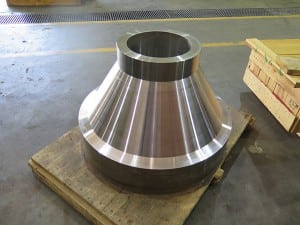
Reactor pressure vessel (RPV) shells in the existing U.S. fleet of nuclear power plants were typically constructed by forging ring segments from ingots of low-alloy steel offering sufficient fracture toughness
-
 Gas
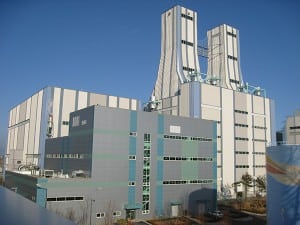
GasMARMADUKE AWARD: KOMIPO Relocates an Entire Combined Cycle Power Plant
Power plants are, with good reason, almost universally regarded as fixed assets to be operated, maintained, and retired on the spot where they were built. The idea of relocating something as large and
-
 O&M
O&MSite-Specific Factors Are Critical for Compliance with Final 316(b) Existing Facilities Rule
On May 16, 2014, the Environmental Protection Agency (EPA) is scheduled to release its long-delayed final 316(b) rule for existing facilities. The rule—which was supposed to have been issued Apr. 17 after
-
 Gas
GasRecent Innovations from Gas Turbine and HRSG OEMs
There is no hotter market in power generation than gas. According to the Energy Information Administration (EIA), the U.S. is projected to add just under 60 GW of new generating capacity between 2013 and 2017