
News
-
Solar
Solar Thermal Power Plant Project Halted in California
Pacific Gas & Electric (PG&E) canceled plans to buy power from two planned BrightSource Energy Inc. 250-MW solar thermal plants on the same day that BrightSource asked regulators to suspended permitting for the $2.7 billion project in California’s Inyo County.
-
Coal
IGCC Power Plant Will Not Seek DOE Loan Help
Southern Co. has withdrawn plans to seek a $1.5 billion federal loan guarantee for the 582-MW lignite-fired integrated gasification combined cycle (IGCC) power plant its Mississippi Power Co. unit is building in Kemper County.
-
Coal
NV Energy Proposes to Exit Coal Power Generation Early
Nevada power company NV Energy Inc. has proposed a plan to accelerate the retirement of its coal-fired generating facilities and the construction of natural gas and renewable power plants.
-
Nuclear
One Dead, Eight Hurt in Accident at Arkansas Nuclear One
An accident at Entergy’s Arkansas Nuclear One station near Russelville, Ark., left one worker dead and eight injured Sunday morning. The accident involved the 836-MW Unit 1, which was in a refueling and maintenance outage at the time. The 987-MW Unit 2 was operating but tripped offline and was reported to be in a stable mode. No nuclear material was released.
-
Coal
EPA, DOJ Settle with Dominion Energy on CAA Violations
The U.S. Department of Justice (DOJ) and the Environmental Protection Agency (EPA) announced on Monday that Dominion Energy has agreed to pay a $3.4 million civil penalty and spend approximately $9.8 million on environmental mitigation projects to resolve Clean Air Act (CAA) violations.
-
Coal
Wyoming Coal Power Project Granted Extension
The Wyoming state Industrial Siting Council has approved an amended permit for the $800 million, 300-MW Two Elk coal-fired power plant, which was first proposed in 1996 but has yet to break ground.
-
Coal
Fire Knocks Out Ukrainian Coal Plant
The 3,600-MW Vuhlehirska Thermal Power Plant in Svitlodarske, Ukraine, was heavily damaged on Mar. 29 by a fire that killed one worker and seriously injured at least eight others. Four units at the seven-unit coal-fired plant were destroyed, and the region was temporarily without power and heating.
-
Business
Engineering Group Gives U.S. Energy Infrastructure a D+
In its 2013 report on the state of U.S. infrastructure, the American Society of Civil Engineers (ASCE) gives the energy sector a grade just shy of failure. In its previous report, in 2009, the ASCE also gave energy a D+.
-
Coal
EPA Updates MATS for Power Plants
The U.S. Environmental Protection Agency (EPA) on March 28 finalized updates to emission limits for new power plants under the Mercury and Air Toxics Standards (MATS). The rule includes emission limits for mercury, particulate matter (PM), sulfur dioxide (SO2), acid gases, and certain individual metals.
-
Nuclear
SCE Seeks License Amendment to Hasten San Onofre Restart
Apparently, deciding that half a loaf is better than none, Southern California Edison (SCE) on Monday submitted a draft proposal for a voluntary license amendment to the Nuclear Regulatory Commission (NRC) for the troubled San Onofre Nuclear Generating Station (SONGS), in hopes of salvaging its plan for a five-month limited-power restart test. The move appeared to be in response to pressure from local groups seeking to keep the reactor shut down.
-
News
America’s Growth Corridors
The familiar Red State–Blue State map is a symbolic means of quickly communicating political preferences. The maps aren’t meant to be predictive of job, economic, or population trends, yet a recent think tank’s report suggests the metaphor may have broader significance.
-
 News
NewsCompact AC Tachometer Generators
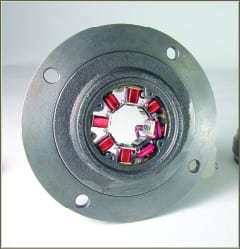
The ATC DigiTec Division of Marsh Bellofram Corp. launched its highly compact 758-GF86/XF86 series of industrial open-face AC tachometer generators, part of its WESTCON product family. The tachometers are designed primarily for use on shaft ends to measure speeds of up to 100,000 rpm and extremely low torque burdens of less than 1 ounce-inch. Designed […]
-
 News
NewsShaft Alignment Phone/Tablet App
LUDECA released a new version of its “Laser Align” mobile application. The application provides a free reference tool for shaft alignment of rotating equipment. It allows users to access important reference material and learn about key laser shaft alignment concepts, and it now has an interactive “Tolerance Table.” When users input their machine’s revolution per […]
-
 News
NewsHigh-Capacity Safety Valve
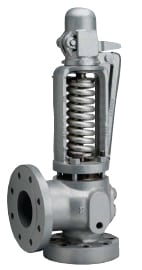
Pentair Valves & Controls’ newly introduced Crosby HCI ISOFLEX is a high-capacity safety valve to help power plant operators reduce lifecycle costs and minimize shutdown periods. The valve ensures cost-effective power plant operation with a unique full-nozzle, flanged design and adjustable lift option that reduces maintenance costs while maximizing plant efficiency. Specifically designed for 300 […]
-
 News
NewsNew Abrupt Arched Expansion Joint
The new Garlock 204 EPS (extreme pressure service) abrupt arched expansion joint is now available for applications where necessary rated pressures exceed those of the Garlock Style 204 and 204 HP designs. Fully customizable and available in concentric or eccentric designs, the expansion joint features a seamless tube to ensure a reliable seal from flange […]
-
 News
NewsVersatile Boiler Inspection Light
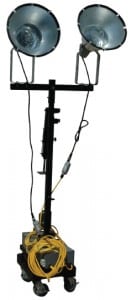
Larson Electronics announced the release of a boiler inspection light with folding boom designed to provide versatile deployment capabilities and high-output illumination. The WALBL-2X1000WMH Boiler Light features a right-angle extension arm, wheeled base, and a pair of 1,000-W metal halide lamps for effective illumination during the servicing and maintenance of boilers and tanks. The boiler […]
-
 News
NewsPV Panel Surge Protection Devices
The ABB Low Voltage Products division released a line of OVR PV UL 1449 3rd Edition, pluggable DC DIN Rail surge protection devices (SPD) specifically designed for photovoltaic (PV) applications. The new SPDs protect solar panels from damage from direct and indirect lightning strikes, which solar panels are especially susceptible to because of their large, […]
-
Business
CPUC Blocks SDG&E Power Purchase Agreements
The California Public Utilities Commission (CPUC) last week directed San Diego Gas & Electric (SDG&E) to procure up to 298 MW of local generation beginning in 2018, and authorized the utility to enter into a purchase power tolling agreement with Wellheads’ Escondido Energy Center. It declined, however, to let the utility enter into similar agreements with two gas generators, because they were bound to be delayed.
-
Nuclear
NuScale to Seek Federal Funding for Small Modular Reactor
NuScale on Wednesday announced it would seek federal funding to accelerate deployment of the company’s small modular reactor technology, saying it would submit a letter of intent in response to a funding opportunity announcement (FOA) announced by the Department of Energy (DOE) earlier this month.
-
News
NYISO Deems Reliability in New York Safe—With Caveats
A reliability plan approved by the board of directors of the New York Independent System Operator (NYISO) on Friday concludes that additional transmission and generation resources will be needed during the study period (2013–2022) to meet system reliability criteria, but several factors could raise new impacts on reliability. These include retirement of more generation units for economic or environmental reasons, or if the Indian Point reactor’s licenses were not renewed.
-
Nuclear
ASLB Upholds Environmental Impact for Proposed Levy County Reactors
The Nuclear Regulatory Commission’s (NRC’s) Atomic Safety and Licensing Board (ASLB) on Tuesday rejected challenges by environmental groups to Progress Energy’s application to license two new nuclear plants in Levy County, Fla.
-
News
Seven EU Members Faulted for Breaching NOx, SO2 Emissions Ceilings
Seven European Union (EU) member states exceeded the EU National Emissions Ceiling (NEC) Directive air pollutant limits in 2011, the European Environment Agency (EEA) said last week. The European Commission is reportedly considering initiating infringement proceedings against the countries for exceeding emissions limits for nitrogen oxides (NOx), sulfur dioxide, volatile organic compounds, and ammonia.
-
Nuclear
Entergy Responds to NRC Claim that Palisades Nuclear Plant at Risk of Pressurized Thermal Shock
Responding to a recent claim by the Nuclear Regulatory Commission (NRC) that the Entergy’s Palisades nuclear power plant is at risk of pressurized thermal shock., the Louisiana-based company said the plant "is a safe and secure facility [and has a] license to operate … through 2031."
-
Nuclear
New SONGS Evaluation Concludes Unit 2 Can Be Operated at 100% Power
Southern California Edison (SCE) on Friday released a new technical evaluation that concludes steam generators at its San Onofre Nuclear Generating Station (SONGS) Unit 2 can safely be operated at 100% power. The evaluation reinforces a more conservative plan proposed by the company to federal regulators to operate the unit, which has been shut down since January 2012, at 70% for five months.
-
Solar
Environmental Groups Remonstrate Against U.S. Challenge of India’s Solar Domestic Content Rules
A dozen environmental groups on Wednesday called on the U.S. Trade Representative to reconsider a World Trade Organization (WTO) challenge to domestic content rules and subsidies in India’s national solar program, urging it instead to agree to a solution that allows India to support and build its domestic solar industry.
-
Solar
SEIA: Despite Decrease in Imported Chinese Modules, 2012 Was a Banner Year for Solar PV
Despite a sharp decrease of Chinese solar module shipments that are now subject to U.S. tariffs, solar photovoltaic (PV) prices continued to fall and installations nationwide grew 76% over 2011 to reach a total nameplate capacity of 3,313 MW in 2012 and an estimated market value of $11.5 billion, a new report from industry group Solar Energy Industries Association (SEIA) shows.
-
Nuclear
NRC Delays Action on Vent Plan, Directs Staff to Study Options
The Nuclear Regulatory Commission (NRC) on Tuesday delayed approving a recommendation made by technical staff that calls for upgrades or replacements of "hardened" venting systems at the nation’s 31 Mark I and Mark II boiling water reactors (BWRs), giving staff a year instead to assess other options and produce a "technical evaluation" on the proposal.
-
Coal
Senate Democrats Urge Obama to Amend EPA’s GHG Rules for New Coal Plants
In a letter to President Obama last week, four Senate Democrats expressed "continued concern" about the Environmental Protection Agency’s (EPA’s) plans to issue greenhouse gas (GHG) new source performance standard (NSPS) rules for new fossil fuel-fired power plants. The proposed rules could ban "new state-of-the-art" plants from being built and hamper advancements that could benefit the nation’s coal power sector, the senators argued.
-
News
Explosion Rocks Long Beach after Steam Pipe Rupture at Gas Plant
An explosion caused by a steam pipe rupture at the natural gas-fired AES Alamitos Generating Station rocked a neighborhood in Long Beach, Calif. on Wednesday morning. No injuries were reported.
-
Smart Grid
AeroVironment Gets Commercial License for DOE-Developed EV Frequency-Responsive Tech.
The commercial license agreement for a frequency-responsive technology that tells an electric vehicle’s (EV’s) battery charger when to start and stop charging based upon existing conditions on the electric grid has been reached between developer Pacific Northwest National Laboratory (PNNL) and AeroVironment Inc. The technology could boost widespread adoption of plug-in EVs and support the integration of variable renewable sources while alleviating concerns about grid stability.