
Markets
-
Commentary
Yesterday’s Retail Tariff and a Transforming Grid
Yesterday’s retail tariff is prohibiting the optimal dispatch of cogeneration resources as our grid is transforming with high levels of solar generation and potential overgeneration issues. An Unintended Consequence of Policy California has some of the most ambitious energy efficiency and renewable energy goals in the world. Investments in renewable energy and other clean energy […]
-
 Coal
CoalAEP Sells Competitive Natural Gas, Coal Power Plants
American Electric Power (AEP) has sold four competitive natural gas and coal power plants‚ a total of 5.2 GW, and plans to invest the proceeds from the sale in its regulated business. AEP completed the sale of the plants to Lightstone Generation LLC, a joint venture of Blackstone and an affiliate of ArcLight Capital Partners […]
-
 Nuclear
Non-Utility Power Generators Push FERC on State Nuclear Subsidies
Non-utility generators urge FERC to overturn state actions in New York and Illinois that the generators claim distort FERC’s wholesale electricity markets.
-
 Legal & Regulatory
Deal Reached to Permanently Close Indian Point Nuclear Plant
Entergy Corp. and the state of New York have reached an agreement that will see the Indian Point nuclear power plant retired by 2021. “Key considerations in our decision to shut down Indian Point ahead of schedule include sustained low current and projected wholesale energy prices that have reduced revenues, as well as increased operating […]
-
 Gas
GasU.S. LNG Exports Surge in 2016—But Not Where They Were Expected [Updated]
The U.S. took a big step toward becoming a major exporter of liquefied natural gas (LNG) in 2016 as Cheniere Energy’s Sabine Pass export terminal in Louisiana came online early last year and upgrades to the Panama Canal that opened in June made shipments to the Pacific region considerably easier. Data from the Department of […]
-
 Coal
CoalCoal-Fired Navajo Station Could Close This Year
The 2,250-MW Navajo Generating Station near Page, Ariz., and the associated Kayenta coal mine may close in 2017.
-
 Commentary
Designing an Electric Power System from Scratch
The Smart Electric Power Alliance (SEPA) launched its 51st State Initiative in 2014 with a simple question: What if there were no predefined electricity market? No rules. No market designs. No policies. No subsidies for any type of energy resource. Just a grid to deliver electric power from a variety of sources. And customers. Plenty […]
-
 Legal & Regulatory
Energy Policy Implications of Elections in France and Germany
Just as the election of Donald J. Trump could result in redirected energy policy in the U.S., 2017 elections in France and Germany could reshape plans for electricity infrastructure on the European continent. Also on both continents, some factors and trends will be out of elected officials’ control. “Difficult to see. Always in motion is […]
-
 International
A 2016 Roundup of Power Sector Wheeling, Dealing, and Repositioning
The past year saw an astonishing number of mergers, acquisitions, and business reconfigurations of electricity and energy companies, without any obvious organizing theory. Is it possible to make sense of the activity, or is it just business Brownian motion—aka, random behavior? Gas companies spun off power generating assets. Power companies sold offshore businesses. Independent generators […]
-
 Coal
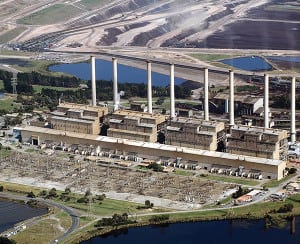
CoalMarket Conditions Force Coal Unit Closures in Australia, Germany
Difficult market conditions have accelerated the much-hyped closures of a string of coal-fired power units in the U.S., but the phenomenon is extending overseas, gripping plants in Australia and Germany. In the wake of the Paris agreement in December 2015, a number of governments have moved to phase out coal-fired generation. This October, France, which […]
-
Renewables
POWER Digest
Japanese Firms Poised to Build Two 540-MW IGCC Plants Based on Nakoso Technology. A consortium of Japanese firms on December 1 said they had received full-turnkey orders for two integrated gasification
-
 Legal & Regulatory
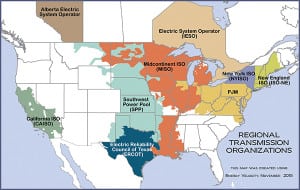
U.S. Electric Markets in Transition
The U.S. market for electricity is trifurcated. More than half the country is served by competitive generators bidding against each other in wholesale markets. Almost half is served by conventional state-regulated, vertically integrated utilities controlling generation and transmission. The rest, a much smaller portion, consists of government-owned and customer-owned utilities, some of which are generators […]
-
 Legal & Regulatory
A Look Back at 2016: The Year of Transition
A tumultuous election year that was marked by market turmoil, the events of 2016 clearly showed that big change is afoot for the power sector. Many of POWER‘s bold predictions for 2016, such as that the near-simultaneous surge in U.S. natural gas production and recent enactment of environmental rules would reshape the U.S. power sector, […]
-
 Coal
CoalU.S. Coal Fleet Continues Contractions Despite Looming Changes in Policy
Some of the U.S. coal market’s own product wound up in its stocking this Christmas season. Despite hope from the election of Donald Trump and a potential shift toward more coal-friendly energy policies, coal plant owners across the country continued the trend toward shutdowns and reduced operations that have marked the past few years. Coal […]
-
 Gas
GasCalifornia Merchant Gas Generator, Lamenting Market Forces, Files for Bankruptcy
The owner of a merchant 1,022-MW combined cycle natural gas–fired power plant in California has filed for bankruptcy protection, citing regulatory policies and market forces that have depressed revenues. La Paloma Generating Co. on December 6 filed for U.S. Chapter 11 bankruptcy, blaming a debt of $524 million that it racked up even though its four-unit […]
-
 Coal
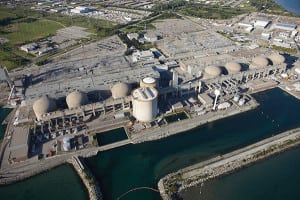
CoalOntario Power Generation: A Clash of Politics and Power Planning
Ontario—Canada’s most populous province and its major economic engine—has an electric power supply system so driven by provincial politics that it has pushed the province’s utility generating arm, Ontario Power Generation, into what appear to be incoherent resource policies. Late last September, in a stunning announcement, the Canadian province of Ontario’s Energy Ministry said it […]
-
 Nuclear
Paducah Laser Nuclear Enrichment Facility Gets Fuel but Not Formal Construction Decision
While GE-Hitachi Global Laser Enrichment (GLE) confirmed it hasn’t made a formal decision to proceed with licensing or construction of a laser enrichment facility at Paducah, Ky., the Department of Energy (DOE) announced it has agreed to sell depleted uranium to the company over a 40-year period to help produce nuclear power plant fuel. The […]
-
 Legal & Regulatory
FirstEnergy Wants Out of Competitive Power Markets
FirstEnergy Corp.—one of the nation’s largest investor-owned electric utilities, serving customers in Ohio, Pennsylvania, West Virginia, Maryland, New Jersey, and New York—has made the strategic decision to exit the competitive power business. “We have made our decision that over the next 12 to 18 months we’re going to exit competitive generation and become a fully […]
-
 Legal & Regulatory
Election Roundup: What Trump’s Win Means for Energy and Environment
Donald Trump’s stunning victory in the U.S. presidential election portends enormous changes in U.S. energy and environmental policy, and a nearly complete turnover of the men and women who will administer that policy for the next four years.
-
 Coal
CoalUPDATED: Unexpected Outcomes for Energy Measures on State Ballots
The November 8 election yielded surprising results for controversial energy-related measures in three states. In Florida, voters rejected Amendment 1, a measure backed by utilities to curb the expansion of resident-owned solar rooftop installations. In Washington, the nation’s first state attempt to impose a carbon tax on fossil fuels and power generated from fossil fuels fell […]
-
 Legal & Regulatory
The State of Solar: New Tech, Outdated Rate Designs
As installed capacity in the U.S. continues its breakneck growth, the solar photovoltaic sector is poised for another leap forward with a variety of new technologies—if increasingly ill-suited regulations and rate designs can be updated to keep pace. The global solar market has moved beyond its early, uncertain days. The luxury of behaving like start-ups […]
-
 Legal & Regulatory
Germany Puts the Brakes on Rapid Renewables Expansion
In July 2016, the German parliament approved three major pieces of legislation specifically laying out the future of the celebrated Energiewende: the 2017 revision of the Renewable Energy Sources Act, the Electricity Market Act, and the Act on the Digitization of the Energy Transition. “These three pieces of legislation will ensure that the transition of […]
-
 Legal & Regulatory
Generators Sue to Block Lifeline for New York Nuclear Plants
A group of generators including Dynegy and NRG Energy filed suit in federal court on October 19 seeking to block an incentive program that would help three New York nuclear power plants remain economic over the next decade. An August decision by the New York Public Service Commission (PSC) approving New York’s Clean Energy Standard included a provision requiring […]
-
 Coal
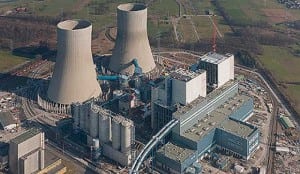
CoalLow River Water Could Cause Problems for German Coal Power Plants
German utility RWE warned energy markets this week that low water levels on the Rhine River may affect the delivery of hard coal to some of its plants.
-
 Legal & Regulatory
Northeastern States File Suit to Force EPA Action on Ozone Transport Region Expansion
Six northeastern states are suing the Environmental Protection Agency (EPA) to force it to act on controlling air pollution blowing in from coal-fired power plants located in nine Midwestern and southern states. New York, Connecticut, Massachusetts, New Hampshire, Rhode Island, and Vermont on October 7 filed a lawsuit in the U.S. District Court for the […]
-
Commentary
Who Is Subsidizing Whom?
For all the words published over the past several years about electric utility customer defection—thanks to the combination of lower-cost residential solar photovoltaic systems, tax incentives, and net
-
 Legal & Regulatory
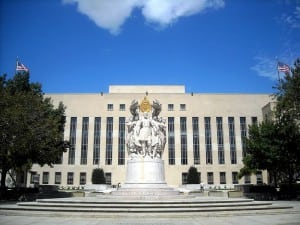
LIVE UPDATES: The Clean Power Plan at the D.C. Circuit
Oral arguments on the merits of the Environmental Protection Agency’s (EPA’s) Clean Power Plan were concluded before an en banc panel (10 judges, rather than the anticipated three) at the D.C. Circuit Court of Appeals on September 27. West Virginia v. Environmental Protection Agency (No. 15-1363) is arguably the most important environmental case in nearly […]
-
 Slideshows
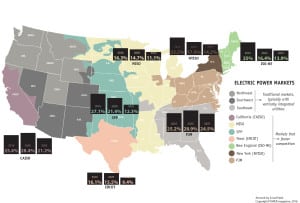
SLIDESHOW: An Alarming Trend Affecting U.S. Baseload Power
States, regulators, and market participants have in recent years called attention to a trend concerning uneconomic baseload generation in organized wholesale markets, specifically in ISO New England, New York Independent System Operator (NYISO), MISO, PJM, the Electric Reliability Council of Texas (ERCOT), and the California Independent System Operator (CAISO). Cheap natural gas, low power demand […]
-
 Coal
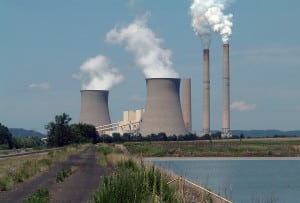
CoalAEP to Shed Ohio, Indiana Coal and Gas Plants in Move for Full Regulation
In an effort to become a fully regulated power company, American Electric Power (AEP) has agreed to sell four Midwestern power plants—representing a total of 5.2 GW—to a newly formed joint venture of Blackstone and ArcLight Capital Partners for about $2.17 billion. AEP will sell: the 1,186-MW natural gas–fired Lawrenceburg Generating Station in Lawrenceburg, Ind. […]
-
 Renewables
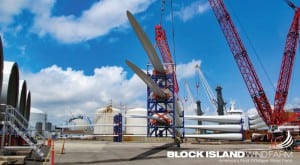
DOE, DOI Roll Out National Strategy for 86 GW of Offshore Wind
A strategy rolled out by the Department of Energy (DOE) and Department of the Interior (DOI) to enable 86 GW of offshore wind capacity in the U.S. by 2050 highlights a number of key hurdles, including those related to technology, regulations, the environment, and markets. The DOE’s and DOI’s September 9–released joint document, “National Offshore […]