
Legal & Regulatory
-
 News
NewsReports: PG&E Prepared to File Bankruptcy in Wake of Wildfires
Reports on Jan. 13 said giant California utility PG&E Corp. could notify its workers as soon as Jan. 14 that it’s preparing to file for bankruptcy. Bloomberg on Sunday said the San Francisco-based utility, which faces billions of dollars in liabilities as investigations into its role in a series of deadly wildfires continues, will notify […]
-
 News
NewsClean Air Act Issues Congress Could Grapple With in New Session
While the Republican-led U.S. House and Senate in the 115th Congress was mainly focused on reviewing, for modification or repeal, several environmental rules issued under the Clean Air Act (CAA), the new Democrat majority in the House could focus on a slew of different measures, a new report from the Congressional Research Service (CRS) suggests. […]
-
 News
NewsReport: CO2 Emissions from Power Sector Rising
A new study from an economic research group shows that U.S. emissions of carbon dioxide (CO2) rose about 3.4% last year, including a 1.9% rise in emissions from power generation. The New York-based Rhodium Group, which released its findings on Jan. 8, said its study used data from the U.S. Energy Information Administration (EIA) and […]
-
Renewables
Who says you can’t teach an old plant new tricks? Top six tips to help improve plant profitability.
Sponsored by:
The energy landscape is changing dramatically and today performance is measured in more than just megawatts. Finding the right balance between operations and maintenance will help keep costs low and help profits grow. Profitability is more than just operations and maintenance, it is about processes and concepts and finding a new way to do something. Join us to learn how you can teach your old plant new tricks for a more profitable future.
-
 News
NewsEnergy Storage Resources: A Year in Review
From both a regulatory and development perspective, 2018 was a significant year for the expansion of energy storage resources (ESRs). From a significant ruling of the Federal Energy Regulatory Commission
-
 News
NewsEPA: Mercury Rules for Coal, Oil Power Units Not ‘Appropriate and Necessary’
Because compliance costs to coal- and oil-fired power plants for the Mercury and Air Toxics Standards (MATS) far exceed quantifiable benefits to regulating hazardous air pollutant (HAP) emissions, the Trump administration has proposed it is not “appropriate and necessary” to regulate HAP emissions from power plants under Section 112 of the Clean Air Act (CAA), […]
-
 News
NewsDespite Financial Hurdles, Utility Capital Spending to Remain Elevated
Despite higher taxable income and pressure on balance sheets, capital spending by regulated utilities will remain elevated—and much of it will be dedicated to replacing aging infrastructure, hardening or efficiency-boosting measures, and on renewables and environmental projects, said Moody’s Investors Service in a recent sectoral briefing. The credit ratings agency for the first time this […]
-
 News
NewsBipartisan Nuclear Modernization Bill Clears Congress
A bipartisan bill to modernize regulation of the nation’s nuclear power fleet passed in the U.S. Senate on Dec. 20 and the House on Dec. 21 without much opposition. It now heads to President Trump. S.512, better known as the Nuclear Energy Innovation and Modernization Act (NEIMA), seeks to provide a program to develop […]
-
 News
NewsNV Energy Accelerates Retirement of One of Nevada’s Last Coal Units
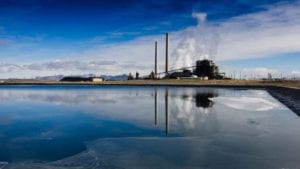
NV Energy plans to retire a 254-MW coal-fired unit in a power-constrained region of Nevada at the end of 2021, four years ahead of schedule. The company will instead purchase 1,001 MW from new solar photovoltaic projects equipped with 100 MW of long-term battery storage, effectively doubling its total renewable generation from 14% in 2017 […]
-
 News
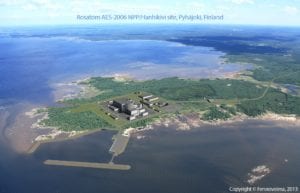
NewsFinnish Nuclear Plant Start-up Delayed Again
Another nuclear power project has been delayed, as the Fennovoima consortium and Russia’s state-run nuclear company Rosatom said the Hanhikivi 1 power plant’s projected start-up date has been pushed to 2028, four years behind the original schedule and eight years later than the proposed start when Finland’s government supported the project in 2010. The announcement […]
-
 Commentary
Bailing Out Coal and Nuclear Plants Is Misguided
For decades the U.S. has relied on coal for much of its energy supply. States with abundant coal—Pennsylvania, West Virginia, Kentucky, and others—have towns and cities whose economies are driven by the coal industry. Now, as the coal industry declines and those areas struggle, the Trump administration wants to use taxpayer money to save coal […]
-
 Press Releases
ACCCE Shares NERC’s Concerns for Reliability if Retirements Accelerate
Washington, DC — Yesterday, NERC (North American Electric Reliability Corporation) released a Special Reliability Assessment to evaluate the risks to the reliability and resilience of the electricity grid from the significant loss of fuel-secure baseload generation. While NERC’s review is not a forecast of expected future conditions, it does represent a credible stress-test of the […]
-
 News
NewsKey Power Industry Conferences and Trade Shows to Think About in 2019
Conferences and exhibitions are a valuable way for power professionals to share ideas and network, gain up-to-date training, further education, understand regulatory or policy changes, and access the latest products and technologies. POWER‘s editors compiled this helpful list of events in 2019 that cater to the power industry. FEBRUARY ARC Industry Forum February 4-7 Orlando, […]
-
 News
NewsRegulators Back Dominion Takeover of SCANA
Dominion Energy’s bid to purchase SCANA Corp. and its South Carolina Electric & Gas (SCE&G) utility, approved by South Carolina regulators on Dec. 14, could bring some stability to SCANA. Shareholders hope that’s the case; they’re excited about swapping their devalued SCANA shares for more valuable Dominion stock. Workers, though, remain uncertain about their futures, […]
-
 News
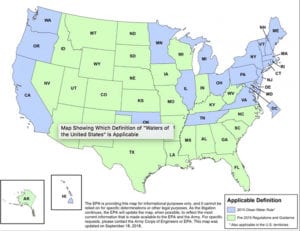
NewsAmid Broad Legal Challenges, EPA Proposes Narrower Definition of WOTUS
In a move widely applauded by the power industry, the Environmental Protection Agency (EPA) and Department of the Army proposed a new definition of “waters of the U.S.” (WOTUS) that could exempt groundwater and ditches from regulation under the Clean Water Act (CWA). The measures follow other recent significant regulatory actions by the agency. On […]
-
 News
NewsFERC Follows Up on Tax Reform Response
The Federal Energy Regulatory Commission (FERC, the Commission) took several actions in November to address impacts from the Tax Cuts and Jobs Act (the Tax Act). FERC had previously issued a Notice of Inquiry seeking comments on how to address the impact of the Tax Act’s reduction in the corporate federal income tax (FIT) rate […]
-
 News
NewsSenate Confirms McNamee as FERC Commissioner
The U.S. Senate on a 50-49 party-line vote December 6 confirmed Bernard McNamee to a seat on the five-member Federal Energy and Regulatory Commission (FERC), despite questions about his independence from the Trump administration and his previous comments in support of a bailout of coal and nuclear U.S. power plants at the expense of renewable […]
-
 News
NewsPlagued by Grim Challenges, Vogtle Nuclear Expansion Lags Behind Schedule, Says Oversight Consultant
The two-unit Vogtle expansion in Georgia faces major challenges that are poised to derail its schedule and ramp up costs—and the project is already behind schedule, a consulting firm tasked with construction oversight of the project told regulators. In revealing testimony filed with the Georgia Public Service Commission’s (PSC’s) public interest advocacy staff on November […]
-
 News
NewsXcel’s Latest Plan: Carbon-Free by 2050
Xcel Energy has announced its plan to move to 100% carbon-free power generation by 2050, with the utility also saying it will reduce carbon emissions by 80% by 2030, from 2005 levels. Xcel, headquartered in Minneapolis, Minnesota, serves customers in eight states and over the past two years has announced a significant number of renewable […]
-
 News
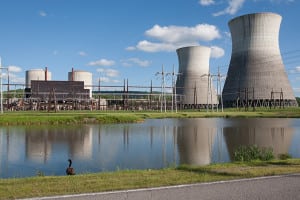
NewsDeveloper Sues TVA Over Cancellation of Bellefonte Deal
The real estate developer who has tried for more than two years to buy the assets of the canceled Bellefonte nuclear power plant project in Alabama has sued the Tennessee Valley Authority (TVA) after TVA last week pulled out of the deal to sell the plant. Attorneys for Franklin Haney, whose Nuclear Development LLC (NDLLC) […]
-
 Cybersecurity
Three Things ICS Security Pros Can Do to Maximize Uptime
Before industrial control systems (ICSs) were network-connected, operators had little to worry about in the way of cyber threats. But as industrial environments, such as energy utilities, become more connected, they’re exposed to vulnerabilities and attacks. ICSs are used in large amounts of critical infrastructure, including the electrical grid, transportation systems, and wastewater plants. How […]
-
 News
NewsSpain Closing Mines in Transition Away from Coal
Coal from domestic mines provides just more than 2% of Spain’s electricity generation, as the country has increasingly moved away from coal-fired power toward renewable sources. The administration of new
-
 News
NewsCleanup and Closure Projects on a Massive Scale
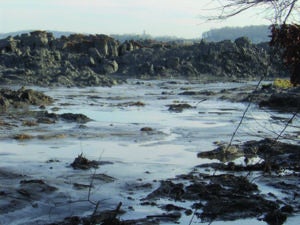
Thousands of workers are involved, and billions of dollars are being spent, as U.S. utilities convert and close dozens of coal ash impoundments in an effort to meet government regulations and prevent future
-
 Environmental
The Impact of Environmental Regulations on Power Generation
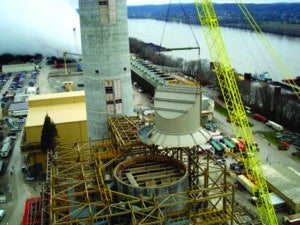
For many years, air pollution control (APC) rules and regulations have governed the design and economics of the world’s power generation fleet. These rules have had a tremendous impact, improving air quality
-
 News
NewsA Legal Guide to Power Generation Mergers and Acquisitions
A myriad of issues come into play when parties execute power industry mergers and acquisitions. Part 2 of this two-part series looks at the issues involved with acquisition agreements, and some of the more
-
 Connected Plant
Cyber Breaches: Is Fear Misplaced?
The power sector’s terror of a debilitating cybersecurity attack is magnified seemingly every day as new vulnerabilities or destructive threat actors are identified. But according to several industrial
-
 Connected Plant
How to Prepare for NERC CIP-013-1
It’s an exciting era in energy generation. The rapid adoption of IT systems and networked technology has enabled new business models and catalyzed production decentralization. However, with innovation comes
-
 News
NewsContamination Found in Water Near Illinois Coal Ash Dumps
Analysis based on testing mostly conducted by energy companies shows that water near all but two coal plants in Illinois is contaminated with toxic waste. The Chicago Tribune on November 28 reported that a compilation of industry-supplied data from 24 Illinois coal plants shows harmful levels of arsenic, chromium, lead, and other heavy metals in […]
-
 News
NewsUtility Agrees to Close Arkansas’ Largest Coal Plants
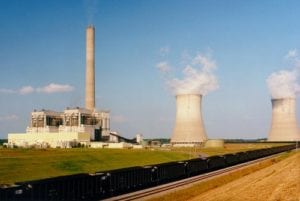
Entergy Arkansas said it will close the state’s two largest coal-fired power plants, along with one gas-fired plant, by 2030 as part of a settlement with environmental groups that sued the utility in federal court for alleged violations of the Clean Air Act (CAA). The Sierra Club and the Washington, D.C.-based National Parks Conservation Association […]
-
 News
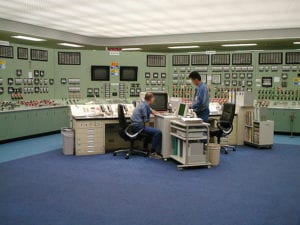
NewsNew Digital Safety System Controller Approved for Nuclear Plants
The U.S. Nuclear Regulatory Commission has approved the use of Mitsubishi Electric Total Advanced Control (MELTAC) Nplus S digital safety system controllers in U.S. nuclear power plants. While new to the U.S. industry, Mitsubishi said the MELTAC system is already deployed in 38 nuclear power plants around the world, primarily in Japan and China. MELTAC […]