
Commentary
-
Commentary
“All of the Above” Is Not a National Energy Policy
It’s all well and good to suggest the U.S. needs to be open to all solutions in the pursuit of its energy future, but at some point "try everything" needs to give way to a well-thought plan implementing the best, most cost-effective options.
-
Commentary
Biogas: An Alternative Energy Source
Most professionals in the energy industry know about biomass; fewer of us are conversant with biogas. This commentary explains the basics of biogas, with a focus on its current use and future potential as a source of electrical power.
-
Commentary
The Shale Gas Revolution Continues
The electricity industry is being transformed by the so-called “shale gas revolution” in the United States. Production of natural gas from shale rock using hydraulic fracturing (“fracking”) has boosted supply and reduced prices, making gas-fired power competitive with coal-fired power on price. Historically, coal-fired electricity generation has dwarfed generation from gas-fired plants in the U.S. […]
-
Commentary
Carbon Tax Would Raise Unemployment, Not Swap Revenue
Interest in a carbon tax seems to be growing in Washington as a means to increase revenue for the federal government and to fight climate change. There are three good reasons why instituting a carbon tax is a very bad idea.
-
Commentary
Cracking the Code
Embattled Environmental Protection Agency (EPA) Administrator Lisa Jackson announced her resignation on December 27 citing the pursuit of “new challenges” and “opportunities to make a difference” as the reasons for leaving her high-profile post. I suspect her departure was caused less by altruism and more by self-preservation.
-
 Commentary
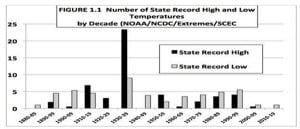
EPA’s CO2 Regulations are NOT Based on Sound Science
An open letter published in the Washington Examiner by a group of climate scientists and meteorologists states why they believe the theory of anthropogenic warming is far from settled science and the actions of the Environmental Protection Agency (EPA) have disregarded established methods of scientific inquiry.
-
Commentary
The Risks in Risk Communications
Human beings have a tough time balancing risks rationally–but this task isn’t made any easier by how the media communicates information about them. Often, the usual approach makes things even worse.
-
Commentary
Stop Thinking and Start Acting
Forethought and analysis have their place, but good leaders need to be ready to act boldly when the time comes.
-
Commentary
Workplace Drama: More on Correction Course
How do you get "beyond" perfection? With a willingness to course-correct and an awareness of when it’s necessary.
-
Commentary
Obama’s Second Act
President Obama enters 2013 with a solid win in his pocket—and a host of challenges and decisions awaiting him.
-
Commentary
The Electric Power Industry: A Post-Election Assessment
With the passing of the 2012 election, one is reminded of the saying, “The more things change, the more they stay the same.”
-
Commentary
Navigating a Sea of New Regulations
A convergence of new environmental regulations and practical realities is creating a boatload of challenges for power producers.
-
Commentary
Remember Kyoto?
The 15-year-old Kyoto Protocol expires at the end of 2012. With U.S. CO2 emissions at a 20-year low, what’s the point in the U.S. signing a new agreement?
-
 Commentary
A Carbon Tax Would Harm U.S. Competitiveness and Low-Income Americans Without Helping the Environment
Supporters of a new carbon tax are using arguments aimed at conservatives (it can be revenue neutral) and liberals (it can help the environment) alike. The damage to the U.S. economy, manufacturing competitiveness, and society’s poorest citizens outweighs the government’s need for a new revenue stream.
-
Commentary
EPA Maintains Its Focus on Climate Change
Expect the EPA to increase the use NEPA data requests, ostensibly related to climate change analysis, as an excuse to slow or stymie new energy system development.
-
Commentary
A Call to Elevate Electric Sector Cyber Security Leadership
It’s time for the leaders in the power generation business to step up and provide some leadership on cybersecurity
-
Commentary
Lessons in Innovation from Sir Edmund Hillary
The first conquest of Mount Everest was not just a triumph of the human spirit but also a classic example of solid project management and good leadership. Hillary’s example offers sound lessons for today’s business leaders.
-
Commentary
Workplace Drama: Leadership Is About Course Correction, Not Perfection
All leaders want to be liked, but letting that desire set your course is a path to frustration and drama. Though it sometimes seems counter-intuitive, the ability to set good boundaries is the mark of a good leader.
-
Commentary
The Management Intelligence of the Octopus
Adaptive, creative, and flexible, the humble octopus has much to teach managers in the modern world.
-
Commentary
Preparing for the EPA’s Cooling Water Rule
With the U. S. Environmental Protection Agency’s (EPA’s) issuance of a final rule regulating cooling water intake structures at existing facilities potentially less than a year away, facilities should be paying close attention to the proposed rule’s provisions, data requests, and study requirements as they evaluate their compliance options and begin to formulate their compliance […]
-
Commentary
Veterans and Utilities: A Valuable Partnership
The brave men and women of the U.S. military spend years crafting special skills and developing traits that prepare them for the challenging assignments they will be given throughout their terms of service. They receive orders for tours of duty and venture without hesitation into places steeped in peril and instability. Because of their consistently courageous responses to unimaginable challenges, civilians herald America’s servicemen and women as heroes. How can we begin to repay our veterans for defending our freedom?
-
Commentary
War Against Coal Is Hurting America
The Boilermakers union has been a leader among the labor and business organizations that seek to shepherd the coal-fired energy sector through the worst effects of these forces. And we continue in those efforts.
-
Commentary
Leave Energy Upgrades to the Businesses
President Obama’s Executive Order on industrial energy efficiency is another incursion of the federal government into the day-to-day operations of American industry. The symbol of a free enterprise is autonomy in determining how to efficiently invest capital, an activity that the government has proven inept time and again.
-
Commentary
Act Your Age
The American Wind Energy Association’s number one priority is renewal of the production tax credit in order to protect industry jobs. But wind isn’t the only industry sector that’s scrambling to protect jobs.
-
Commentary
Thriving in a World Without 30-Year Careers
Long careers with one company ending with the presentation of a gold watch are passé. It’s every person for themselves these days. You should be preparing for that new job right now.
-
Commentary
If This Is What It Takes to Produce 8 Kilowatts . . .
The cost of regulatory review is often equal to the cost of the cost of installation for very small projects. It’s time some common sense is used by legislators and government regulators when it comes to small power projects.
-
Commentary
Workplace Drama: Master Your Energy
One strong way to master your energy drain at work is to understand how to interpret your emotional experiences differently. Then you can make positive and empowering choices that don’t drain your energy.
-
Commentary
London’s Lessons for Good Management
The recent London Olympics were not just a triumph of athletics. They also showed how solid project management can bring an enormously challenging job to a successful conclusion, putting on one of the most successful Olympic Games ever.
-
Commentary
Fuel Diversity Is Critical in Industry Transition
Success in life and business is all about seizing the right opportunities at the right time. Opportunities abound today in the electric utility business. Our industry is in the midst of an extraordinary period of transformation and investment that will affect how we produce and deliver electricity—and what customers pay for it—for decades. By 2020, […]
-
Commentary
Wind Energy Blown Away by Natural Gas
The environmental push for renewables and mandates to force them into existence are rightly facing some serious headwinds. The American Renewable Energy Production Tax Credit Extension Act of 2011 foundered in Congress, and more states are experiencing significant power rate increases to cover renewable energy production costs. While renewables are generally not ready for prime time in large quantity on today’s power grid, that doesn’t mean environment concerns ought to be trashed, especially when a more effective off-the-shelf solution is available.