
Coal
-
Coal
Senators Introduce “Carbon Fee” Bill, House Dems Call for Blue Ribbon Climate Panel
Boosted by President Obama’s inaugural address commitment to mitigate climate change, congressional Democrats have initiated several more climate measures. A legislative packet that seeks to mitigate climate change by enacting a carbon "fee" of $20 per ton of emitted carbon or methane equivalent was introduced last week by Sens. Bernie Sanders (I-Vt.) and Barbara Boxer (D-Calif.). In the House, as several Democratic amendments for climate change hearings were voted down, more than 40 lawmakers urged President Obama to create a panel that would help communities deal with climate change events.
-
Coal
PNM, New Mexico, EPA Settle Coal-Fired San Juan NOx Technology Dispute
An agreement reached on Friday between PNM, New Mexico’s largest electricity provider, the New Mexico Environment Department (NMED), and the U.S. Environmental Protection Agency (EPA) calls for the retirement of two units at the 1,800-MW coal-fired San Juan Generating Station by 2017 to comply with federal visibility rules. The remaining two units will be retrofitted with selective noncatalytic reduction technology by 2016, a nitrogen-oxide reducing technology.
-
Coal
EPA Urged to Regulate GHG Emissions of Existing Sources Through Seldom-Used CAA Section
A think tank affiliated with the New York University School of Law is urging the Environmental Protection Agency (EPA) to mandate cuts of greenhouse gas (GHG) emissions in all 50 U.S. states through a little-used section of the Clean Air Act.
-
Coal
Miss. House Passes Bill Backing Kemper IGCC
Members of the Mississippi House passed a pair of rate mitigation and securitization bills that would allow the Mississippi Public Service Commission (MPSC) to approve a multiyear rate plan for Mississippi Power’s $2.88 billion Kemper integrated gasification combined cycle (IGCC) plant that is under construction in Kemper County.
-
Coal
Obama Calls for Market-Based Climate Change Solution in SOTU
President Obama outlined a number of key energy-related measures in his State of the Union speech on Tuesday night, urging Congress to pursue legislation to mitigate climate change and calling for an expansion of clean energy and reduced red-tape for natural gas and oil permits.
-
Coal
Low Gas Prices Prompt Duke to Retire Coal Units Two Years Early
Citing low natural gas prices, Duke Energy announced on Feb. 1 that it would shutter its 1920s-built Buck and Riverbend stations two years before the coal-fired plants were slated for retirement. The company had chosen to retire the plants just before April 2015, which is the compliance deadline for recently enacted federal environmental rules.
-
Coal
Minn. Power Considers Fuel Switch, Coal Unit Retirement to Comply with Fed, State Mercury Rules
A newly announced resource strategy could require Duluth, Minn.–based Minnesota Power to convert its 110-MW Laskin Energy Center in Hoyt Lakes, Minn., to a natural gas peaking facility in 2015, install environmental upgrades at its 558-MW Clay Boswell Energy Center Unit 4 in Itasca County, and retire one of three coal-fired units at its 225-MW Taconite Harbor facility in Schroeder.
-
Coal
Murkowski’s Energy Blueprint Presses All Measures for OPEC Oil Independence
An energy blueprint released on Monday by Sen. Lisa Murkowski (R-Alaska), the ranking minority member of the Senate Energy and Natural Resources Committee, calls for complete independence from OPEC oil by 2020.
-
Coal
CRS to Redraft Report Critical of Coal Ash Legislation
Criticism from Sen. John Hoeven (R-N.D.) and Rep. David McKinley (R-W.V.) has reportedly prompted the Congressional Research Service (CRS) to revise a December 2012 report in which it found coal ash bills sponsored by the lawmakers would not guarantee the protection of human health and the environment.
-
Coal
DOE Charts Progress for FutureGen 2.0
FutureGen 2.0, a government-backed project that involves the upgrade of a coal-fired power plant in Meredosia, Ill., with oxy-combustion technology to capture 90% of that plant’s carbon emissions and then sequester them underground, has entered its second phase, the Department of Energy (DOE) said on Monday.
-
Coal
Arizona Challenges EPA’s Regional Haze BART Mandate in Federal Court
The Environmental Protection Agency’s (EPA’s) imposition of a federal implementation plan (FIP) to curb regional haze that could force coal-fired power plants in Arizona to install $1 billion in pollution controls was challenged by the state in federal court last week.
-
Coal
Duke Continues Switch from Coal with Three New Gas Plants
Duke Energy’s once coal-heavy fleet is making a big transition to gas. Two new advanced combined cycle plants, and a third set to start up later this year, are a key part of the North Carolina–based firm’s drive to modernize its portfolio.
-
 Coal
CoalFirst U.S. Ultrasupercritical Power Plant in Operation
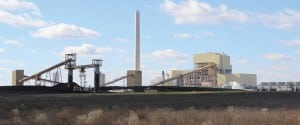
The U.S. saw the historic start of operations at its first ultrasupercritical coal-fired power plant last December as Southwestern Electric Power Co.’s (SWEPCO’s) 600-MW John W. Turk, Jr. Power Plant switched on in Arkansas.
-
 O&M
O&MLayup Practices for Fossil Plants
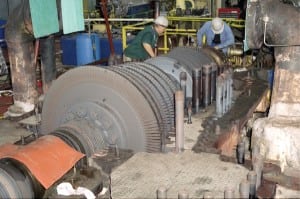
Improper layup practices are a major contributor to boiler tube failures and to steam turbine pitting and cracking in U.S. fossil plants. EPRI’s research into identifying damage mechanisms, utility best practices, and innovative new methods to protect plant equipment during outages will aid plant operators in achieving a successful layup.
-
Coal
1,300-MW Circulating Fluidized Bed Project in Texas Suspended
Development of a $3.2 billion circulating fluidized bed (CFB) petroleum coke–fired power plant proposed for construction in Corpus Christi, Texas, was suspended last week. Chase Power Development, parent company of the 1,300-MW Las Brisas Energy Center, cited market conditions and regulatory obstacles for its decision.
-
Coal
D.C. Circuit Denies Petitions for Full Court Review of Decision to Overturn CSAPR
The U.S. Court of Appeals for the D.C. Circuit last week declined petitions for rehearing en banc of the Cross-State Air Pollution Rule (CSAPR). The federal court’s denial of the petitions leaves in place the Clean Air Interstate Rule (CAIR)—a Bush-era rule that the court had formerly invalidated in July 2008 and then reinstated. It also could prompt environmental groups, 15 states, and the Environmental Protection Agency (EPA) to take their case to the U.S. Supreme Court.
-
Coal
Settlement Allows Mississippi Power to Request Higher Rates for Kemper Coal Plant
Mississippi regulators last week approved a settlement with Mississippi Power that will allow the Southern Co. subsidiary to seek higher customer rates for rising costs associated with its 582-MW Kemper integrated gasification combined cycle (IGCC) plant under construction in Kemper County. On the day following that ruling, the utility asked the state for permission to recover $172 million for the 2013 regulatory year.
-
Coal
MidAmerican Energy to Switch 674-MW of Coal Capacity to Nat. Gas, Other Fuels
A settlement agreement reached with environmental group the Sierra Club last week may mean that Iowa’s largest utility, MidAmerican Energy Co., will switch 674 MW of coal-fired capacity to natural gas or other fuels by April 2016.
-
Coal
Wisconsin Utility Doubled Its Gas Burn in 2012
Wisconsin Energy nearly doubled its natural gas burn for power generation in 2012, from 23.9 billion cubic feet (bcf) in 2011 to 46.5 bcf in 2012. Gale Klappa, CEO, said during a January 30 earnings conference call that natural gas units at the company’s 1,150-MW Port Washington generating station operated at a 46% capacity factor in 2012. This compares with a 23% capacity factor in 2011.
-
Coal
EPA Tightens Fine Particulate Matter NAAQS
The Environmental Protection Agency (EPA) issued a final rule in December that strengthens its National Ambient Air Quality Standard (NAAQS) for fine particulate matter (PM2.5) to 12.0 micrograms per cubic meter (μg/m3) but declared it would not finalize a proposal to update separate secondary PM2.5 standards. The final rule’s issuance was lauded by environmental and public health groups, though industry groups opposed it, citing concerns that nonattainment areas would suffer economic setbacks.
-
O&M
Report: Fuel for Power Generation to Lead Energy Growth Through 2040
Fuel for power generation will account for about 55% of demand-related energy growth through 2040, ExxonMobil forecasts in its latest annual energy forecast. Like several other forecasters, the Irving, Texas–based oil and gas company also predicts that natural gas will emerge as the leading source of electricity generation by 2040.
-
Coal
EPA Finalizes Standards for Industrial Boilers, Certain Incinerators
The Environmental Protection Agency (EPA) on Dec. 20 finalized changes to a specific set of adjustments to the Clean Air Act that apply to coal, oil, natural gas, and biomass boilers and certain solid waste incinerators.
-
 O&M
O&MJinzhushan 3: The World’s First PC-Fired Low Mass Flux Vertical Tube Supercritical Boiler, Part 3
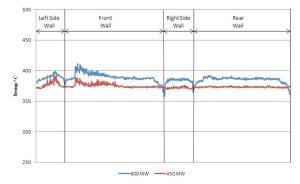
The world’s first supercritical pulverized coal–fired low mass flux vertical tube Benson boiler is Jinzhushan 3, located in the Hunan Province of the People’s Republic of China. The 600-MW Babcock & Wilcox Power Generation Group Inc. once-through boiler burns Chinese anthracite using downshot pulverized coal (PC) technology. Part 1 of this three-part article presented a summary of the project design features. Part 2 discussed the boiler technology. This third and final part reviews the plant’s performance test results.
-
 O&M
O&MAmerica’s Aging Generation Fleet
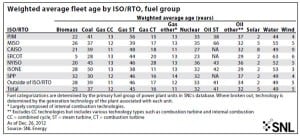
Proposed U.S. Environmental Protection Agency rules and a greater reliance on newer generation technologies have put the nation’s aging fossil-fueled generation units at risk of retirement. The numbers demonstrate that the U.S. power generating fleet is older than you may believe.
-
 Coal
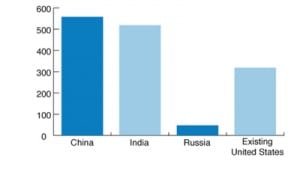
CoalCountries Worldwide Propose to Build 1,200 New Coal Plants
While the war on coal is working to reduce coal generation and consumption and associated carbon dioxide emissions in the United States, many world economies are looking toward coal for future generation needs. China, India, Russia, and Germany, to name a few, are building coal-fired power plants.
-
Coal
Climate Change on Obama’s Second-Term Agenda
Among the surprises in President Barack Obama’s second Inaugural Address on Monday was his promise to address the challenges of climate change and sustainable energy. An independent draft report released about a week earlier on climate change and its impacts in the U.S. may have helped to fuel his renewed resolve on these intertwined issues.
-
Coal
Federal Court Vacates EPA PM 2.5 Loophole for New Power Plants
A federal court on Tuesday ruled that the Environmental Protection Agency (EPA) exceeded its authority when it established a screening tool that could allow some new power plants to be exempted from certain requirements under the EPA’s October 2010-finalized rule aimed at curbing emissions of particulate matter less than 2.5 micrometers in diameter.
-
Coal
EPA Proposal Could Mean $1.1B in New Emissions Controls for Arizona Coal Plant
A proposal released by the Environmental Protection Agency (EPA) on Friday could require owners of the 2.3-GW coal-fired Navajo Generating Station (NGS) near the Arizona-Utah state line to install emission controls worth $1.1 billion to improve visibility at 11 national parks and wilderness areas in the Southwest.
-
Coal
Supreme Court Shuns Review of Challenge to EPA SO2 NAAQS Revision
The U.S. Supreme Court on Tuesday declined to review challenges to a 2010 Environmental Protection Agency (EPA) rule setting the acceptable limit for sulfur dioxide (SO2) in the air at 75 parts per billion (ppb) over a 1-hour period. The denial of certiorari leaves intact the EPA’s final revision to the primary National Ambient Air Quality Standard (NAAQS) for SO2 emissions from power plants and other industrial facilities.
-
Coal
Virginia Moves to Repeal Incentives for Renewable Power
An agreement reached between the Virginia Attorney General’s office, Dominion Virginia Power, and Appalachian Power proposes to reduce financial incentives associated with the utilities’ generation of renewables and construction of new fossil fuel–fired power plants.