
Coal
-
 Coal
CoalBlast at Coal Plant Injures 1, Damages Cascade Building
An explosion on Tuesday morning at CPS Energy’s 420-MW Deely 1 power plant that left one worker with minor injuries has damaged the coal-fired unit’s cascade building, the San Antonio municipal utility said. The blast that occurred shortly before 11 a.m. at a 7,500-acre site in southeast Bexar County prompted officials to evacuate the building […]
-
Coal
BP: King Coal Keeps the Worldwide Throne Against the Gas Challenger
The revolution that has toppled coal from the top of the generating queue in the U.S. has not reached the rest of the world, according to the “BP Statistical Review of World Energy.” While natural gas may have supplanted coal as king of the hill in the U.S. electric generating mix, the solid mineral—geographically the […]
-
 Legal & Regulatory
Oklahoma Requests Full Court Review of EPA Regional Haze Case
The state of Oklahoma and Oklahoma Gas and Electric (OG&E) on Tuesday asked the full 10-judge panel at the 10th Circuit Court of Appeals to review their challenge to the Environmental Protection Agency’s (EPA’s) implementation of a regional haze rule to limit emissions from power plants in the state. The move follows a decision by […]
-
 Coal
CoalDuke to Retire Four Coal Units Under New Edwardsport IGCC Settlement
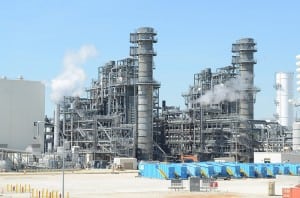
Duke Energy will retire four coal units and possibly two oil-fired units under terms of a settlement reached between the company and four citizen and environmental groups over outstanding air permits for the company’s Edwardsport Integrated Gasification Combined Cycle (IGCC) project. The agreement resolves a long-standing dispute over air permits for the now-operational IGCC plant […]
-
Coal
More Than 5.5 GW of Generation Switched to Gas Since 2011, Says SNL Energy Study
As environmental regulations continue their forward march and gas prices remain low compared to historic rates due to increased domestic supply, the number of power plants changing their primary fuel source to natural gas has increased dramatically. In 2011 and 2012, just more than 5.5 GW of power plant capacity switched to burning primarily […]
-
 Coal
CoalIEA Sees Strong Growth in Asian and North American Gas as Europe Lags
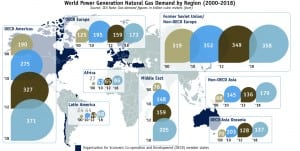
Despite frail demand for natural gas in Europe and difficulties in upstream production growth in the Middle East and Africa, the “Golden Age” of natural gas will remain in full swing until at least 2018, recent projections from the International Energy Agency (IEA) show. A medium-term outlook released by the Paris-based autonomous intergovernmental organization in […]
-
 Coal
CoalFunding for Coal Plants Overseas Curbed on Climate Concerns
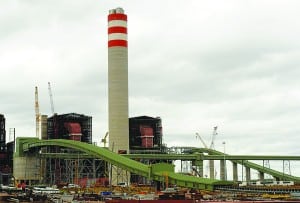
In his climate change speech earlier this summer, President Obama announced a major policy shift: The U.S. government will end financing for virtually all new coal power plants oversees. In the wake of that
-
 Legal & Regulatory
Federal Court Allows Public Nuisance Lawsuits Even When Power Plants Comply with Air Permits
In a decision that sets precedent, a federal court last week ruled that residents neighboring a Pennsylvania coal-fired power plant may sue for property damage even though the plant fully complies with state and federal emissions rules. The U.S. Court of Appeals for the Third Circuit sided with two named plaintiffs in a class action […]
-
 Renewables
Reports: Future Coal and Nuclear Prone to Market Forces, Gas Expansion
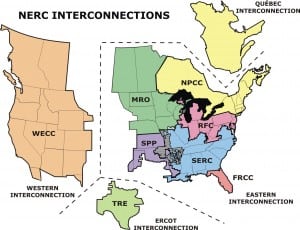
Two federally sponsored reports submitted to the Eastern Interconnection States’ Planning Council (EISPC) suggest that the rapid expansion of natural gas could force the closure of between 35 GW and 60 GW of U.S. coal power capacity over the next five years and weaken market forces that now bolster existing nuclear plants. An Energy Department–funded […]
-
 Coal
CoalOkla. to Seek Rehearing of Regional Haze Contest with EPA
Oklahoma will seek a rehearing of its regional haze case against the Environmental Protection Agency (EPA) before the full 10th Circuit Court of Appeals, state Attorney General Scott Pruitt confirmed on Wednesday. On July 19, a divided three-judge panel threw out the state’s claims that the EPA had “impermissibly rejected” a State Implementation Plan (SIP) […]
-
 Coal
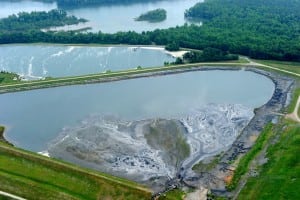
CoalNorth Carolina Sues for Coal Ash Water Contamination at 12 Duke Energy Sites
North Carolina on Friday sought a state Superior Court order to force Duke Energy to address groundwater and wastewater violations at 12 power plant sites that the utility uses to store coal ash residuals. The state’s Department of Environment and Natural Resources (DENR) filed two lawsuits for injunctive relief against Duke Energy Progress Inc. and […]
-
 Coal
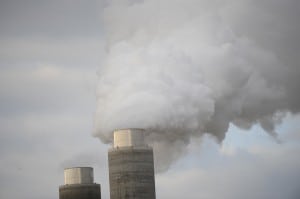
CoalDOJ Files to Enforce Luminant’s Alleged NSR Violations at Big Brown, Martin Lake
An enforcement action filed in federal district court by the Department of Justice last week alleges Luminant Generating Co. made unauthorized changes to its Big Brown and Martin Lake coal-fired power plants in Texas that violated the Clean Air Act. The case filed under seal in the Northern District of Texas (Dallas division) follows a […]
-
 Renewables
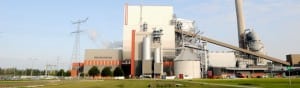
RWE to Close 3.1 GW of Conventional Generation Across Europe on Profit Woes
Europe’s third-largest power provider on Tuesday announced it would take offline 3.1 GW of natural gas and coal power plants in Germany and the Netherlands, citing a “continuing boom in solar energy.” Echoing several European utilities, Germany-based RWE has underscored the declining profitability of fossil fuel–fired plants that it says is pegged to fundamental changes […]
-
Coal
Duke Energy Settlement with Consumer Advocates Affects Nuclear, Coal Plants
A revised settlement agreement reached between Duke Energy Florida, the Office of Public Counsel, and other consumer advocates addresses cost recovery issues related to a retired nuclear reactor, a proposed nuclear project, and two coal units. Under the settlement agreement, Duke Energy will address cost recovery issues for the retired Crystal River 3 plant and […]
-
Coal
Replacing Coal in a Small Town
Courtesy: NRG When a new power plant is proposed, traditional battle lines are often drawn: The utility or plant owner on one side, usually with business interests in support, and concerned citizen and environmental groups on the other. Observers of NRG’s drive to replace its aging coal-fired Dunkirk Generating Station on the western shore of […]
-
 Coal
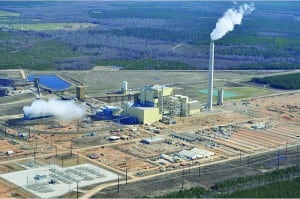
CoalAEP’s John W. Turk, Jr. Power Plant Earns POWER’s Highest Honor
AEP’s SWEPCO requested proposals in December 2005 for new generation to meet long-term capacity needs, and by August 2006 the company settled on coal-fired technology for a new plant site in Arkansas. Construction began in early 2008, and the new plant entered commercial service in December 2012. For overcoming numerous legal and regulatory obstacles and for building the first ultrasupercritical plant in the U.S., the John W. Turk, Jr. plant is awarded POWER’s 2013 Plant of the Year Award.
-
 Coal
CoalR&D Projects Target Cheaper Carbon Capture, Use, and Storage
In order to burn abundant supplies of coal globally while minimizing carbon dioxide emissions, cheaper methods of capturing, using, and storing greenhouse gas emissions from power plants are needed. A new federal agency is on the leading edge of identifying and supporting promising technologies.
-
Coal
Coal Plant Owners, Beneficiaries, Enviros Propose “Better-than-BART” Alternative to EPA
Stakeholders of the coal-fired Navajo Generating Station on Friday proposed to shut down a 750-MW unit at the plant by 2020 as an alternative to an Environmental Protection Agency (EPA) rule that requires the owners to install costly Selective Catalytic Reduction (SCR) technology on all three units by 2018.
-
Coal
Coal Ash Bill Clears House with 265–155 Vote, Heads to Senate
Coal ash legislation that would protect the recycling of coal ash and gives states the authority to set their own standards for the disposal of fly ash with oversight from the Environmental Protection Agency (EPA) last week cleared the House by a vote of 265–155.
-
Coal
Federal Court Upholds EPA’s GHG Permitting Rules
A divided panel from the U.S. Court of Appeals for the D.C. Circuit last week ruled that Texas, Wyoming, and industry groups lacked standing to challenge rules by the Environmental Protection Agency (EPA) related to state greenhouse gas (GHG) permitting requirements.
-
Coal
Federal Court Denies Review of Okla. Regional Haze EPA Case
A divided three-judge panel of the 10th U.S. Circuit Court of Appeals recently rejected Oklahoma State’s challenge to the Environmental Protection Agency’s (EPA’s) implementation of a regional haze rule to limit emissions from power plants in the state.
-
Coal
Clean Air Act Ruling Developments
The U.S. Court of Appeals for the Seventh Circuit has upheld an earlier district court decision that Clean Air Act liabilities do not transfer to new owners when a facility is sold, while the Third Circuit has upheld an Environmental Protection Agency (EPA) rule to limit sulfur dioxide emissions from a Pennsylvania coal-fired power plant on request of New Jersey, a downwind state.
-
O&M
AEP Will Retire Rather than Refuel Ohio Plant
American Electric Power (AEP) has opted to retire—instead of refueling with natural gas—its 585-MW coal-fired Muskingum River Plant Unit 5 in Beverly, Ohio, in 2015.
-
O&M
How Stealth Combustion Losses Lower Plant Efficiency. Part 1: The Problem
At the average coal-fired power plant, the battle to reduce net heat rate is complicated by skin-tight maintenance budgets, staff reductions, and—for some—the switch from baseload to mid-peaking service. The most fruitful approach to improving a plant’s heat rate is to optimize combustion in its boiler, particularly by minimizing the amount of “stealth” air in-leakage.
-
O&M
ORP: New Tool or Another Gadget?
Understand how to best use a new tool-in this case, the measurement of oxidation-reduction potential—and avoid another on-line gadget.
-
Coal
Economic, Regulatory Hurdles to Drive More Coal Retirements
The headwinds battering the coal power industry show no signs of slackening, as upcoming regulations and unfavorable economics promise to force another round of retirements.
-
Coal
Comprehensive Diagram Charts Nation’s Energy Use and Waste
An updated energy flow chart released by the Lawrence Livermore National Laboratory (LLNL) that visually depicts the relative size of primary energy resources and end uses in the U.S., with fuels compared on a common energy unit basis, shows the nation consumed more natural gas and renewables but less coal in 2012.
-
Coal
A Dozen States File Suits for Documents Related to EPA’s “Sue and Settle” Tactic
Twelve attorneys general last week filed a lawsuit in federal court requesting for access to documents related to the Environmental Protection Agency’s (EPA’s) so-called "sue and settle" practice with advocacy groups.
-
Coal
Federal Court Denies Review of Okla. Regional Haze EPA Case
A divided three-judge panel of the 10th U.S. Circuit Court of Appeals on Friday rejected Oklahoma State’s challenge to the Environmental Protection Agency’s (EPA’s) implementation of a regional haze rule to limit emissions from power plants in the state.
