
Business
-
Business
The Great Wall: The Barriers to Shale Gas in China and Why Shales Worked in the U.S.
China has enormous shale reserves and a power-hungry populace that needs the gas. But there are good reasons to think that China may not experience a U.S.-style shale gas boom any time soon. -
Business
POWER Digest (December 2012)
Georgia Power Completes 2,500-MW Coal-to-Gas Conversion. Southern Co. subsidiary Georgia Power on Oct. 28 put online the third and final 840-MW natural gas combined cycle unit at Plant McDonough-Atkinson in Smyrna, Ga. The first gas plant went online in December 2011 and the second on April 26. Bringing the plant’s capacity to 2,500 MW, the […]
-
Nuclear
Babcock & Wilcox Team Gets Unspecified DOE Award for SMR Development
The U.S. Department of Energy (DOE) has announced an award to support a new project to design, license, and help commercialize small modular reactors (SMR) in the U.S. The project supported by the award will be led by Babcock & Wilcox (B&W) in partnership with the Tennessee Valley Authority and Bechtel.
-
Coal
Report: Mississippi Power’s Kemper Project Will Be Over-Budget and Behind Schedule
A new report from the Institute of Energy Economics and Financial Analysis (IEEFA) challenges claims by Mississippi Power Co. (MPC) that its 582-MW Kemper Integrated Gasification Combined Cycle (IGCC) plant under construction in Kemper County, Miss., is 70% complete, and suggests that the project is over budget and behind schedule in several respects.
-
O&M
As Cybersecurity Bill Dies, Newly Declassified Report Underscores Grid Vulnerabilities
Despite growing concern about cybersecurity both in and outside of Washington, the Senate’s cybersecurity bill died a second time on Nov. 13. The apparent inability of Congress to pass legislation designed to protect critical U.S. infrastructure could lead to President Barack Obama implementing some of the bill’s provisions via executive order. A day after the bill failed to gain 60 votes for passage, a recently declassified report was released that finds the U.S. power grid is vulnerable to attacks that could be more destructive than natural disasters such as Hurricane Sandy.
-
Hydro
Hawaii’s Largest Wind Project Online as State Struggles to Integrate Renewables
On Monday, as First Wind announced its 69-MW Kawailoa Wind Project had gone into commercial operations on Oahu, other news underscored the difficulty the island state faces in trying to substitute renewables for expensive, imported fossil fuels.
-
Solar
European Solar Initiative to Source Power from North Africa Hits Blocks
The Desertec Industrial Initiative (Dii) oversees a $508 billion initiative to establish 6,500 square miles of concentrated solar power plants in the vast African and Middle Eastern deserts. Those plants are expected to furnish a fifth of Europe’s power needs by 2050, but in recent weeks the Dii has seen the exit of two of its 57 partners from 16 countries and a project held up by the Spanish government.
-
 Legal & Regulatory
Clean Air Rules: Unintended Consequences Generator?
A complex tangle of Clean Air Act rules is making life difficult for folks in the power industry, often seeming to go in different directions at the same time. It could get worse and here’s an attempt to make some sense of the confusion.
-
Legal & Regulatory
Whistleblower Heartaches, Headaches and Heads Ups
Whistleblowers are a growing and difficult fact of life in large and important organizations, and mishandling them can cause organizational pain and financial penalty. -
 Finance
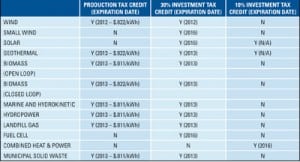
Financing U.S. Renewable Energy Projects in a Post-Subsidy World
Subsidies for renewable energy projects, a mainstay of U.S. policy for 20 years, is coming to an end. What next?
-
Legal & Regulatory
FERC Proposes Regulatory Regime for Solar Storms
With the power industry already facing a completely new, government-mandated approach to cybersecurity, CIPS 5, the Federal Energy Regulatory Commission has launched another regulatory venture that will result in a new set of reliability standards—this one designed to protect the bulk power system from solar storms.
-
Business
Creating Customer-Friendly Utility Communications
Make messages to customers simple, direct, and concrete to hit a response sweet spot. -
 Supply Chains
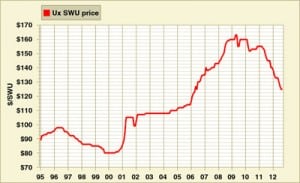
Why Swooning SWU Prices Will Continue
Long a tightly controlled near-monopoly, the market for enriched uranium is finally about to see some meaningful foreign competition.
-
Wind
Energy Storage Startup Gets $37.3 Million from High-Profile Investors
Berkeley, Calif., startup LightSail Energy, which aims to produce “the world’s cleanest and most economical energy storage systems,” has secured $37.3 million in a Series D round that included three big-name investors: Bill Gates, Vinod Khosla, and Peter Thiel.
-
Business
As Time Goes By—The Long Gestation for Gas Pipeline Projects
When you’re building a natural gas pipeline, running pipe from Point A to Point B is only the final, most obvious step. You’ve got to jump through a lot of hoops to get there, in a process that can take years and that involves a lot of foresight.
-
Business
POWER Digest (November 2012)
Global Companies Take on Nigeria’s Newly Privatized Plants. Nigeria’s $1 billion liquidation of five government-owned thermal and hydropower generation companies—part of a wider privatization effort that includes transmission and distribution assets to encourage investment in the power shortage–stricken country’s electricity sector—has attracted a number of global companies and investors. Eight firms bid a total of […]
-
 Business
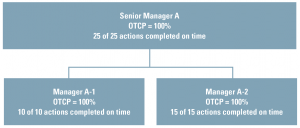
Measuring On-Time Completion to Improve Your EHS Audit Program
A number of factors promote effective and responsible completion of EHS audit action plans, with the most important being the proper alignment of responsibility and authority for developing and implementing the audit action plan.
-
 Nuclear
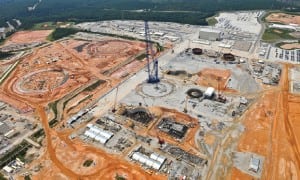
What Worldwide Nuclear Growth Slowdown?
Data detailing plans for new nuclear reactors worldwide show few effects of the March 2011 Fukushima accident. China and Russia in particular continue to be hot spots for nuclear development, but cost overruns, construction glitches, and ongoing safety reviews are slowing construction projects elsewhere.
-
 Business
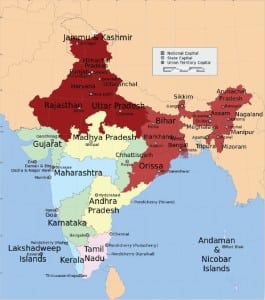
After Blackouts, India Plans Reforms
The back-to-back collapse at the end of July of India’s Northern, Eastern, and Northeastern grids that slashed power to more than 60% of India’s population of 1.24 billion has impelled the country into a spending frenzy to upgrade its rickety power network, which, a government inquiry revealed, was one cause of the unprecedented blackouts.
-
Business
$1.2 B Pennsylvania–New Jersey Line Gets Federal OK
The National Park Service on Monday approved a $1.2 billion 500-kV transmission line that will run from the Berwick area in Pennsylvania to Roseland, N.J., a project that developers Public Service Electric and Gas Co. (PSE&G) and PPL Electric Utilities say will boost electric service reliability and provide a significant economic stimulus to the region.
-
Gas
New Study Advocates Shift Toward Long-Term Gas Supply Agreements
Current low gas prices offer a unique opportunity to lock in savings for years to come—but only if utilities, gas suppliers, and regulators have the vision to commit to a new way of doing business.
-
Business
POWER Digest (October 2012)
Chile Supreme Court Strikes Plans for $5B Coal Plant. Chile’s Supreme Court on Aug. 28 rejected the $5 billion Central Castilla thermoelectric power plant planned by Brazilian firm MPX Energia and Germany’s E.ON, citing environmental reasons. Developers argued that the 2,100-MW plant is needed by Chile, the world’s foremost copper producer, which struggles with high […]
-
 Coal
CoalAre Economics Trumping Regulation?
The fate of coal-fired generation remains fluid as owners weigh environmental rules, the effect of low natural gas prices, and the shifting cost of investing in emissions control technology. An analysis of generating unit data suggests that smaller, older, less-efficient, and less-frequently dispatched assets are most vulnerable to retirements. Recently accelerated retirement dates for some units indicate that economic factors are a more important determining factor than pending environmental mandates
-
 Coal
CoalChina’s Power Generators Face Many Business Barriers
China’s five largest power generators own half of that country’s power generating assets. Faulty policies and the rapidly changing global economy have made it difficult for these companies to fulfill the high expectations arising from enactment of the Power System Reform Scheme of 2002
-
 Water
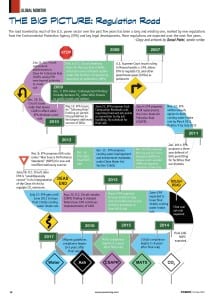
WaterTHE BIG PICTURE: Regulation Road
To view a larger version of this graphic, download the file here.
-
O&M
Unit Cycling Makes the Impossible the Ordinary, EUCG Members Say
Low natural gas prices and still-soft electricity demand are forcing low-load and cycling operations at traditionally baseloaded coal units across the country. The resulting challenges were top of mind at the Electric Utility Cost Group’s (EUCG’s) fall meeting in Denver last week. One member of the EUCG’s fossil generation committee from an Ohio Valley utility said that cycling and low-load operations pose challenges for one of his company’s 1,300-MW coal-fired plants that “two years ago we wouldn’t have considered possible.â€
-
Instrumentation & Controls
Chinese Hackers Blamed for Breach of Telvent’s SCADA-Related Network
Cyber attacks on the utility industry are no longer theoretical. According to multiple sources, smart grid technology vendor Telvent told U.S., Canadian, and Spanish customers on Sept. 10 that hackers had broken through its firewall and accessed “project files” related to its OASyS SCADA system. On Wednesday, reports surfaced that, based on the perpetrators’ “digital fingerprints,” the attack appears to be the work of a well-known Chinese hacker group.
-
Business
NYISO Braces for Generation Gap By 2020
About 1,792 MW of existing generation in the New York bulk power system is expected to retire or be mothballed over the next decade, and if demand heightens as has been forecast by 2020, the state’s grid could see a 1,000-MW generation gap, the New York Independent System Operator (NYISO) warned in its recently released 2012 Reliability Needs Assessment (RNA).
-
Business
SDG&E Settles with Feds on 2007 California Wildfire Claims
San Diego Gas & Electric (SDG&E) has agreed to pay $6.4 million to the U.S. Forest Service to settle claims related to one of the largest wildfires in California history. The utility has already paid more than $1 billion to settle thousands of lawsuits after state investigations concluded that the company’s high-voltage power lines produced electrical arcing and ignited the 2007 Witch Creek Fire that ravaged 198,000 acres near Santa Ysabel in San Diego County, Calif.
-
Legal & Regulatory
Understanding Consequential Damages
One set of legal provisions that anyone in a business or operational role should be aware of is the “consequential damage waiver.” These provisions dictate two of the most vital aspects of any contract: What can you recover if the other party breaches the contract, and what do you have to pay if you do?