
Business
-
Coal
Four Major EPA Air and Water Rules Forthcoming Through May, Agency Schedule Shows
The Environmental Protection Agency (EPA) estimates final regulations curbing greenhouse gas (GHG), mercury, and air toxics emissions from new sources could appear in the Federal Register over the next six weeks. Also forthcoming are final cooling water intake rules and proposed effluent guidelines. The coal ash rule, which has no target date for a final rule, may not be issued this year, the agency said.
-
Legal & Regulatory
NLRB Overturns Dues Precedent, Faces Court Challenge
Taking an activist stance in favor of unions, the National Labor Relations Board recently ruled that employers must continued to withdraw union dues from paychecks even after a collective bargaining agreement has expired. But another court ruling may place this NLRB decision—and many others—in doubt.
-
Business
Value: One of the Most Confounding Propositions We Face
It’s easy to say utilities need to show their customers the value they receive for their money. It’s much harder to define exactly what that means or how to do it.
-
Finance
Mexico’s Power Sector Attracts New Investors
Opportunities abound in the Mexican energy sector as investors rediscover one of Latin American’s breakout markets. -
Legal & Regulatory
NRC Grants Citizen Petition to Examine Solar Storms
Attention to the potential risks of solar storms to the power sector continues, as the NRC issues a highly unusual grant to a citizen’s rulemaking petition on how solar storms could affect spent fuel powers at nuclear plants.
-
Business
Utility Communicators: An Ounce of Prevention or a Pound of Cure?
Selling the value of good customer communications to upper management is not always easy. Positioning it as CEO pain avoidance can go a long way toward that goal.
-
Supply Chains
TREND: Down Go Electricity Prices
A variety of factors have exerted downward pressure on wholesale electricity prices the past few years. EIA data suggest this may be a long-term spiral, not just a temporary hiccup.
-
Coal
Gates Calls for Increased Spending on Energy Research, Renewed Focus on Nuclear
Bill Gates didn’t mince words last night when sharing with the IHS CERAWeek crowd his thoughts about public support for basic scientific research in the United States.
-
Coal
China Looks to Curb Carbon Emissions by Diversifying Power Portfolio
China will reduce the nation’s carbon emissions and energy use per unit of gross domestic product (GDP) by at least 3.7% this year and perform trials for a carbon-trading program, China’s National Development and Reform Commission (NDRC), said in a report on Tuesday. The country would also make "greater efforts to conserve energy" and "reduce the discharge of major pollutants," it’s top economic planner said.
-
Environmental
Obama Nominees—McCarthy for EPA, Moniz for DOE, and Jewell for DOI—Face Tough Confirmation Hearings
President Obama this week nominated Gina McCarthy, the current assistant administrator for the Environmental Protection Agency (EPA) Office of Air and Radiation, to head the EPA. He also nominated Dr. Ernest Moniz, currently a faculty member at the Massachusetts Institute of Technology (MIT) for secretary of energy. Both are expected to face a difficult confirmation process.
-
Business
Survey Suggests Regulatory Risk, Weak Power Prices Are Biggest Challenges for European Power Sector
A survey of European power utility and consultancy workers conducted by energy information provider Platts last week suggests that regulatory risk and weak wholesale power prices are thought to be at the top the industry’s most significant challenges.
-
Wind
What Toothpaste and Battery Manufacturing Have in Common (Video)
Among the early-stage energy technology projects on display at last week’s Advanced Research Projects Agency-Energy (ARPA-E) Energy Innovation Summit were two from the Palo Alto Research Center (PARC) that have the potential to enhance a variety of battery and other power-related applications. POWER shot video demonstrations of these technologies, which are approximately three to five years from commercialization. See if you can figure out which one was inspired by striped toothpaste.
-
Environmental
Gas Power Fights Uphill Battle in China
Soon to become the world’s largest electricity market, China is also looking to ease its reliance on coal by shifting toward renewables and natural gas. But an array of roadblocks stand in the way of gas becoming a major element of the mix. -
Business
Creating a Sustainable Energy System Through Gas and Electric Harmonization
The increasing importance of natural gas in the nation’s generation mix has brought a number of reliability concerns to the forefront. Though regional and federal regulators are beginning to address the issues involved in harmonizing the natural gas and electric power sectors, a number of roadblocks remain to be removed. -
Renewables
The Spotlight on a Mexican Success Story
Energy demand in Mexico, according to the Secretary of Energy (SENER), will increase by approximately 4% each year for the next ten years, and with it the potential for private sector growth in the industry. Download the report.
-
Business
POWER Digest (March 2013)
Selected business news and deals in the power generation industry.
-
Gas
Should the U.S. Export Natural Gas?
Controversy concerning natural gas exports flared the day the U.S. Energy Information Administration (EIA) released its estimate that U.S. natural gas exports could begin in 2021.
-
 Coal
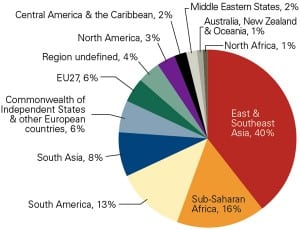
CoalNations Agree to Legally Binding Instrument to Curb World’s Mercury Emissions
Mercury emissions from power plants in 137 United Nations member countries could be subject to strict controls and reductions if an international treaty is signed by participating nations this October.
-
 Gas
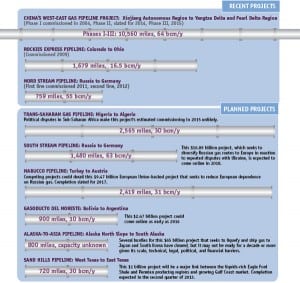
GasTHE BIG PICTURE: Stretching the Pipeline
Here are some of the longest pipelines recently built as well as noteworthy ones in the pipeline.
-
Legal & Regulatory
Align Generation Reliability and Fuel Supply Firmness
More and more electricity is generated by natural gas. This trend is likely to persist. Hydraulic fracturing technology is increasing domestic supplies and enabling natural gas prices to remain at historic lows.
-
 Coal
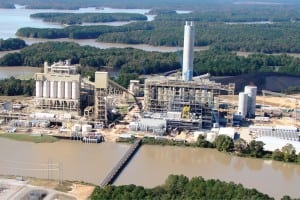
CoalTechno-Economic Considerations When Using Low-Grade Coal for Power Generation
The use of low-grade coal is becoming synonymous with circulating fluidized bed (CFB) power plants. Although CFB technology may often be a better choice than pulverized coal technology, that is not always the case. Owners and developers need to consider several technical and economic factors before making this decision.
-
 Gas
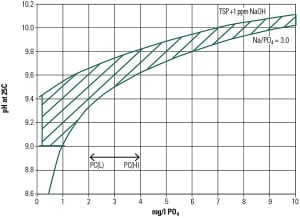
GasSelecting a Combined Cycle Water Chemistry Program
The lifeblood of the combined cycle plant is its water chemistry program. This is particularly true for plants designed for high pressures and temperatures as well as fast starts and cycling. Even though such plants are increasingly common, no universal chemistry program can be used for all of them.
-
 Wind
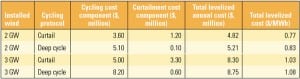
WindRethinking Wind’s Impact on Emissions and Cycling Costs
Recent reports by the National Renewable Energy Laboratory and others suggest that the emissions-reducing benefits of renewable energy sources such as wind and solar may have been overstated and the cost of cycling fossil-fueled plants underestimated. These findings may change how utilities and policymakers weigh the costs and benefits of wind and solar energy.
-
Gas
Japan Banks on LNG
Japan’s scramble to replace generation lost from nuclear power plants that were shuttered after the March 2011 Fukushima Daiichi nuclear accident has forced it to rely on pricey imports of fossil fuels—and soaring energy costs are hammering the world’s third-largest economy.
-
Environmental
Chu’s Last Public Speech as Secretary of Energy
Dr. Steven Chu gave what was likely his last public speech as U.S. secretary of energy today on the last day of the ARPA-E Energy Innovation Summit. As usual for Chu presentations, it was a mix of data, vision, and humor. It fell to others to comment on the value and legacy of his service, especially to energy research and development.
-
Coal
ARPA-E Plays Matchmaker for Innovative Energy Research Projects
The Advanced Research Projects Agency-Energy (ARPA-E) may be the most important federal agency many in the power industry have never heard of. Whatever generation technology you are associated with, ARPA-E’s work will affect its future.
-
Environmental
Bipartisan Center Outlines 50 Policy Recommendations for More Secure U.S. Energy Future
Technological progress and policy interventions over the last decade have arguably enhanced U.S. energy security and put it in a stronger position to shape its own energy destiny, a new report from the Bipartisan Policy Center (BPC) argues. Among more than 50 energy policy recommendations outlined in the report to tackle significant challenges still faced by the nation’s energy sector are those calling for the establishment of a comprehensive national energy strategy.
-
Smart Grid
DOE Announces $20M in Funding to Enhance Energy Cybersecurity
The Department of Energy (DOE) last week announced the availability of up to $20 million for the development of tools and technologies to enhance cybersecurity of delivery control systems for electricity, oil, and gas in the U.S.
-
Coal
Obama Calls for Market-Based Climate Change Solution in SOTU
President Obama outlined a number of key energy-related measures in his State of the Union speech on Tuesday night, urging Congress to pursue legislation to mitigate climate change and calling for an expansion of clean energy and reduced red-tape for natural gas and oil permits.
-
Business
White House Nominates Sally Jewell as Secretary of the Interior
Sally Jewell, who has been CEO of REI, a privately held outdoor recreation gear retail corporation organized as a consumers’ cooperative, has been nominated as the next secretary of the interior, the White House announced on Wednesday.