
Blog
-
With Macfarlane Out, Wither the NRC?
President Obama named Allison Macfarlane to the Nuclear Regulatory Commission and appointed her chairman in July 2012 largely to restore some calm to the chaos that reigned at the NRC under the chairmanship of Greg Jaczko, whose patron was Senate Majority Leader Harry Reid (D-Nev.). Her expertise in nuclear waste issues – a geologist, she […]
-
Bob Fri, Energy and Environmental Policy Guru, Dies at 78
Robert W. Fri, long a major figure in environmental and energy policy in Washington, although better known to the public as a director of the Smithsonian Institution’s National Museum of Natural History, died October 10 at Sibley Hospital in Washington. The Washington Post obituary said the cause was lung cancer. He was 78. As an […]
-
Gas
Beyond Common Sense
The Sierra Club’s frequently silly “Beyond Natural Gas” campaign just got a whole lot sillier. Last week, the New Jersey chapter put out the claim that repowering an old coal- and oil-fired power plant in Cape May with natural gas would hurt area reliability. If that sounds like an odd statement from an environmental group, […]
-
Love, War, and Politics 2: Coal and Kentucky
If you judge that West Virginia’s coal politics are slimy this electoral season, take a look at Kentucky. In an earlier blog posting, I took exception to the way Republican-oriented outside groups were sliming the West Virginia Democratic candidate for the U.S. Senate, Natalie Tennant. Now it’s time to turn the tables, look at neighboring […]
-
Where’s the Heat?
In the 1984 Democratic presidential nomination contest, Sen. Paul Tsongas repeatedly charged the establishment in his party with lacking “new ideas.” When he and front-runner Walter Mondale, former senator and vice president, locked up in a televised debate, Mondale correctly pointed out that Tsongas had no new ideas. Riffing on a popular Wendy’s TV ad, […]
-
Love, War, and Politics
My home in Maryland is just across the Potomac River from West Virginia – I can see my neighboring state when I walk out of my front door and look to the left – where a U.S. Senate seat is up for grabs in the coming election. Well, only nominally up for grabs. There’s very […]
-
The Truth about Fracking
Let’s get frank about fracking. As I see it, horizontal well drilling and hydraulic fracturing of tight rock formations to release hydrocarbons is the best thing to happen in U.S. energy in 40 years. I’ve reported on fracking developments in the context of power generation since 2008. I’ve covered energy issues, with a focus on […]
-
MISO Confronts Capacity Problems
For much of its 15-year history, the Midcontinent Independent System Operator (nee the Midwest Independent System Operator) didn’t pay much attention to the topic of “resource adequacy.” The regional transmission organization, in a region rich in baseload, coal-fired power plants, had a 30%-35% reserve margin through most of its years of operation. That excess in […]
-
Who Runs U.S. Grid Security?
An article in today’s Washington Post troubles me greatly. It outlines severe retention and moral problems at the Department of Homeland Security, the uber-agency created in the aftermath of the 9/11 horror. DHS – much like the Department of Energy in 1977 – was cobbled together in haste in 2002 from some 22 disparate agencies […]
-
Deadlock Strikes the Federal Energy Regulatory Commission
The perils of having only four members in a five-member regulatory agency were on display this week at the Federal Energy Regulatory Commission. The commission deadlocked 2-2 over whether to consider a complaint from activists claiming that the owner of the 1,530-MW coal-fired Brayton Point generating station near Boston manipulated an ISO-New England forward capacity […]
-
Dump ‘Nukespeak’ to Reach Broader Audiences
Washington, D.C. – A recent editorial in the industry news service World Nuclear News struck an intellectual and emotional chord for me. The editorial argues that the nuclear industry must “ditch the jargon” of the nuclear industry in order to reach out more effectively to the financial community. I agree completely and would broaden the […]
-
Can FERC Nominee Honorable Beat the Clock?
Washington, D.C. – With the departure of John Norris, the Federal Energy Regulatory Commission may once again face a long period of a vacancy on the five-member commission. While the Obama administration has announced its intention to nominate Colette Honorable, chairman of the Arkansas Public Service Commission, to fill the vacancy, the clock is working […]
-
Seismic Specter Arises Again at Diablo Canyon
Washington, D.C. – Last month’s 6.0 earthquake in California’s Napa Valley has again raised the issue of whether the U.S. nuclear regulatory system adequately accounts for seismic activity in its safety analysis of the 2,000-MW Diablo Canyon plant. Diablo Canyon is the last operating nuclear station in the state and located well away from the […]
-
Could FERC Implement a Carbon Price Equivalent?
Washington, D.C. – Many economists and policymakers believe that the best way to reduce U.S. carbon dioxide emissions is the simplest: a market-based price on the emissions. But that approach – either through a direct carbon tax or a somewhat more convoluted cap-and-trade mechanism – is simply not politically possible, as the Obama administration has […]
-
At DOE’s 37th Birthday, Was it a Wise Creation?
Washington, D.C. — Congress enacted legislation creating the U.S. Department of Energy in August of 1977. The agency began operating in October of 1977. Was that wise legislation? In the 37 years since its creation, much has changed in the U.S. energy economy. When Jimmy Carter pushed Congress to create the energy department, the U.S. […]
-
Will the Smart Cloud Bypass the Smart Grid?
Washington, D.C., August 17, 2014 – Samsung Electronics last week announced that it has acquired a Washington-based home electronics firm, SmartThings, for an undisclosed sum. The move is further evidence that the electric utility industry’s still forming visions of a smart grid to control customers energy use could be bypassed by wireless technology and the […]
-
Norris Says ‘Arrivederci FERC’ and Heads to Rome
In a series of events that could have been choreographed by the Three Stooges, John Norris yesterday resigned his seat on the Federal Energy Commission. He will become the top official representing the U.S. Department of Agriculture in Italy, thanks to his old friend and former boss, USDA secretary Tom Vilsack. The Norris resignation has […]
-
Is John Norris leaving the Federal Energy Regulatory Commission?
Washington, D.C. – Rumors are surfacing in Washington that John Norris, a Democratic member of the Federal Energy Regulatory Commission and FERC’s most liberal commissioner, is poised to resign, some three years before his term expires in June 2017. Norris has already said he won’t seek reappointment, and complained about the tawdry circumstances that have […]
-
Renewables Fail Badly in Brookings Cost Analysis
Washington, D.C. — Electricity generation from natural gas, nuclear, and hydro are far better economic and environmental propositions than wind or solar, according to a paper from the Washington-based Brookings Institution – The Net Benefits of Low and No-Carbon Electricity Technologies. The paper by Brookings fellow Charles R. Frank avoids the usual approach to analyzing […]
-
NAS panel criticizes basics of U.S. nuclear safety approach
Washington, D.C. – Is the conventional approach to nuclear safety in the U.S. – and most of the world – fundamentally flawed? That’s the clear implication of a recent National Academy Sciences report on the U.S. response to the 2011 catastrophe at Fukushima. Although the report has not gotten much attention in the U.S. media, […]
-
Closed Kewaunee nuke has a buyer, but no seller
Washington, D.C. — Robert G. Abboud, a Chicago-area businessman-politician, wants to buy a well-used Wisconsin nuke. But the owner, Virginia’s Dominion Resources, says it doesn’t want to sell the Kewaunee plant that it shut down in 2012. Abboud is the principal in RGA Labs in Barrington, Ill., an energy engineering consulting firm. He’s a nuclear […]
-
Climate Hype Discredits Journalists and Activists
Washington, D.C., July 15, 2014 – Is Miami sinking under the assault of a climate gone wild? That’s the characterization of an article in Britain’s left-oriented Guardian newspaper. But the piece is generating push back from non-ideological and moderate journalists. And the Guardian’s breathless hype is too often reflective of general media coverage of the […]
-
Gina McCarthy’s Thin Skin on the Origins of the Obama Greenhouse Regs
Washington, D.C., July 12, 2014 – In public, Gina McCarthy, head of the Environmental Protection Agency, comes across as a no-nonsense, rough-and-tumble, tough cookie. But a recent flap over the origins of her agency’s proposed rules for controlling carbon dioxide from existing coal-fired power plants shows her to be defensive and thin-skinned. The revelation of […]
-
The Unintended Political Consequences of Obama’s Global Warming Policy
Washington, D.C., July 9, 2014 – President Obama made a major political mistake in using the ambiguous authorities in the 1990 Clean Air Act to take on the task of reducing carbon dioxide emissions from existing coal-fired power plants. Today, it looks like Obama’s petulant push to go where Congress wouldn’t on climate policy is […]
-
Will the Smart Grid Become the Annoying, Vulnerable Grid?
Washington, D.C., July 3, 2014 – Do you want a future in which you have to plug in your username and password on your smart phone to open you refrigerator? Talk about an annoyance. This thought came to me when reading a new report in the June 30 issue of MIT’s Technology Review magazine. Much […]
-
The Ups and Downs of U.S. Nuclear Power
Washington, D.C., June 30, 2014 – There appears to be a cyclical element to the story of nuclear power in the U.S., an ebb-and-flow that repeats itself over time. There’s no lock-step periodicity, but the tides of hyperbole and deflation occur with some regularity. The most recent case of the binge-and-repent cycle in nuclear comes […]
-
Iceland’s Uniqueness Extends to Electricity
June 27, 2014 – Iceland, the westernmost country in Europe, is unique. Its geology is entirely volcanic, as it sits on the meeting place of the Eurasian and North American tectonic plates. It has a unique language, with a 32-letter alphabet, based on Scandinavian, Saxon, and Celtic roots. Iceland had the first parliamentary system of […]
-
 Gas
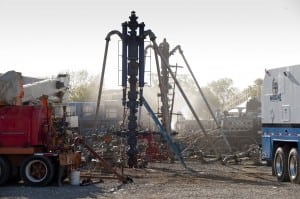
GasWhat China and Other Nations Can Learn from U.S. Shale Gas Fracking Experience
This week, the Bonn climate change conference concluded in Germany. During the talks, discussion focused on adaptation and long-term greenhouse gas emissions reduction goals to meet climate targets. These mitigation and adaptation strategies build on international momentum to tackle climate change, such as China’s announcement that by 2016, its first carbon emissions cap will come […]
-
 Commentary
How Much Energy Will the 2014 World Cup Consume?
Along with 3 billion other viewers around the world, I plan to tune in for the month-long World Cup to see whether the 22-year old Neymar can withstand the colossal pressure that has been put upon his shoulders to deliver a win for team Brazil. Every time I turn on my television set, I’m using World Cup-related energy. And […]
-
Making Decisions in the Face of Uncertainty
Washington, D.C., June 10, 2014 – How can governments and businesses make investment and policy decisions in the face of enormous uncertainties? That’s a question facing many in the world today as scientists assert that global warming could be an existential crisis, but with great uncertainties attached. The World Bank’s economics team offers some […]