
Articles By

-
Legal & Regulatory
NLRB Overturns Dues Precedent, Faces Court Challenge
Taking an activist stance in favor of unions, the National Labor Relations Board recently ruled that employers must continued to withdraw union dues from paychecks even after a collective bargaining agreement has expired. But another court ruling may place this NLRB decision—and many others—in doubt.
-
Business
Value: One of the Most Confounding Propositions We Face
It’s easy to say utilities need to show their customers the value they receive for their money. It’s much harder to define exactly what that means or how to do it.
-
Finance
Mexico’s Power Sector Attracts New Investors
Opportunities abound in the Mexican energy sector as investors rediscover one of Latin American’s breakout markets. -
Legal & Regulatory
NRC Grants Citizen Petition to Examine Solar Storms
Attention to the potential risks of solar storms to the power sector continues, as the NRC issues a highly unusual grant to a citizen’s rulemaking petition on how solar storms could affect spent fuel powers at nuclear plants.
-
Business
Utility Communicators: An Ounce of Prevention or a Pound of Cure?
Selling the value of good customer communications to upper management is not always easy. Positioning it as CEO pain avoidance can go a long way toward that goal.
-
Commentary
Yes, Virginia, There is A Nuclear Renaissance
The news for nuclear the past few years has not been good. But forces lurking in the background are moving to rekindle the nuclear renaissance, as the long-term cost advantages seem certain to beat out much of the competition from renewables.
-
Commentary
Minerals Make the World Go Around
The increasingly advanced American economy is increasingly in need of a wide variety of minerals—many of which must currently be imported. But regulatory reform and a better understanding of their importance could lead to a renaissance in domestic mineral production.
-
Commentary
“All of the Above” Is Not a National Energy Policy
It’s all well and good to suggest the U.S. needs to be open to all solutions in the pursuit of its energy future, but at some point "try everything" needs to give way to a well-thought plan implementing the best, most cost-effective options.
-
Commentary
An Iconoclast’s Manifesto
It’s time to banish a few common terms that are hindering good thinking and obstructing progress in the power sector.
-
General
Snowquester, Sequester, and Farce
By Kennedy Maize Washington, D.C., March 10, 2013 – What if Congress scheduled a hearing on global warming, then had to cancel it at the last minute because of a severe late winter snow storm? A scene from a bad Hollywood farce? No, that’s what really happened last week. And yes, you are allowed to […]
-
Coal
Gates Calls for Increased Spending on Energy Research, Renewed Focus on Nuclear
Bill Gates didn’t mince words last night when sharing with the IHS CERAWeek crowd his thoughts about public support for basic scientific research in the United States.
-
Coal
China Looks to Curb Carbon Emissions by Diversifying Power Portfolio
China will reduce the nation’s carbon emissions and energy use per unit of gross domestic product (GDP) by at least 3.7% this year and perform trials for a carbon-trading program, China’s National Development and Reform Commission (NDRC), said in a report on Tuesday. The country would also make "greater efforts to conserve energy" and "reduce the discharge of major pollutants," it’s top economic planner said.
-
Environmental
Obama Nominees—McCarthy for EPA, Moniz for DOE, and Jewell for DOI—Face Tough Confirmation Hearings
President Obama this week nominated Gina McCarthy, the current assistant administrator for the Environmental Protection Agency (EPA) Office of Air and Radiation, to head the EPA. He also nominated Dr. Ernest Moniz, currently a faculty member at the Massachusetts Institute of Technology (MIT) for secretary of energy. Both are expected to face a difficult confirmation process.
-
Nuclear
Federal Court Reopens Case Disputing Nuclear Waste Fund Fees
The U.S. Court of Appeals for the D.C. Circuit last week reopened and set a relatively expedited briefing schedule for a case in which several states and nuclear utilities have claimed collection of a nuclear waste fee by the Department of Energy (DOE) is unlawful.
-
Environmental
EIA: U.S. Power Sector SO2, NOx Emissions Lowest Since 1990
Power plant emissions of sulfur dioxide (SO2) and nitrogen oxides (NOx) in the U.S. declined to their lowest level since 1990, the Energy Information Administration (EIA) said last week.
-
Nuclear
Global Laser Enrichment Formally Proposes Uranium Facility for Paducah
GE–Hitachi division Global Laser Enrichment (GLE) has reportedly submitted a nonbinding proposal to establish an additional uranium enrichment facility at the Department of Energy’s (DOE’s) Paducah enrichment site in Kentucky.
-
Business
Survey Suggests Regulatory Risk, Weak Power Prices Are Biggest Challenges for European Power Sector
A survey of European power utility and consultancy workers conducted by energy information provider Platts last week suggests that regulatory risk and weak wholesale power prices are thought to be at the top the industry’s most significant challenges.
-
Legal & Regulatory
FERC’s Market Transparency Push: A Solution in Search of a Problem
The Federal Energy Regulatory Commission has recently launched a multi-front effort to combat market manipulation. But its proposal to require expanded reporting of interstate wholesale natural gas transaction threatens to distort the market and ultimately do far more harm than good. -
Why We Need to Be Cautious in the Shift to Gas
There’s a lot to like about gas-fired power: Abundant fuel supplies, lower emissions, higher efficiencies. But in the rush to seize these advantages, the U.S. may risk overcommitting to a single generation resource—one with a long history of price volatility. -
Environmental
Gas Power Fights Uphill Battle in China
Soon to become the world’s largest electricity market, China is also looking to ease its reliance on coal by shifting toward renewables and natural gas. But an array of roadblocks stand in the way of gas becoming a major element of the mix. -
Wind
What Toothpaste and Battery Manufacturing Have in Common (Video)
Among the early-stage energy technology projects on display at last week’s Advanced Research Projects Agency-Energy (ARPA-E) Energy Innovation Summit were two from the Palo Alto Research Center (PARC) that have the potential to enhance a variety of battery and other power-related applications. POWER shot video demonstrations of these technologies, which are approximately three to five years from commercialization. See if you can figure out which one was inspired by striped toothpaste.
-
Environmental
The Effect of Shale Gas on Power Generation in New England
Generators in New England were burned in the 2000s when a fleet of new gas turbine plants couldn’t compete because of high fuel prices. But what goes around comes around, and these same plants are now pushing out oil and coal thanks to cheap shale gas and favorable regulations. -
Legal & Regulatory
With the Gas, the Flow of Fracking Litigation Continues
Few industrial innovations are free of litigation, and fracking is no exception. In this update from last year’s review of litigation trends, favorable early results for explorers and developers suggest cautious optimism may be in order for the natural gas industry. -
Environmental
Air Quality Impacts from Natural Gas Extraction and Combustion
EPRI performed a review of air quality issues related to natural gas extraction and combustion in 2011–2012. This review focused on both traditional pollutants (such as particulate matter and volatile organic compounds) and emerging air pollutants (such as ultrafine particle number) that are being considered in air quality management processes. This article summarizes the major topics and conclusions from this review. -
Business
Creating a Sustainable Energy System Through Gas and Electric Harmonization
The increasing importance of natural gas in the nation’s generation mix has brought a number of reliability concerns to the forefront. Though regional and federal regulators are beginning to address the issues involved in harmonizing the natural gas and electric power sectors, a number of roadblocks remain to be removed. -
Renewables
The Spotlight on a Mexican Success Story
Energy demand in Mexico, according to the Secretary of Energy (SENER), will increase by approximately 4% each year for the next ten years, and with it the potential for private sector growth in the industry. Download the report.
-
 Coal
CoalDespite Pollution-Curbing Efforts, Dense Smog Covers Wide Swath of China
Four bouts of dense smog described as the worst air pollution in recent memory enveloped more than half of China in January, from the Beijing-Tianjin-Hebei triangle in the north of the country to Nanjing in the south, via the central city of Wuhan.
-
 News
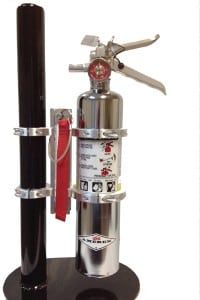
NewsQuick-Release Mount for Fire Extinguishers
A new modular and durable quick-release mount for popular fire-extinguisher sizes is now available from Off-Road Solutions (ORS). The system uses two pieces of 6061-T6 billet aluminum: one attaches to the extinguisher while the other piece secures to a fixed object. The 3/16-inch hinge pin and 3/8-inch quick-release pull pin with detent ball are made […]
-
 Nuclear
Hungary Inaugurates Subsurface Repository for Nuclear Plant Waste
Construction of a $310 million repository about 250 meters below Earth’s surface for low- and intermediate-level radioactive waste from the operation and future decommissioning of Hungary’s power plants reached a significant milestone at Bataapati.
-
 News
NewsEPA-Compliant Particulate Monitor
Filtersense’s new continuous particulate emissions monitor and baghouse leak detector incorporates “Automatic Zero and Span Checks” to eliminate manual calibration audits, as required by the U.S. Environmental Protection Agency (EPA) for Maximum Achievable Control Technology (MACT) standards and other regulations for fabric filter particulate emissions monitoring. In addition to internal self-checks, the company’s field-proven induction-sensing […]