
Articles By

-
Commentary
It Can Happen Here
When the Soviet Union’s Chernobyl nuclear power plant exploded in 1986, the response of the Western nuclear industry was, “It can’t happen here.” And then there was Fukushima Daiichi disaster in 2011. Was one disaster worse than the other?
-
 Coal
CoalPlant of the Year Trophy Presented
The POWER Plant of the Year for 2011 was Kansas City Power & Light’s 850-MW Iatan 2, located about 30 miles northwest of Kansas City.
-
 Smart Grid
EEI Proposes Road Map for Electric Vehicle Integration
Several new models of plug-in electric vehicles will enter the market in 2012, joining the Nissan LEAF and Chevrolet Volt. The Edison Electric Institute has prepared four suggestions to help utilities smoothly handle the introduction of these vehicles to roads and grids.
-
Legal & Regulatory
TREND: Europe’s Enthusiasm for Renewables Wanes
The EU has poured billions of dollars in support of the development of wind and solar projects over the past decade. Have the Europeans now lost their appetite for all things green?
-
Legal & Regulatory
Rethinking Security Requirements for Generation Developers
A universal reality for U.S. power generation developers is the challenge of obtaining funding in today’s tight credit markets.
-
 Business
Automating Crew Callouts
Progress Energy has adopted an emergency worker callout program that has eliminated manual dialing, improved work acceptance rates, and increased the speed of worker reporting. The standardized process also complies with union work rules that require equality in overtime opportunities, by seniority. The business case for automating the worker callout process is compelling.
-
 Coal
CoalCoping with Coal Dust
Plants can no longer sweep coal dust under the rug and ignore the health and safety hazard it presents, because a single spark can cause a dust explosion that could put a plant out of service, perhaps permanently. Managing dust in a power plant begins with good housekeeping, followed by retrofits using properly designed equipment.
-
 News
NewsCertified Zero Air Material for CEMS Reporting
Air Liquide introduced Scott brand 72.2 Certified ZAM (zero air material) to meet 40 CFR Part 75 regulations, which call for a continuous emission monitoring (CEM) system to be exposed to “zero air material” during testing protocols in order to qualify the accuracy of the instrument. Air Liquide achieves a balance between regulatory compliance certainty […]
-
 O&M
O&MRegional Service Organization Provides Supplemental Maintenance Support
American Electric Power’s Field Services Regional Service Organization augments resident power plant maintenance teams to provide outage support and non-outage balance-of-plant support. The augmentation approach adds significant value to the maintenance process, with the greatest benefits coming in the areas of expertise, cost, productivity, and ownership.
-
 News
NewsFill-Level Measuring Device for Coal Mills
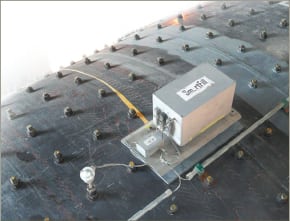
KIMA Echtzeitsysteme’s fill-level measuring device, used for ball mills in the cement industry for over seven years, has now been adapted and developed for use in coal mills. A new fill-level sensor enables reliable fill-level measurements, even with fluctuations in coal quality or moisture levels. Tested over a period of several months, the SmartFill for […]
-
News
Abundance of Energy
President Obama’s Jan. 24 State of the Union address did not convince me that the nation should, in his words, “double down” on future clean energy investment. America’s abundance of oil and gas should be the foundation upon which to build a comprehensive national energy policy, not subsidies for government-favored energy technologies and overreaching energy regulations.
-
 O&M
O&MAchieving Sustainable Performance Improvement
Well-organized operations and maintenance (O&M) and outage efforts enable power plants to reduce overall operating costs, improve equipment reliability, and increase long-term productivity. Experienced contractors can help plant staff maximize the success of their outages and O&M endeavors.
-
 News
NewsNew Capacitive Accelerometer Modules
Silicon Designs, a designer and manufacturer of highly rugged industrial-grade MEMS capacitive accelerometer chips and modules, has introduced a ±5 g model to its 2011 industry best-selling 2210 accelerometer series. The low-noise, single-axis model 2210-005 accelerometer module incorporates high-quality MEMS capacitive sensing elements. Sensing elements are packaged within a compact, lightweight, anodized epoxy-sealed aluminum housing […]
-
 Hydro
HydroTHE BIG PICTURE: Dammed Dams
New coal and nuclear power plants aren’t the only ones facing opposition. Several countries that are struggling to alleviate chronic power shortages are facing hurdles as they attempt to build new hydropower plants. Here are some massive projects riddled with setbacks caused by everything from social and environmental protests to funding collapses.
-
 News
NewsFully Automatic Sodium Analyzer
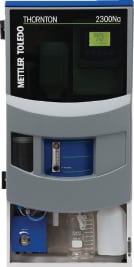
METTLER TOLEDO’s Process Analytics Division announced the 2300Na sodium analyzer, which can be used in pure water treatment and power generation applications. The design of the METTLER TOLEDO Thornton 2300Na sodium analyzer is based on extensive instrumentation experience and is optimized to handle measurement challenges. Features of the sodium analyzer include fully automatic, unattended calibration, […]
-
 Solar
SolarLarge China Energy Storage Project Begins Operation
Chinese state entity State Grid Corp. of China (SGCC) and battery maker BYD in January said they had finished construction on what they call “the world’s largest battery energy storage station”—a project in Zhangbei, Hebei Province that combines 100 MW of wind and 40 MW of solar capacity, a smart power transmission system, and 36 MWh of energy storage in arrays “larger than a football field.”
-
 News
NewsFlowmeter for Custody Transfer of Compressed Natural Gas
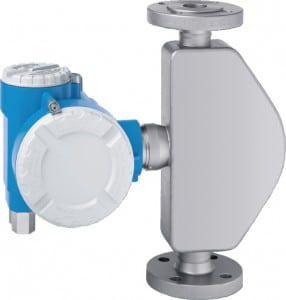
The new CNGmass Coriolis flowmeter series from Endress+Hauser is approved by the National Type Evaluation Program (NTEP) in the U.S. and five other international standards organizations for custody transfer of compressed natural gas (CNG) and for fueling vehicles with CNG. Available in three common sizes from 3/8 inch to 1 inch, the CNGmass measures mass […]
-
 Gas
GasMeeting LNG Demand with Floating Liquefaction Facilities
The past two years have seen a dramatic escalation of global natural gas liquefaction capacity.
-
 News
NewsContinuous Duty Industrial Vacuum
Manufacturer of heavy-duty industrial vacuums and vacuum systems VAC-U-MAX introduces its updated Model 1020 Continuous Duty Industrial Vacuum. The VAC-U-MAX Model 1020 features a powerful positive displacement pump designed specifically for high-volume recovery of up to 5 tons per hour. It is also used in the recovery of heavy materials, including steel shot, foundry sand, […]
-
Legal & Regulatory
A Year of Fukushima’s Economic Fallout
A year has passed since Japan’s Fukushima Daiichi nuclear plant was destroyed by earthquake and tsunami. What is the economic price Japan must pay?
-
 Business
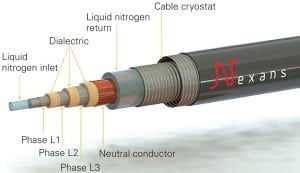
High-Temperature Superconductor Technology Stepped Up
A new project planned by RWE and partners Nexans, the Karlsruhe Institute for Technology (KIT), and Jülich is poised to mark another milestone for high-temperature superconductor (HTS) cable technology, which transports electricity without losses when cooled down to about –200C (–392F).
-
Commentary
Has the Dust Settled?
As our seasons transition, so may the fire and deflagration hazards from coal and combustible dust that once were visible and now may be out of sight. Yet often, what is out of sight presents the greatest hazard and risk.
-
News
GenOn to Shutter 3 GW of Coal Capacity in Penn., Ohio, and N.J
Houston-based GenOn is the latest of a string of power firms to announce planned power plant closures in Pennsylvania, Ohio, and New Jersey. The company formed in December 2010 through the merger of Mirant Corp. and RRI today announced it would deactivate 3,140 MW of generating capacity in PJM’s operational region between June 2012 and May 2015, citing insufficient “forecasted returns on investments necessary to comply with environmental regulations.”
-
News
Montana Cannot Charge Rent for Hydropower Dams, Rules U.S. Supreme Court
In a landmark ruling that some analysts are calling a “major victory” for the hydropower sector, a unanimous U.S. Supreme Court last week overturned a March 2010 decision by the Montana Supreme Court that entitled the state of Montana to collect $89 million in back rent from PPL Montana for that company’s use of state-owned riverbeds for long-standing hydropower plants.
-
News
NIST Releases New Smart Grid Interoperability Standards
An updated roadmap for the smart grid is now available from the National Institute of Standards and Technology (NIST), which recently finished reviewing and incorporating roughly 240 comments on the draft version that was released for public comment in October last year.
-
News
Fire Ravages UK’s Flagship Coal-to-Biomass 750-MW Tilbury Station
A severe blaze that broke out on Monday morning at RWE npower’s 750-MW Tilbury power station—a plant recently converted from coal to biomass that has been billed as a pioneer in its use of that technology—raged for two days, until Tuesday, when it was brought under control. All employees at the plant have been accounted for.
-
News
EPA to Keep Thresholds in Step 3 of Tailoring Rule for GHG Permits
A proposed rule issued on Monday by the Environmental Protection Agency (EPA) will not change the greenhouse gas (GHG) permitting thresholds for the Prevention of Significant Deterioration (PSD) and Title V Operating Permit programs. However, it includes revisions to the permitting program that would provide some flexibility in how compliance is achieved with GHG emission caps.
-
News
Moisture from Blizzard of `78 Caused Cracks in Davis-Besse Shield Building, FENOC Says
The shield building of FirstEnergy Nuclear Operating Co.’s (FENOC’s) Davis-Besse Nuclear Power Station in Oak Harbor, Ohio, lacked an exterior weatherproof coating, and this allowed moisture from the blizzard of January 1978 to migrate into the concrete and cause the hairline wall and subsurface cracks discovered during a reactor head replacement outage at the facility last fall, a root cause analysis report indicates.
-
News
BPA to Upgrade Pacific Direct Current Intertie
The Bonneville Power Administration (BPA) last week proposed a $428 million upgrade to the Pacific Direct Current Intertie, an 846-mile overhead transmission line that delivers hydropower and wind power between the Northwest and California. The line is one of the world’s longest and highest capacity transmission links.
-
News
Study: U.S. Could Site 952 GW of New Capacity, Water Use and Plant Footprints Considered
A study conducted by the Oak Ridge National Laboratory (ORNL) and released by the Electric Power Research Institute (EPRI) on Tuesday shows that enough physical and geographical locations exist in the U.S. to site 952 GW of new advanced coal with carbon capture and storage (CCS), dry-cooled and water-cooled concentrating solar power (CSP), and large and small nuclear reactors. The study also suggests that plant siting opportunities exist for compressed air energy storage (CAES) in 38% of the U.S.