
Articles By

-
News
House Passes Small Hydro Bill by 372–0
The U.S. House of Representatives on Monday passed H.R. 5892, the Hydropower Regulatory Efficiency Act, by a vote of 372–0. The bipartisan bill—championed by Reps. Cathy McMorris Rodgers (R-Wash.) and Diana DeGette (D-Colo.)—seeks to facilitate the development of small hydropower and conduit projects and direct the Federal Energy Regulatory Commission (FERC) to study the feasibility of a streamlined two-year permitting process. The legislation now moves to the Senate.
-
Environmental
EPA Promulgates Final Step 3 of GHG Tailoring Rule
The Environmental Protection Agency (EPA) last week promulgated a final rule that does not revise the greenhouse gas (GHG) permitting thresholds that were established in Step 1 and Step 2 of the GHG Tailoring Rule. The final rule, which comes just days after a federal appeals court ruled the EPA was “unambiguously correct” in its interpretation of the Clean Air Act to regulate carbon dioxide emissions, is the third step of the agency’s phased-in approach to GHG permitting under the Clean Air Act.
-
News
Alberta Institutes Rolling Blackouts amid Soaring Summer Heat, Plant Outages
Utilities in the Canadian province of Alberta were on Monday forced to institute rolling blackouts as soaring summer temperatures drove demand for electricity to an all-time high and six generators–four coal plants and two natural gas plants–entered unplanned outages.
-
News
Mississippi Power Appeals PSC Denial of Cost Recovery for Kemper IGCC in State High Court
Mississippi Power on Monday asked the Mississippi Supreme Court to review the June 22 unanimous denial by three commissioners of the Mississippi Public Service Commission (MPSC) of the company’s request to recover financing costs for its 582-MW Kemper County Integrated Gasification Combined Cycle (IGCC) plant.
-
News
Court Orders Olkiluoto EPR Operator to Release Withheld Payments to AREVA Consortium
Finnish utility Teollisuuden Voima Oyj (TVO)—operator of the Olkiluoto 3 (OL3) nuclear power plant under construction in Finland, a project that could be the world’s first EPR reactor but that has faced costly delays—must release €125 million ($155 million) of withheld payments to an AREVA-Siemens consortium, an international arbitration court ordered last week.
-
News
Unpopular Natural Gas Project in Ontario to Be Relocated, Not Cancelled
Ontario’s provincial government has persuaded the owner of an unpopular 280-MW natural gas-fired power plant that was already under construction in the City of Mississauga to relocate the project to an existing power plant site in southwestern Ontario. The agreement settles legal challenges to the government’s proposals to cancel the project.
-
Environmental
New York Adopts Rules Curbing Carbon at New Plants, Requiring Environmental Justice Analysis
New York’s State Department of Environmental Conservation (DEC) last week adopted rules that set limits on carbon dioxide emissions from new power plants as well as require new or expanding electric generating facilities in that state to evaluate the potential disproportionate impacts on nearby environmental justice communities.
-
Business
Texas PUC Approves 50% Increase in Wholesale Price Cap
In a bid to spur the construction of new power plants and offset a power crunch, the regional grid operator has forecast, the Public Utility Commission (PUC) of Texas last week voted to raise the wholesale price cap for electricity prices on Aug. 1 by 50%, to $4,500/MWh from $3,000/MWh.
-
Coal
Settlement to Force Wisconsin Cooperative to Install Pollution Control, Close Coal Units
A settlement to resolve alleged violations of the New Source Review (NSR) provisions of the Clean Air Act reached between the Dairyland Power Cooperative (DPC), federal entities, and the Sierra Club will force the Wisconsin utility to invest about $150 million in pollution control technology, retire three coal units at its 210-MW Alma Station, and pay a civil penalty of $950,000.
-
Coal
EPA Grants PNM Stay on San Juan Pollution Control Mandate
The Environmental Protection Agency (EPA) on Tuesday granted PNM a 90-day stay in the effectiveness of the federal plan that would force the Albuquerque, N.M.–based utility to install pollution controls at its 1,800-MW San Juan Generating Station by September 2016 to meet visibility requirements of the Clean Air Act in New Mexico.
-
Wind
DOI Releases Environmental Statements for Massive Wyo. Wind Project, Offshore Wind Leases
The Department of the Interior (DOI) on Monday announced the release of final environmental impact statements for a proposed wind power complex in Wyoming with a nameplate capacity of 3,000 MW and publication of an environmental assessment for commercial wind leases and site assessment activities on the Outer Continental Shelf (OCS) offshore Rhode Island and Massachusetts.
-
 Environmental
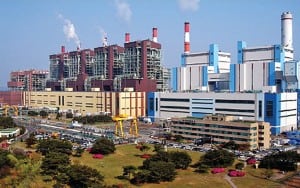
South Korea Enacts Cap-and-Trade Program
The Republic of Korea’s National Assembly on May 2 passed legislation that will mandate cuts in greenhouse gases (GHGs) starting in 2015. The Act on Allocation and Trading of Greenhouse Gas Emissions Allowances passed with a near unanimous vote of 140-0, with three abstentions. It follows the country’s voluntary GHG emissions reduction target of 30% […]
-
 Coal
CoalInnovation Required as Gas Displaces Coal
Panelists at the ELECTRIC POWER Keynote and Roundtable Discussion in Baltimore in May wrestled with a range of issues. But despite calls for a “balanced portfolio,” an “all-of-the-above” energy strategy, and predictions of “more changes in the next 10 years than in the last 100,” the focus of attention appears to be the decidedly mundane displacement of coal by natural gas.
-
 Gas
GasGeorgia Power Adds Second 840-MW Gas Unit
The second of Georgia Power’s three natural gas combined cycle units at Plant McDonough-Atkinson in Smyrna, Ga., came online on April 26 (Figure 7). The first unit at the plant became operational in December 2011, and the third unit, currently under construction, is expected to come online in November 2012, increasing the plant’s capacity from […]
-
 Hydro
HydroUtility Perspectives on Ramping Up Renewable Power
Panelists at ELECTRIC POWER discussed how U.S. utilities choose renewable power generation technologies based on their geographic locations, state requirements, economics, and other criteria—including reliability and federal regulations.
-
Business
POWER Digest (July 2012)
UK Unveils Draft Energy Reform Bill. A draft energy bill unveiled by the UK’s Department of Energy and Climate Change on May 22 seeks to attract £110 billion ($168 billion) of investment to build new nuclear, renewables, and carbon capture and storage (CCS) plants to replace nearly a fifth of the country’s total power capacity, […]
-
 Coal
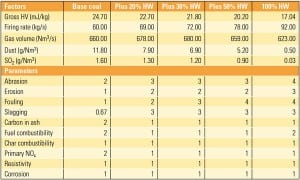
CoalNew Technologies Advance Biomass for Power Generation
As U.S. utilities seek to increase the percentage of carbon-neutral biomass used in their generation portfolios, they must deal with a number of complex challenges unique to this fuel source. Several breakthrough technologies are poised to help promote greater use of biomaterials.
-
Hydro
FERC Rule 1000: What Does It Mean?
The Federal Energy Regulatory Commission (FERC) has the responsibility for ensuring just and reasonable rates and preventing undue discrimination by public utility transmission providers. Last year FERC defined a new framework for public utilities and regional transmission organizations planning new transmission networks. The framework is provided in Order No. 1000—Transmission Planning and Allocation by Transmission Owning and Operating Public Utilities. The Final Rule was issued on July 21, 2011, and reaffirmed by Order No. 1000-A on May 17, 2012.
-
 Coal
CoalClean Air, Dirty Water
Efforts by power producers to meet clean air rules mean that wastewater effluent streams now face revised EPA regulations. A skirmish involving a New Hampshire power plant could set the tone for the next battle over regulations.
-
 Coal
CoalSafety Implications of Coal and Biomass Fuel Mixes
Practically everyone would agree that the energy policy of the U.S. is in a great state of flux. Not since the introduction of commercial nuclear power some five decades ago has our country come to such an energy crossroads. No matter what your political ideology, no one can refute that conventional coal-fired power plants are being paralyzed by recent and potential U.S. Environmental Protection Agency (EPA) regulations designed to cut the nation’s reliance on coal.
-
Nuclear
Fukushima Disaster Continues to Cloud Nuclear Outlook
With new reactors finally under construction, this should be an optimistic time for nuclear power in the U.S. But cheap natural gas, rising construction costs, and the Fukushima accident’s lingering pall have darkened the mood.
-
 O&M
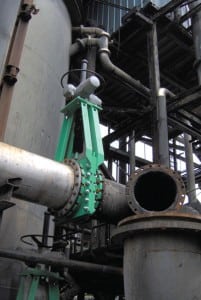
O&MImproving Slurry Knife Gate Valves in FGD Applications
The primary considerations in slurry valve selection are reliability in function and design, abrasion resistance, and ease of maintenance. In addition, valves with a straight-through, unobstructed flow minimize the effect of abrasion and therefore reduce the need for maintenance.
-
O&M
Dusty Trail: The Movie
The season’s blockbuster includes white-hatted heroes, good-natured regulatory sidekicks, bar fights, and a lurking menace named Fugitive Dust.
-
Legal & Regulatory
When Successful Procurement Policies Fail
California is approaching a tipping point with respect to the near-term economic viability of existing non-utility generation. The procurement policies and practices implemented in response to the statewide energy crisis over a decade ago have evolved into market conditions that do not offer “uncontracted” existing resources with sufficient and stable enough revenue streams to recover going-forward costs. Continued adherence to these policies will subject such resources to an increasing risk of economic retirement, threatening long-term reliability and potentially costing electric consumers billions of dollars.
-
 Gas
GasGas Glut Drives Action in Combined Cycle Power
A diverse range of speakers reviewed the state of gas-fired generation at ELECTRIC POWER, but there was one constant: flexibility
-
 Coal
CoalOptimizing Catalyst Performance Lowers O&M Costs
Santee Cooper’s Cross Station has implemented a catalyst optimization program that reduces catalyst replacement cost while maximizing catalyst performance. This case study illustrates the economic advantages of taking a holistic approach to optimizing unit catalyst performance by controlling slag, fouling, sulfur trioxide, and ammonium bisulfate—key factors that lead to premature shortening of catalyst life. With catalyst costing $2 million a layer and up, there is plenty of economic motivation to find ways to improve its life.
-
 News
NewsFlue Gas Analyzer
Emerson has launched the latest solution for combustion flue gas analysis, the Rosemount Analytical 6888 in-situ oxygen analyzer. The 6888 analyzer provides accurate measurement of oxygen remaining in flue gases coming from combustion processes such as boilers, incinerators, kilns, process heaters, and industrial heating furnaces. By maintaining the ideal level of oxygen in the flue […]
-
 News
NewsUpgraded Thermal Imaging Camera
IDEAL INDUSTRIES released an upgraded version of its popular HeatSeeker handheld thermal imaging camera. The new model features twice the resolution of legacy models and a wider field-of-view to improve troubleshooting efficiency. Engineered with a powerful 320 x 240 2MP sensor that captures 76K pixels, the new HeatSeeker 320 can be used for a wide […]
-
 News
NewsPortable Video Camera for Borescopes
The new Luxxor Portable Video Camera quickly and easily attaches to any Hawkeye Rigid or Flexible Borescope, and most other major borescope brands as well, transforming them into a videoscope. Designed and manufactured by Gradient Lens Corp., the new Luxxor camera allows users to view internal visual inspection images on portable or benchtop video monitors, […]
-
News
MACT Attack
The Utility MACT Rule, the most recent skirmish in the U.S. Environmental Protection Agency’s (EPA’s) war on coal, is based on flimsy scientific evidence of actual health effects and again demonstrates the agency’s indifference to conducting rigorous scientific inquiry. The end justifies the means is not science.