Utilidata, a group specializing in embedded artificial intelligence (AI) for power infrastructure, and NexGen Cloud, a European AI cloud provider, have announced the deployment of the Karman AI power control platform across NexGen Cloud’s data centers.
The companies on March 12 said the collaboration is designed to increase available AI compute capacity within existing grid constraints, targeting up to 50% additional usable capacity through intelligent Graphics Processing Unit (GPU) power orchestration and utilization of stranded energy. The initiative also strengthens infrastructure resilience by introducing real-time, AI-driven power optimization at the rack level. Karman runs on a custom NVIDIA module and acts as the intelligence layer for next-generation power infrastructure, dynamically balancing performance, efficiency, and reliability across AI workloads.
The initial deployment is a showcase data center facility in Montreal, Quebec, Canada, before a broader rollout across NexGen Cloud’s European operations. For its enterprise customers, the partnership will enable NexGen Cloud’s full stack AI cloud platform, Hyperstack, to deliver more AI capacity, at a lower price, and with enhanced power-related services for its customers.
The partnership enables Hyperstack to drive superior energy performance through Karman as part of its ambitious secure private cloud expansion—including planned AI Factory deployments across North America and the Nordics, with capacity reaching hundreds of megawatts—and will extend these benefits to users of the Hyperstack on-demand compute service for AI, machine learning, and visualization applications.
“Power is the single biggest constraint for AI growth today. Billions of dollars of existing capacity are underutilized in data centers worldwide,” said Josh Brumberger, Utilidata CEO. “Karman unlocks that trapped capacity immediately while ensuring new data centers are optimized from day one. We’re excited to partner with NexGen Cloud, a neocloud that understands the urgency of maximizing today’s infrastructure and the enormous opportunity in building tomorrow’s most effectively.”
Hyperstack operates across Europe and North America, with infrastructure powered by 100% renewable energy across its European and Canadian data centers. NexGen Cloud, its parent company, is an NVIDIA Cloud Partner (NCP), positioning it at the forefront of European AI infrastructure. With Karman’s embedded intelligence, Hyperstack will unlock massive capacity gains without waiting for grid upgrades or new electrical infrastructure.
“We now live in a world where 100MW+ projects are becoming commonplace. For infrastructure providers like NexGen Cloud servicing such projects, the next critical factor is energy management—specifically, maximizing the capacity already on-site. Karman gives us a significant commercial advantage by unlocking that trapped capacity; proving this level of optimization is a benefit we can then carry over directly to our end customers,” said Chris Starkey, CEO of NexGen Cloud.
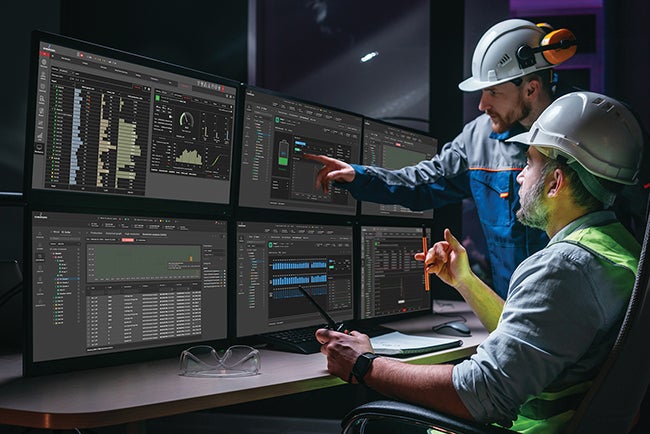
Utilidata’s custom module, co-developed with NVIDIA, provides the visibility, controls and safety mechanisms necessary to allow data center operators to fully utilize provisioned power capacity. By sampling at more than 1 million times per second and responding with sub 20-millisecond latency, Karman sees and reacts as fast as the servers themselves, providing data-driven, software-defined safety mechanisms to deploy dramatically more GPUs within existing power infrastructure.
As data centers scale to meet AI demand, Karman complements NVIDIA’s server-level optimizations with a parallel intelligence layer at the rack, row and building level. While GPUs optimize compute workloads, Karman optimizes electrical delivery, creating redundant, distributed visibility and control across both layers.
—This content was contributed by the communications team for Utilidata.