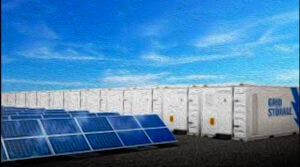
Zeo Energy Corp., a Florida-based residential solar installer that acquired struggling concentrated solar thermal developer Heliogen Inc. six months ago, has signed a non-binding memorandum of understanding (MOU) with Creekstone Energy to study the development of 280 MW of generation for a multi-gigawatt data center campus under construction in Millard County, Utah.
Under the Feb. 18 MOU, Zeo will conduct pre-feasibility studies of solar-plus-storage options intended to support “baseload” power supply for Creekstone’s Gigasite project in Delta, which broke ground in December 2025. Although Zeo confirmed to POWER that it is exploring Heliogen’s concentrated solar power (CSP) technology as part of the assessment, the company emphasized that the project remains in early design. It said the configuration will most likely rely on conventional photovoltaic (PV) systems, though CSP remains under consideration.
Zeo said its engineering team is “applying its expertise in thermal and chemical storage to design a solution to create firm baseload power from the intermittent power product by solar panels.” Creekstone, for its part, described the potential energy system as “designed to provide reliable, dispatchable electricity through solar power firmed with long-duration storage.”
An Ambitious Multi-Source Project
Creekstone is developing what it describes as a “10-GW Delta Gigasite” in Utah, according to a November 2025 press release announcing Series B funding led by Trident Ridge and Pelion Ventures. In November, the company described the project as a “multi-gigawatt, hybrid-generation data center campus” that “integrates natural gas, solar, and renewable generation.” A December 2025 announcement clarified that “Creekstone’s goal is to provide approximately 10 GW of non-nuclear generation at the Gigasite through a diversified portfolio of power and infrastructure technologies.” According to the company’s website, Creekstone has “direct access to natural gas infrastructure” onsite and owns “gigawatt-scale solar-ready land” adjacent to the campus.
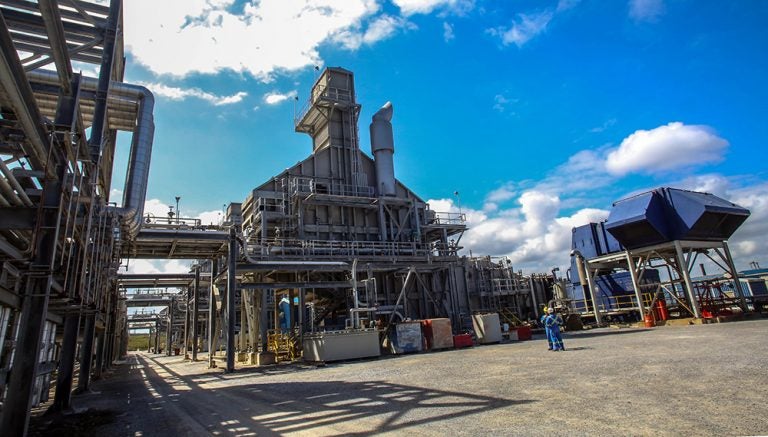
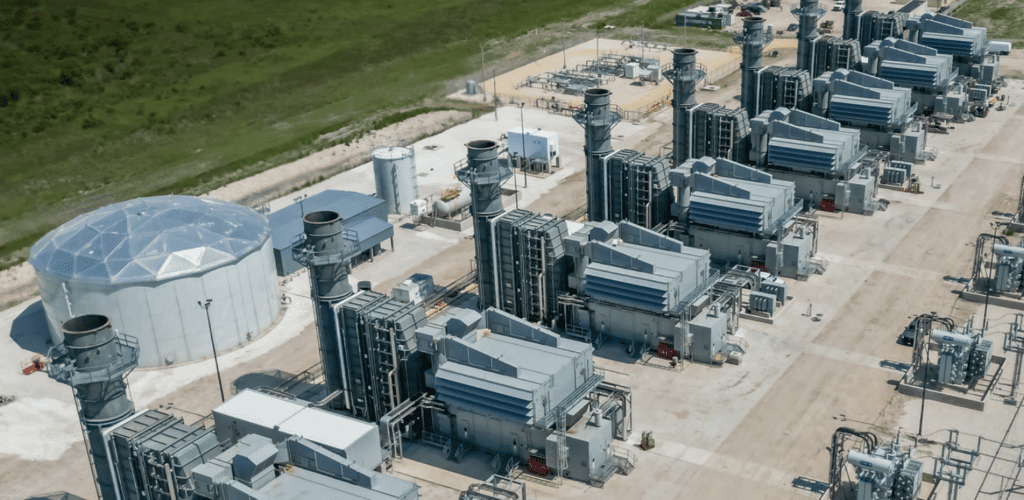
The site is also adjacent to the Intermountain Power Project (IPP), which provides “unmatched grid connectivity and transmission access,” according to Creekstone’s website. IPP is an 840-MW natural gas generation facility owned by the Intermountain Power Agency and operated by the Los Angeles Department of Water and Power that transitioned from 1.8 GW of coal-fired generation in 2025. The new hydrogen-capable Mitsubishi Power gas turbines are designed to initially burn a blend of 70% natural gas and 30% green hydrogen supplied by the nearby Advanced Clean Energy Storage (ACES) Delta project, a Chevron-led facility under construction slated to produce hydrogen using renewable energy-powered electrolysis and store it in underground salt caverns. The units are designed to eventually transition to 100% hydrogen fuel by 2045, according to LADWP’s website. “Currently, the new units at IPP run on natural gas, with plans to start adding green hydrogen to its fuel in 2026,” LADWP adds.
In December 2025, Creekstone signed a separate non-binding MOU with Utah-based nuclear services company EnergySolutions to evaluate “at least 2 GW of next-generation nuclear capacity”—including large-scale and small modular reactor options—for potential commercial operation in the 2030-2035 timeframe. The nuclear evaluation MOU “is non-binding and establishes a framework for structured evaluation without obligating either party to pursue a specific project, technology, or investment,” according to the December release.
For now, Creekstone plans to deliver “over 600 MW of baseload power to our Gigasite customers in 2027 in Phase 1 of our project,” CEO Ray Conley said on Wednesday. Initial generation will come from “over 300 MW of gas-powered energy to data center clients at the Gigasite in the first half of 2027,” according to the Feb. 18 Zeo press release. Creekstone broke ground on the Gigasite in December 2025.
So far, Creekstone has announced one confirmed customer: Blue Sky AI Inc., which will receive up to 50 MW of power. The Zeo solar-storage project would represent approximately 3% of Creekstone’s 10-GW non-nuclear generation target.
Zeo’s Potential Move From Residential Solar to Solar Plus Long-Duration Storage
The MOU announced on Wednesday contemplates that Zeo could provide project financing and engineering services, including Front-End Loading (FEL) and Front-End Engineering Design (FEED) studies and project management for the Creekstone installation. Zeo operates primarily as a residential solar installer through its Sunergy division, serving customers in Florida, Texas, Arkansas, Missouri, Ohio, Illinois, and expanding into California, Colorado, Minnesota, Utah, and Virginia. The company acquired Heliogen in an all-stock transaction that closed Aug. 8, 2025. According to Zeo’s Form S-1 prospectus filed in February 2026, Zeo’s preliminary purchase price allocation for Heliogen totaled $14.4 million.
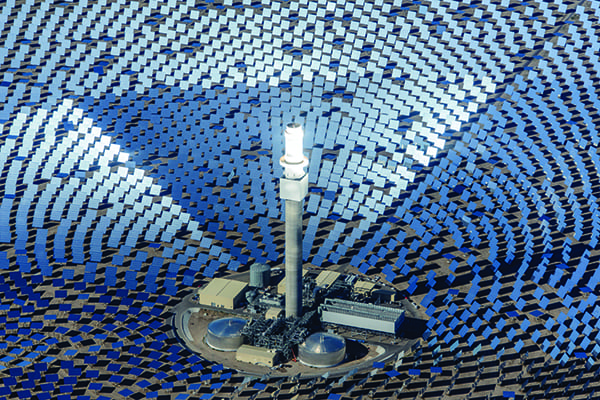
Heliogen’s technology uses concentrated solar power (CSP) systems that utilize AI-controlled heliostats to focus sunlight onto a receiver atop a tower, generating temperatures exceeding 1,000C, according to the company’s website. The system integrates thermal energy storage using molten nitrate salts operating at temperatures up to 565C or solid particle receivers using heated sintered bauxite. The company describes its approach as combining “AI and computer vision” to maintain heliostat alignment and maximize efficiency without manual recalibration. Heliogen’s website claims the technology can provide “dispatchable electricity” by pairing concentrated solar power with photovoltaics and thermal storage using a steam Rankine cycle.
Heliogen, notably, operated a demonstration facility in Lancaster, California, from 2019 until its closure in 2024. In December 2021, Heliogen demonstrated ICARUS, an AI-powered autonomous robot designed to install and maintain heliostat mirror fields, claiming it would be deployed across Heliogen’s full-scale facilities by 2023, though that timeline was not met. In January 2025, Heliogen announced it concluded the Capella project—a next-generation Gen 3 concentrated solar technology demonstration targeting a 5-MW plant developed with Woodside Energy and DOE funding—after completing front-end engineering and design (FEED), with both parties deciding not to pursue construction due to cost escalation. The company said it would pivot its focus to proven Gen 2 CSP technology.
Zeo’s SEC filing describes Heliogen’s business model as providing “concept-to-completion engineering and consulting services” specializing in “thermal storage (molten salt), compressed CO₂, plus traditional and new battery storage technologies.” The company’s investor presentation materials claim molten salt storage is suitable for “6 hours to multi-day storage” at a levelized cost of storage “as low as $.08/kWh” and capital expenditures of “$374/kWh (with 100 MW, .9GWh capacity)” at scale.
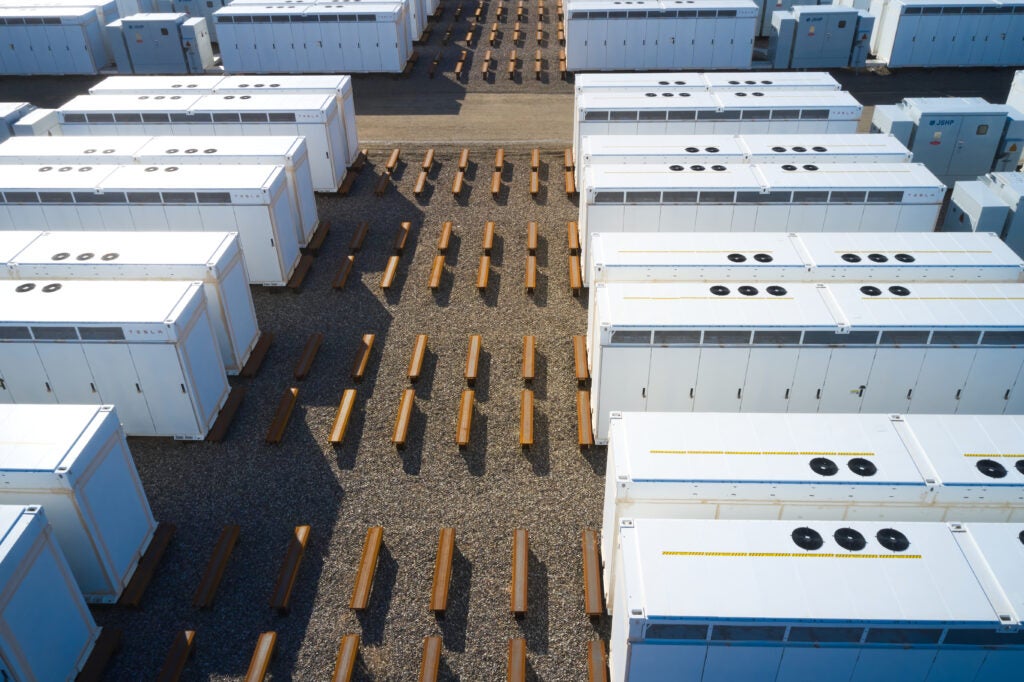
Earlier this week, Zeo confirmed that if suitable, “Heliogen would bring its own and/or third-party storage technology to the project.” The project design “will be a solar-plus-storage system,” it said. “The solar is likely to be photovoltaic panels. The type of long-duration storage is under design, and may be thermal, chemical, or electrochemical energy storage.” Lithium-ion batteries may serve as a supplemental storage resource, it added.
“The MOU is evidence of Zeo’s continuing steps to expand its business model by applying long-duration energy solutions to the large and growing market for energy to power cloud computing, artificial intelligence, and data centers,” the company said.
“Since our acquisition of Heliogen, we have been actively seeking to apply our long-duration storage expertise to the unprecedented power demand in the data center space,” said Tim Bridgewater, CEO of Zeo on Wednesday. “Our MOU with Creekstone is a milestone in this effort, and we are in discussions with several other projects that we believe can benefit from our clean baseload power solutions.”
According to Conley, Creekstone’s CEO, the collaboration reflects “the market urgency of using all available energy sources to rapidly provide baseload power. With solar power and Zeo’s long-duration energy storage solution, we plan to significantly expand the amount of clean power we offer our hyperscalers and artificial intelligence data center customers,” he said.
—Sonal Patel is a POWER senior editor (@sonalcpatel, @POWERmagazine).