
Drones
-
 T&D
T&DPuget Sound Energy, Heimdall Power Launch Smart Sensor Transmission Line Project
Northwest U.S. utility Puget Sound Energy (PSE) has joined with Norway-headquartered Heimdall Power on a dynamic line rating (DLR) pilot project in Washington state. The companies on October 22 said Heimdall is installing 75 advanced monitoring devices, known as “Neurons,” on about 100 miles of electricity transmission lines across five counties in western Washington.
-
 Legal & Regulatory
Trump Administration to Overhaul Drone Rules, Fast-Track Nuclear Reactor Deployment on the Moon
The Trump administration has proposed new drone regulations that will eliminate case-by-case approval processes for beyond visual line of sight (BVLOS) operations, while Acting NASA Administrator Sean Duffy confirmed accelerated plans to deploy a nuclear reactor on the moon by 2030. The Federal Aviation Administration (FAA), Department of Transportation (DOT), Transportation Security Administration (TSA), and […]
-
 Commentary
Utilities Need Proven Partners, Solutions to Accelerate Digital Transformation
Utilities need to modernize their grid infrastructure but face a unique challenge: change is tricky when the stakes are high. Technology is changing faster than ever, from the latest smartphones and devices to automated tools being introduced across industries to ease workloads. For essential mission-critical services such as electric power, failure is not an option. […]
-
Press Releases
Curtiss-Wright and Teledyne FLIR Defense Sign Agreement to Provide Unmanned Systems and Integrated Solutions to the U.S. Nuclear Power Market and Department of Energy
DAVIDSON, N.C.–(BUSINESS WIRE)– Curtiss-Wright Corporation (NYSE: CW) announced today that it has entered into an agreement with Teledyne FLIR Defense to supply unmanned systems and integrated solutions to the U.S. nuclear power market and Department of Energy (DOE). Mobile unmanned systems (MUS), including drones, robotics, and submersibles, play a critical role in industrial and defense applications […]
-
 Connected Plant
Automated Powerline Inspection: How Preparation Is the Key to Combating Wildfires During the Off Season
2020 was a catastrophic year for wildfires across the U.S. The National Interagency Fire Center (NIFC) reported that almost 60,000 fires ran rampant across more than 9 million acres in the U.S. last year, nearly 1.5 times the 10-year average of 6.6 million acres. Not only this, California saw its first-ever “gigafire,” a devastating single […]
-
 POWER Podcasts
Using Autonomous Drones in the Power Sector
Drones, or unmanned aerial vehicles (UAVs), have been dabbled with throughout the power industry for years. POWER featured a drone on its cover in April 2014, and has published many articles on drone technology since then. Yet, the technology has been used more as a novelty in the power sector up to this point. As […]
-
 Connected Plant
Using AI-Powered Thermal Tagging to Prevent Summer Overheating Outages
Summertime heat is cresting at the same time many economic restrictions related to the COVID-19 pandemic are easing in communities across the United States. Meanwhile, as extreme weather events are becoming more frequent, much of the country is on alert as forecasters predict severe hurricane, tornado, and wildfire seasons will continue. Utilities know they need […]
-
O&M
Power Line Management in the Time of Coronavirus
The novel coronavirus (COVID-19) has put communities on lockdown and created a need for social distancing. Many are staying at home, but that’s not an option for the frontline workers running critical power transmission infrastructure and keeping the lights on. How can utilities keep up with their operational and safety obligations with a reduced onsite […]
-
 News
NewsUsing Geospatial Data to Strengthen the Grid Against Extreme Weather
Extreme weather events are hitting more often and harder than ever before, and storm-hardening regulations are prompting utilities to strengthen the electrical grid to withstand storm-force winds. As part of this effort, leading utilities are using drone-based data collection and analysis to assess how their electrical grids can withstand Mother Nature’s punishment. Aerial robotics and […]
-
 News
NewsEPA Reinterprets ‘Ambient Air,’ Further Tweaks New Source Review
The Environmental Protection Agency (EPA) has finalized a change to a long-standing policy interpreting “ambient air”—a foundational concept under the Clean Air Act that applies to all types of air pollution, from ground-level ozone, particulate matter, and greenhouse gases. While the agency framed the change as part of a suite of actions to reform New Source […]
-
Connected Plant
Clobotics Joins Forces with Leading European Wind O&M Provider GEV to Bring Artificial Intelligence to $27.4 Billion Market
SEATTLE – February 20, 2019– Clobotics, a leading provider in industry-level computer vision solutions, today announced a global strategic partnership with GEV Wind Power, one of the largest wind operations and maintenance (O&M) companies in Europe. The global partnership will use Clobotics pioneering artificial intelligence solutions to deliver AI-based autonomous blade inspections for wind turbines, […]
-
Press Releases
Sulzer Schmid’s new technology platform slashes cost of drone-based rotor blade inspections
Zurich, Switzerland, 06 February 2019 – Sulzer & Schmid Laboratories AG, a Swiss company pioneering next-generation technology for the inspection of wind turbine rotor blades, announced today that it has launched a new highly competitive inspection platform. The company’s new 3DX™ HD product has been developed as a cost-effective solution to cope with large volumes […]
-
 IIOT Aerospace
FAA Initiative Highlights Best Practices for Flying Drones BVLOS
A three-year-long initiative spearheaded by the Federal Aviation Administration (FAA) in collaboration with industry has yielded a blueprint that establishes best operational and safety practices and recommended technologies for flying commercial drones beyond the visual line of sight (BVLOS). As part of the FAA’s 2015-chartered Pathfinder Initiative, the agency partnered with three private companies to […]
-
 Power
PowerOn the Horizon: Utility Drone Flights Beyond Visual Line of Sight
The Federal Aviation Administration (FAA) is taking steps to more quickly enable flights of unmanned aerial systems (UAS) beyond visual line of the operator’s sight (BVLOS), though no changes are planned to a rule that governs visual line of sight in aircraft operations. The agency that is responsible for the safety of civil aviation under […]
-
Press Releases
SwRI-led Team to Develop Drones for Use in Fukushima Daiichi Nuclear Power Plant
Engineers test autonomous UAS to fly inside damaged nuclear power station SAN ANTONIO–(BUSINESS WIRE)–A team led by Southwest Research Institute (SwRI) is developing unmanned aerial system (UAS) technology to fly into the containment vessels of the damaged units at Japan’s Fukushima Daiichi nuclear power station and assess conditions. Tokyo Electric Power Company Holdings, Incorporated (TEPCO […]
-
Legal & Regulatory
A Bird’s-Eye View: Drones in the Power Sector
Unmanned aerial systems—drones—have quickly found their place in the power sector. But as the industry moves out of test cases and experiments, and into full implementation of drones, it is facing a whole
-
Press Releases
Sharper Shape, SkySkopes Successfully Execute First Transmission Line Cable Construction Mission using Drones
(Grand Forks, ND – September 12, 2017) — Sharper Shape and SkySkopes, in cooperation with an investor owned utility, have developed an innovative and unique way to use unmanned aircraft systems (UAS) for powerline construction. The mission used the Sharper A6 UAS to string sock lines for a 675 kV line construction project. Matt Dunlevy, […]
-
 Nuclear
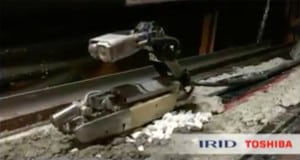
Fukushima Cleanup Hitting Snags as Robot Probes Fail
The epic recovery from the 2011 accident at Japan’s Fukushima Daiichi Nuclear Plant, already predicted to take decades and cost at least $35 billion, is encountering delays as a series of robot probes have failed due to encountering more difficult conditions than expected, plant owner Tokyo Electric Power (TEPCO) said this month. TEPCO’s head of […]
-
 O&M
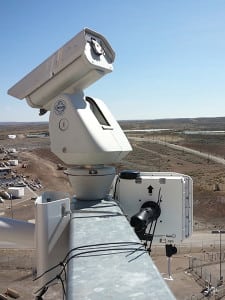
O&MUsing Radar to Improve Security and Counter Drone Threats
Security is taken very seriously at most power plants. Fences and other barriers are usually installed before construction of a plant even begins to keep curious busy-bodies, thieves, protestors, and—at the far end of the spectrum—saboteurs and terrorists out of sensitive locations. Some plants have dedicated security staff patrolling areas both inside and outside of […]
-
 Technology
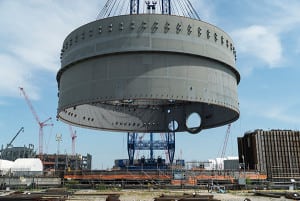
New Best Practices for Power Project Planning and Construction
Effectively managing time, budget, and resources has always been the goal of companies involved in constructing power generation projects, but today the challenges in meeting those goals can be greater than ever. Any power generation company involved in new construction or an upgrade or retrofit project hopes it will see completion safely, without exceeding schedule […]
-
 Legal & Regulatory
How the FAA’s First-Ever Commercial Drone Rules Could Affect Power Companies
The first operational rules finalized by the Federal Aviation Administration (FAA) for routine commercial use of drones could have major implications for utilities and power companies, which are increasingly using them for operations and maintenance. The new rules (Part 107 of the Federal Aviation Regulations) that apply to unmanned aircraft systems (UAS)—or drones—weighing less than […]
-
 Commentary
When Technology Tails Wag Power Dogs
When you hear “drone,” do you think, toy, military craft, dangerous device, or useful tool? Depending on the type of unmanned aircraft system (aka, drone) we’re talking about, any of those descriptors
-
 O&M
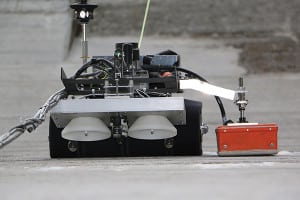
O&MLeveraging Drones and Robots for O&M Savings
If you’re still thinking of drones and robots as more toy than tool, think again. The drones now working in the power sector have gone far beyond remote-control hobbies and now resemble something closer to
-
 Coal
CoalDrones Promise Faster, Easier Inspection of Boilers, Stacks, Towers, and More
Mention the word “drone,” and most people will have a mental picture of what a drone is and does. They likely will think first of military drones carrying missiles and other weapons that could malfunction