
POWER
-
 Coal
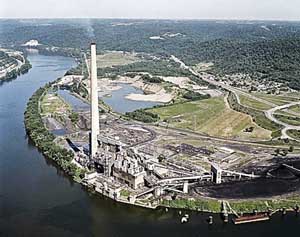
CoalFirstenergy to Convert Coal-Fired Burger Plant to Biomass
Confronted with a district court ultimatum that would have forced it to install expensive pollution controls or close two coal-fired units at its R.E. Burger Plant in Shadyside, Ohio, Akron-based FirstEnergy Corp. announced in April that it would convert them to biomass. When the $200 million retrofit is complete, as is expected by 2013, the Burger Plant will likely be one of the largest biomass facilities in the U.S.
-
Business
The Foreign Investment Factor (supplement to Powering the People: India’s Capacity Expansion Plans)
Recognizing that the long-term sunk cost, long project planning and construction timeframe, and high-risk portfolio make it difficult for private investors to raise funds whose maturity matches project completion dates, the Indian government has since 1991 allowed 100% foreign direct investment in the power sector.
-
 Solar
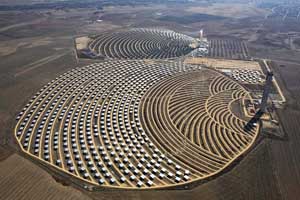
SolarInterest in Solar Tower Technology Rising
Though solar thermal tower technology has been around since the 1970s, to date, only one plant in the world commercially generates electricity: Abengoa Solar’s 11-MW PS10 tower just outside Seville, in Spain’s Andalucía desert has been grid-connected since early 2007. Because the technology relies on heat from solar energy that is reflected by mirror arrays (heliostats) onto a tower-mounted receiver, installations tend to be site-specific, expensive, and high-maintenance.
-
 O&M
O&MMaking the Most of Thermal Imaging Data
This article discusses planning, operation, and documentation procedures designed to effectively use the thermal imaging camera as a critical element in an effective reliability program.
-
 Coal
CoalNorway Leads the Way on CCS
According to a new study from Emerging Energy Research, more than $20 billion will be spent on carbon capture and storage (CCS) projects this year at 50 power generation projects totalling 16 GW around the world. The European Union (EU), with an investment of $11.6 billion, leads all efforts, because it is pressed to achieve a target to reduce carbon emissions by 20% of 1990 levels by 2020. In December, the governing body reached agreement on a climate and energy package, which includes a framework for CCS and a directive on the way EU members and Norway will regulate licenses to ensure reliable carbon storage. The U.S. takes second place, earmarking $6 billion, and Canada is third, at $2.7 billion.
-
 Nuclear
Problems Plague Russia’s Nuclear Power Ambitions
"The Russian Nuclear Industry: Status and Prospects," a February report from a Canadian-based think tank, Centre for International Governance Innovation, examines a revival of Russia’s Soviet-era plans for a massive nuclear expansion within the current state of the country’s nuclear power industry. It concludes that although the industry has been greeted with renewed funding and enthusiasm, achieving its ambitious plans will require the federation to overcome considerable problems and limitations.
-
 News
NewsKnife Gate Valve for Heavy Slurry Applications
Red Valve Company Inc. launched Series DX Slurry Knife Gate Valve, a durable and user-friendly gate valve that has been designed especially for heavy slurry applications in the power and mining industries. When the valve opens, the reinforced elastomer sleeves seal against each other and provide a 100% full port opening, minimizing turbulence, which in […]
-
 Wind
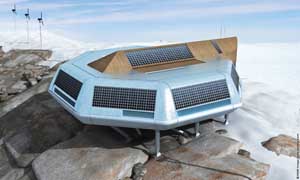
WindTurbines Spinning at Antarctica’s First "Zero-Emissions" Station
About 110 years after the Belgica expedition — a polar voyage organized by the Geographical Royal Society to establish the world’s first Antarctic scientific research program — a new, unique research station sponsored by the Belgian Federal Government has been commissioned. Inaugurated on Feb. 15 after two years of construction, the Princess Elizabeth Station (Figure 4) is the only polar base to run entirely on renewable energies.
-
Commentary
Transforming the U.S. Grid
Al Gore, in his recent New York Times op-ed titled "The Climate for Change," calls for a "$400 billion investment over ten years to construct a national smart grid to distribute renewable energy." Echelon supports these proposed investments. We also believe the answer is not just in constructing something new but in transforming the existing […]
-
 Environmental
Researchers: Spanish Electricity Model Is Unsustainable
The current Spanish electricity model is unsustainable: Carbon dioxide (CO2) emissions are hard to control, demand shows no sign of weakening, and the country is overly dependent on imported fuel. These are the conclusions of a team of scientists from the Institute for Research in Technology of the University of Pontificia Comillas in Madrid, who looked at how the Spanish electricity sector would evolve in four different scenarios.