Global Monitor
-
 Nuclear
With Fresh Election, Japan Veers Away from Nuclear Phase-Out
A landslide victory handed by Japanese voters to the Liberal Democratic Party (LDP) in mid-December saw power in the country’s Lower House shift back to the nationalist-conservative party that had governed Japan almost continuously since 1955. The LDP had been ousted in a historic defeat only three years earlier. In his first televised interview since taking office, newly elected Prime Minister Shinzo Abe (who previously served as prime minister from September 2006 to September 2007) called for review of plans to phase out nuclear power in Japan by 2030, endorsing instead the construction of new, safer nuclear power plants.
-
 Coal
CoalWorld Energy Outlook Foresees Distinct Generation Shift
Global generating capacity is poised to soar by more than 72%, to 9,340 GW, by 2035 from 5,429 GW in 2011, despite retirement of about 1,980 GW, the International Energy Agency (IEA) forecasts in its World Energy Outlook 2012, released in November.
-
 Solar
SolarFloating Solar—on Water
The recent explosive growth of massive solar plants in some of the world’s most remote deserts has stolen some of the spotlight from smaller solar installations that float on water. But in November, a concept proposed by researchers at Norwegian foundation DNV (Det Norske Veritas) for a dynamic floating offshore solar field concept stirred up myriad possibilities, particularly for congested urban regions such as coastal megacities.
-
 Coal
CoalTHE BIG PICTURE: The Coal Pile
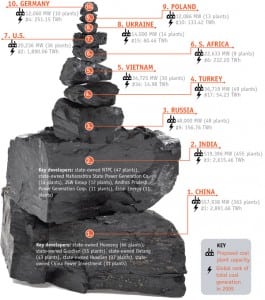
About 1,199 new coal-fired facilities (as defined by the World Research Institute)—a total installed capacity of 1,401 GW—were being proposed globally as of July 2012, spread across 59 countries.
-
 Waste to Energy
Vanadium Flow Battery Juices Onion Plant
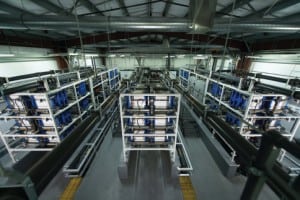
An emerging flow battery technology got a major boost earlier this year when Gills Onions, one of the largest fresh-cut onion processing plants in the world—began operating a 3.6-MWh vanadium redox battery (VRB) energy storage system (ESS).
-
 Waste to Energy
Largest Wastewater Treatment Fuel Cell Plant Goes Online
In October, Canadian biogas power producer Anaergia opened a 2.8-MW fuel cell system powered by cleaned and conditioned wastewater biosolids at a municipal water treatment facility in Ontario, Calif.
-
 Wind
WindOf Giant Turbines and Rotor Blades
Offshore wind turbine technology experienced a brief gust in October as Siemens Energy began field testing of its new 154-meter (m) rotor for the 6-MW offshore wind turbine, and Norwegian technology company Sway Turbine unveiled a 10-MW offshore turbine.
-
 History
Modernization of Century-Old Hydro Facility Yields Rich History
When the Boulder Canyon Hydroelectric Facility was built in the steep, forested mountains between Boulder and Nederland, Colo., in 1910, it was the highest head hydroelectric facility in the western U.S.
-
 Solar
Solar14-MW Solar PV Plant Completed at Naval Station
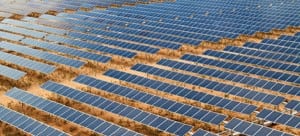
The U.S. Navy in late October saw the completion of its largest solar generation system, a 13.78-MW (DC) solar photovoltaic (PV) power system at Naval Air Weapons Station China Lake (NAWS China Lake) in California.
-
Business
POWER Digest (December 2012)
Georgia Power Completes 2,500-MW Coal-to-Gas Conversion. Southern Co. subsidiary Georgia Power on Oct. 28 put online the third and final 840-MW natural gas combined cycle unit at Plant McDonough-Atkinson in Smyrna, Ga. The first gas plant went online in December 2011 and the second on April 26. Bringing the plant’s capacity to 2,500 MW, the […]
-
Nuclear
Note on the Oconee Top Plant
Note on the Oconee Top Plant Some of our readers may have been confused by the wording of a press release about our November issue’s nuclear Top Plants, the table of contents blurb about Duke’s Oconee plant, or a sentence in the cover story about that plant. In the interest of brevity, it seems we […]
-
 Business
After Blackouts, India Plans Reforms
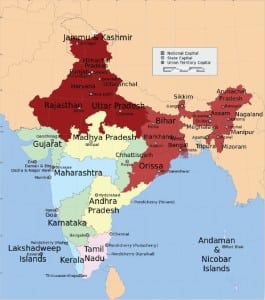
The back-to-back collapse at the end of July of India’s Northern, Eastern, and Northeastern grids that slashed power to more than 60% of India’s population of 1.24 billion has impelled the country into a spending frenzy to upgrade its rickety power network, which, a government inquiry revealed, was one cause of the unprecedented blackouts.
-
 Gas
GasProgress for Germany’s Power-to-Gas Drive
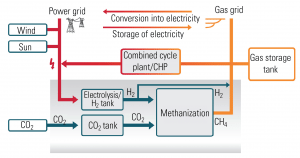
Germany’s E.ON this August began construction of a new pilot plant in Falkenhagen in northeast Germany that will convert excess wind energy into synthetic natural gas that can then be fed into the regional gas grid, where it can be used to produce heat and power.
-
 Water
WaterResearch Center Dedicated to Power Plant Water Use Opens
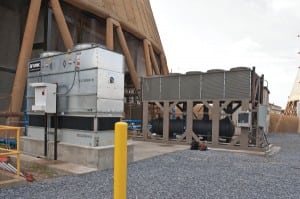
The Electric Power Research Institute and several partners—including the Southern Research Institute, Southern Co. subsidiary Georgia Power, and Southern Research—are testing a new technology that could reduce the amount of water needed for power plant cooling.
-
Business
POWER Digest (November 2012)
Global Companies Take on Nigeria’s Newly Privatized Plants. Nigeria’s $1 billion liquidation of five government-owned thermal and hydropower generation companies—part of a wider privatization effort that includes transmission and distribution assets to encourage investment in the power shortage–stricken country’s electricity sector—has attracted a number of global companies and investors. Eight firms bid a total of […]
-
 Nuclear
France Considers Departure from Iconic Stance on Nuclear Energy
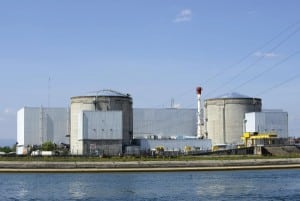
No other country has been as frequently cited as an example of exploiting the virtues of a nuclear-heavy energy policy as France. Deriving more than 75% of its electricity from 58 operational nuclear reactors with a total capacity of about 63 GW, France has one of the lowest costs of generation and is the world’s largest net exporter of power, earning €3 billion ($3.9 billion) a year from sales of surplus power to buyers beyond its borders. But that is all about to change.
-
 Coal
CoalGermany’s Reliance on Coal Grows
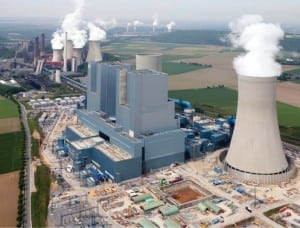
This August, instead of the usual fanfare at the official commissioning ceremony of RWE’s twin-unit 2.2-GW coal-fired BoA Units 2 and 3—a $3.3 billion lignite-fired power plant in Grevenbroich-Neurath near Cologne (Figure 1)—Germany’s premier of the state of North Rhine–Westphalia, Hannelore Kraft, and the newly installed federal minister of the environment, Peter Altmaier, requested a rapid cutback in power production. As 400 guests watched, the output of one unit was reportedly reduced by more than 150 MW in five minutes, and then restored just as fast. The demonstration was to show how quickly the plant could offset the intermittency of wind and solar power, the officials said, proclaiming the plant an “important element” of Germany’s energy strategy.
-
 News
NewsPowering Curiosity on Mars—And Beyond
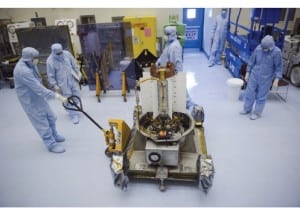
With the precarious descent of NASA’s Mars rover Curiosity into the Red Planet’s Gale Crater a success, NASA now plans to gather geological and environmental data from the Martian surface to determine whether the planet has ever offered environmental conditions favorable for life—and collect data for a manned mission.
-
 Nuclear
South Korea Connects Two New Reactors to the Grid
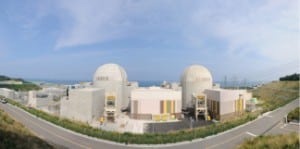
3. An atomic leap. South Korea is looking to boost nuclear capacity to 43.4% of its total power profile by 2020. Two new reactors became commercially operational this summer, the 960-MW Shin Kori 2 plant near Nae-ri and the Shin Wolsong 1 (shown here) in the southwest city of Gori. Courtesy: Korea Hydro and Nuclear […]
-
 Nuclear
Plant Vogtle Moves Forward, as Do Costs and Schedules
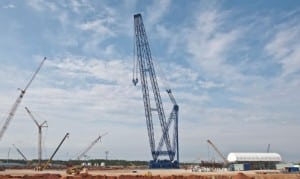
At Plant Vogtle in Georgia, where Southern Co. subsidiary Southern Nuclear is building two new 1,100-MW AP1000 units for Georgia Power and co-owners Oglethorpe Power Corp., the Municipal Electric Authority of Georgia, and Dalton Utilities, work on the first new nuclear units built in the U.S. in 30 years is progressing—albeit with hiccups.
-
 News
NewsMicrobial Fuel Cells Promise Power from Sludge
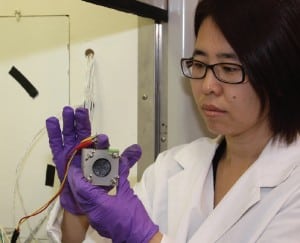
A microbial fuel cell technology developed at Oregon State University (OSU) promises to produce 10 to 50 times more electricity per volume directly from wastewater than most other approaches using microbial fuel cells. The breakthrough could reportedly have significant implications for waste treatment plants by replacing the “activated sludge” process that has been widely used for almost a century. The new approach could produce significant amounts of electricity while effectively cleaning the wastewater, OSU researchers say.
-
Business
POWER Digest (October 2012)
Chile Supreme Court Strikes Plans for $5B Coal Plant. Chile’s Supreme Court on Aug. 28 rejected the $5 billion Central Castilla thermoelectric power plant planned by Brazilian firm MPX Energia and Germany’s E.ON, citing environmental reasons. Developers argued that the 2,100-MW plant is needed by Chile, the world’s foremost copper producer, which struggles with high […]
-
 Water
WaterTHE BIG PICTURE: Regulation Road
To view a larger version of this graphic, download the file here.
-
 Coal
CoalTHE BIG PICTURE: A Big Switch
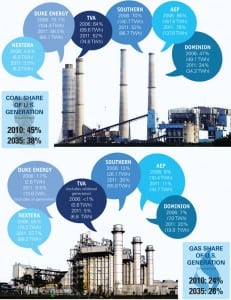
The widespread transition from coal to natural gas for new generation is exemplified by the morphing fleets of some of the biggest U.S. generators. Figures show the amount of power generated by each company using coal (top) and natural gas (bottom). Sources: POWER, NextEra, Duke Energy, Tennessee Valley Authority (TVA), Southern Co., American Electric Power […]
-
 Hydro
HydroThree Gorges Dam Completed Amid Technical Victories, Controversy
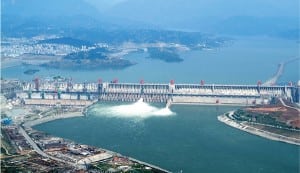
China in early July installed the 32nd and final turbine of its mammoth Three Gorges Dam, virtually completing the controversial 1994-initiated hydropower project on the middle reaches of the Yangtze River.
-
 Coal
CoalEU Ruling Slackens Poland’s Coal Power Expansion Ambitions
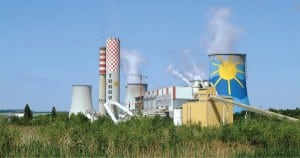
Poland, a country that currently depends on coal power for nearly 85% of its electricity and plans to build another 11,300 MW of new coal-fired capacity by 2020, suffered a critical planning setback in mid-July as the European Union (EU) effectively blocked the country from using free carbon emission permits to build new coal-fired power plants.
-
 News
NewsSolar-Hybrid Mini-Grid Lights Up Brazilian Island
An innovative mini-grid in April turned on the lights for about 250 residents living in Ilha Grande, a tiny island on the northwest coast of Maranhão State in northeastern Brazil.
-
 News
NewsSumitomo Introduces Battery System
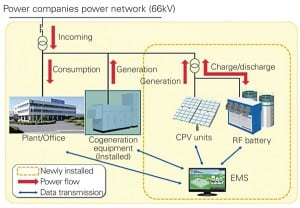
Japan’s Sumitomo Electric Industries in July began operation of a new power generation and megawatt-class storage system at its Yokohama Works site.