
Latest
-
 Legal & Regulatory
Stricter EPA Ozone Pollution Standards May Be Forthcoming
Revised national ambient air quality standards (NAAQS) for ozone that are expected from the Environmental Protection Agency (EPA) this December will likely be stricter. Agency staff from the Office of Air Quality Planning and Standards in a 597-page final policy assessment released on Aug. 29 recommend revising the standard to within a range of 60 […]
-
 Legal & Regulatory
PG&E Slapped with $1.4 Billion Fine for San Bruno Blast
Nearly four years to the day after eight people were killed in a natural gas pipeline explosion in San Bruno, two judges of the California Public Utilities Commission (CPUC) ruled on Sept. 2 that Pacific Gas & Electric (PG&E) must pay a record $1.4 billion in fines and penalties for its role in the disaster. […]
-
 Instrumentation & Controls
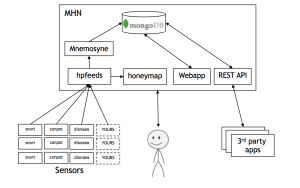
How to Use “Honeypots” to Overcome Cybersecurity Shortcomings
Cybersecurity threats facing the power industry have escalated dramatically in the past few years, as state-sponsored, organized crime, and hacktivist groups all seek to infiltrate U.S. energy infrastructure for cyber-espionage and sabotage purposes. A recent example of the severity of this threat can be seen in operation “Energetic Bear”—a Russian campaign to infect U.S. and […]
-
 Renewables
10 Energy Takeaways from the U.S.-Africa Summit
The Aug. 4–6 U.S.-Africa Leaders Summit shed light on the power plights faced by sub-Saharan African countries, but it also highlighted their massive power potential and the array of solutions under consideration to resolve Africa’s energy crisis. Here are a number of key insights gleaned from discussions at the summit—the first a U.S. president has […]
-
 Environmental
EPA’s New 316(b) Rule and the Opportunity of Social Costs
Though “social costs” may be a new term of art in the power industry, it is about to become a critical one. Here’s what you need to understand about the concept in general and how it applies to the recently finalized cooling water intake rule. The U.S. Environmental Protection Agency’s (EPA’s) recently released rule regarding […]
-
 Gas
GasReciprocating Engines Expand Roles
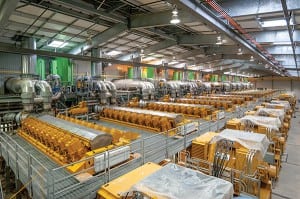
Once merely a staple of backup and distributed generation, reciprocating engines are now challenging other resources for utility-scale generation—in addition to carving out some new niches. Grant County is a rural, sparsely populated county in southwestern Kansas. It doesn’t have a lot of people—its population in the 2010 U.S. Census was just 7,829—but what it […]
-
Plant Design
How to Design the Collector Pipe for Condensate Return Lines
While several methods exist for sizing collector pipes on steam lines, the results obtained from the various approaches can be quite different. This article will show how design parameters can be used to calculate the dimensions much more accurately. In the steam lines of thermal and nuclear power plants, condensed steam is usually discharged from […]
-
 Renewables
What’s Needed to Address U.S. Geothermal’s Deep-Seated Challenges?
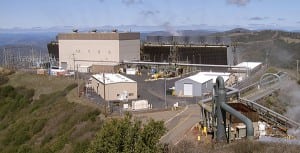
Geothermal generation is clean, renewable, and cost-effective over the long term, and the U.S. has vast untapped geothermal resources. So why is it still operating on the sidelines? For the U.S. geothermal energy industry, 2013 ended on a positive note. Cyrq Energy’s Dale Burgett geothermal plant, a 4-MW unit in southwest New Mexico, began […]
-
 O&M
O&MNew Disaster Preparedness Approaches for Nuclear Plants
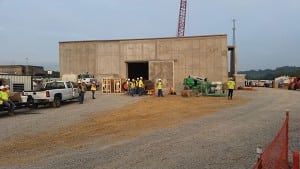
To ensure that its nuclear plants do not meet the same fate as those damaged and destroyed by the March 2011 events at the Fukushima Daiichi plant—should they be hit by similarly severe natural disasters—Tennessee Valley Authority (TVA) is using multiple new approaches to enhance safety. First Installation of New Spent Fuel Pool Instrumentation Spent […]
