Latest
-
 Solar
SolarDiffering Visions for Energy Storage
Big or small? Centralized or distributed? The answer, at least for energy storage, may be both, but what that future may be is unclear, if early discussions at the Energy Storage North America (ESNA) conference in San Diego October 4–6 are anything to go by. Speaking on the first night’s opening keynote panel, Colin Cushnie, […]
-
 Nuclear
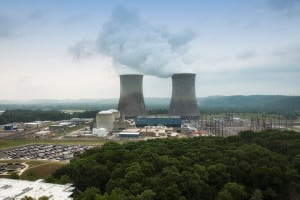
Watts Bar Unit 2 Nuclear Plant Completes Power Ascension Testing
The Tennessee Valley Authority (TVA) has reached another milestone in its effort to bring Watts Bar Unit 2 into commercial operation: The unit completed its final power ascension test—a 50% load rejection from full power—and safely returned to full power on September 30. The testing had been halted on August 30 due to a switchyard […]
-
 Partner Content
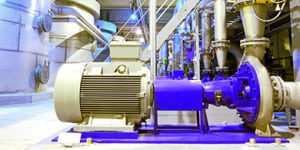
Is it time to invest in new equipment or take a closer look at revitalizing your control system?
How does this investment compare to the alternative (buying a new turbine)?
Updating a control system is inexpensive compared to buying a new turbine. Although new turbines offer higher heat rates, better emissions and overall more MW output than older systems. The Return on Investment of a new turbine would take more years to recover. -
 Nuclear
A World View of New Nuclear Power Plant Construction [Slideshow]
According to the International Atomic Energy Agency (IAEA), there are 60 nuclear reactors currently under construction around the world. China leads the way with 20 units in progress, followed by Russia with seven, and India with five. Twelve other countries, including the U.S., round out the list. The IAEA predicts that nuclear power generating capacity […]
-
Coal
Slide Show Supplement to Mátra Power Plant, Visonta, Hungary
The Mátra Power Plant in Visonta, Hungary, uses a dense slurry system for handling fly ash and other coal combustion residuals. The DSS combines ash and water in a 1:1 ratio, creating a cement-like slurry. [gss ids=”93802,93804,93832,93808,93834,93836,93838,93840,93842,93844,93822,93846,93848,93850″]
-
 O&M
O&MHigh-Speed Turbine Rotor Balancing Lowers Costs and Improves Operation
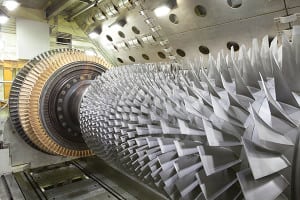
High-speed turbine rotor balancing was once rare because of the costs and logistical challenges involved in doing it during an outage. That’s begun to change as economic options emerge, and experience is showing that high-speed balancing can pay big dividends in reliability and maintenance costs. To a maintenance engineer or fleet manager, unwanted vibration in […]
-
 Technology
Chronic Tardiness at South Africa’s Eskom Could Be Its Downfall
South Africa’s state-owned utility faces recent generation shortages, plant construction problems, load shedding, and uncertainty at the African continent’s only nuclear power plant. And that’s just on the generation side. Moves on the business planning and regulatory side are painfully slow and could, some argue, be writing the utility’s obituary. Eskom, South Africa’s state-owned monopoly […]
-
Commentary
The Surprising Ground Zero for Electricity Market Fights
Look to the East and you’ll see a major initiative to transform New York’s electric grid into a cleaner, more efficient system. Look to the West and you’ll find ambitious clean energy legislation in California. Yet utility executives and federal regulators recently gathered in the Midwest to highlight how this region is ground zero for […]
-
 O&M
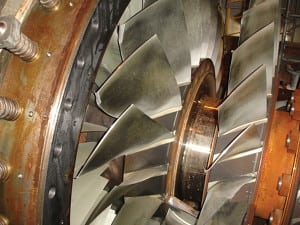
O&MA Primer on Gas Turbine Failure Modes
When a gas turbine goes down, recovery can be an expensive, time-consuming process. Knowing what can go wrong and how to anticipate turbine failures can help you avoid a difficult unplanned outage. Gas-fired power is hot and getting hotter. The Energy Information Administration estimates that 2016 will be the first year ever that the U.S. […]