
Latest
-
 Coal
CoalDuke Energy Agrees to Pay $6 Million for Dan River Coal Ash Spill
Duke Energy agreed to pay a $6 million fine under a new settlement reached with North Carolina’s Department of Environmental Quality (DEQ) for the February 2014 coal ash spill at its Dan River power plant in Eden. State regulators fined the utility $6.8 million in February, but Duke Energy challenged the decision, which was the […]
-
 Legal & Regulatory
Dutch Parliament Vote Could End Coal Power Generation in the Netherlands
The Dutch parliament’s vote in favor of a motion to cut carbon emissions 55% by 2030 could spell the end of coal-fired power generation in the European nation. Although nonbinding, the measure would bring the Netherlands in line with agreements negotiated during the Paris climate talks that took place late last year. What it means […]
-
 Legal & Regulatory
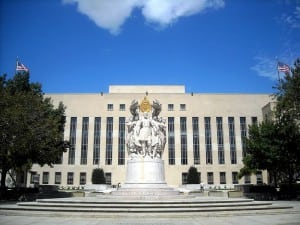
LIVE UPDATES: The Clean Power Plan at the D.C. Circuit
Oral arguments on the merits of the Environmental Protection Agency’s (EPA’s) Clean Power Plan were concluded before an en banc panel (10 judges, rather than the anticipated three) at the D.C. Circuit Court of Appeals on September 27. West Virginia v. Environmental Protection Agency (No. 15-1363) is arguably the most important environmental case in nearly […]
-
 Nuclear
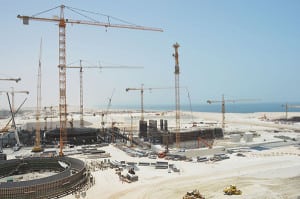
Nuclear Power Projected to Expand: 30 Developing Countries Considering the Energy Source
A recently released International Atomic Energy Agency (IAEA) study predicts that nuclear power will continue expanding globally in the coming years, even as the pace of development slows due to low fossil fuel prices and the growth of renewable energy. The IAEA presents nuclear power generating capacity projections annually. The estimates were released just days […]
-
 Nuclear
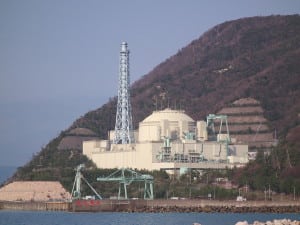
Japan Kills Monju but Not Breeders
In a widely expected move, the Japanese government finally killed the ill-fated Monju breeder reactor project on September 21, but reasserted its faith in breeder reactor technology as a component of the nation’s future power mix. The Monju plant was an ambitious project that never came close to meeting its backers’ expectations. Launched in 1980, […]
-
 Legal & Regulatory
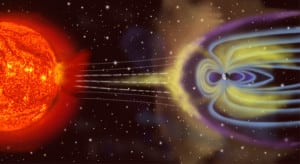
FERC Adopts GMD Rule and Says Farewell to Tony Clark
The Federal Energy Regulatory Commission (FERC) last week unanimously adopted a final rule on reliability standards to address the threat to the grid from geomagnetic disturbances (GMD).
-
 Renewables
Major Challenges in Further Renewable Integration, Report Says
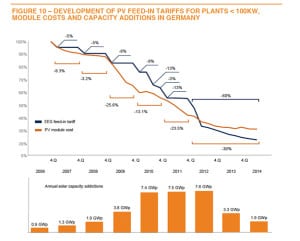
Global resources of variable renewable energy—primarily wind and solar—despite breakneck growth over the past two decades, are beginning to run up against technological and policy limitations on further deployment, and future growth will depend on significant changes in policy and grid design, according to a new report. Released on September 20, Variable Renewable Energy Sources […]
-
 Renewables
Briefs: Mass., N.Y., Calif. Move to Address Greenhouse Gas Emissions
At least three states called for hefty new measures relating to greenhouse gas (GHG) goals over the past week. Mass. Gov. Directs State Officials to Implement Regulations to Annually Reduce GHG Massachusetts Gov. Charlie Baker (R) signed an executive order on September 16 directing state officials to develop rules for specific, yearly reductions in GHG […]
-
 Nuclear
New Record: Nuclear Power Plant Online for 940 Continuous Days
The Heysham 2 nuclear power station broke a nearly 22-year-old record for continuous operation when it shut down Unit 8 on September 16 after 940 days online. The previous record—held by Pickering 7, a Canadian nuclear plant—was 894 days, set on October 7, 1994. EDF Energy said that the Heysham reactor—a 615-MW unit located on […]
-
 Slideshows
SLIDESHOW: An Alarming Trend Affecting U.S. Baseload Power
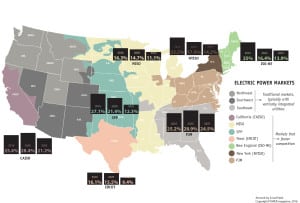
States, regulators, and market participants have in recent years called attention to a trend concerning uneconomic baseload generation in organized wholesale markets, specifically in ISO New England, New York Independent System Operator (NYISO), MISO, PJM, the Electric Reliability Council of Texas (ERCOT), and the California Independent System Operator (CAISO). Cheap natural gas, low power demand […]