
Latest
-
 Legal & Regulatory
Judge Orders Release of EPA Nominee Scott Pruitt’s Emails with Industry
A state court ordered Oklahoma Attorney General Scott Pruitt to turn over more than 2,500 emails his office withheld from open records requests relating to communications with coal, oil, and gas corporations. The order came a day before the Senate is poised to confirm him as President Donald Trump’s nominee to lead the Environmental Protection […]
-
 Connected Plant
Cybersecurity a Main Concern for Connected Plants, but Tech is Improving
Security issues are second only to cost concerns when energy generators consider the risks related to implementing connected technology at their power plants, according to a February 15 poll of the audience at POWER’s Connected Plant Conference. However, continued improvements in available cybersecurity systems are quickly reducing those risks, Stan Schneider, CEO of Real-Time Innovations, […]
-
 Coal
CoalUtility Owners Vote to Shut Down 2.2-GW Navajo Generating Station
The utility owners of the Navajo Generating Station (NGS) in Arizona have voted to shut down the 2,250-MW coal-fired power plant in December 2019. The decision to close the plant on tribal land near Page along the border with Utah was based on the “rapidly changing economics of the energy industry,” which has seen natural […]
-
 Wind
WindSPP Becomes First U.S. Grid Operator to Record Greater Than 50% Wind Penetration
A large swath of the central U.S. set a North American wind penetration record of 52.1% early in the morning on February 12, the Southwest Power Pool (SPP) reported. The regional transmission organization (RTO), whose footprint spans 550,000 square miles from the Canadian border in Montana and North Dakota to parts of New Mexico, Texas, […]
-
 Nuclear
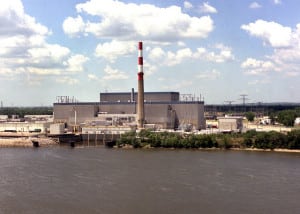
Generators Sue to Block Illinois Nuclear Subsidies
A group of power companies have filed a federal lawsuit against the State of Illinois, challenging a recently enacted law that creates subsidies for Exelon’s uneconomic nuclear power plants. The plaintiffs in the lawsuit filed on February 14 in the Northern District of Illinois are the Electric Power Supply Association (EPSA), Dynegy, Eastern Generation, NRG […]
-
 Connected Plant
Don’t Just Connect Your Plant—You Need to Model It, Experts Say
Remote and online monitoring of plant performance parameters is an important step toward a fully connected plant, but alone it’s not enough to exploit the real value in the Industrial Internet of Things, speakers at POWER’s inaugural Connected Plant Conference on February 15 in Dallas said. Randy Bickford, president and CTO of software firm Expert […]
-
 Partner Content
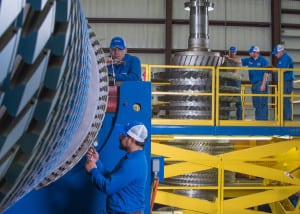
Meeting the growing demands of gas turbine maintenance
The number of industrial gas turbines in service continues to rise along with the technology that has significantly evolved over the last 50 years to meet ever-increasing demands. At the same time, turbine operators are looking for the most cost effective way to maintain their equipment, ensuring that it meets local emissions standards and delivers reliable service.
-
 Nuclear
Explosion Rocks Flamanville Nuclear Power Plant in France
An explosion at EDF Energy’s Flamanville nuclear power station in France has been controlled, the utility said. The blast, which rocked Unit 1 at the nuclear plant on France’s northern coast at around 9:45 a.m. local time on February 9, stemmed from a fire originating from a fan located under the generator, EDF Energy said […]
-
 Legal & Regulatory
GOP Statesmen Pitch Carbon Tax at White House
Former President Barack Obama’s regulation-heavy Climate Action Plan was inefficient and should be replaced with a carbon tax, a group of senior Republican statesmen told White House officials during a February 8 meeting. The new pitch is laid out in a paper by the Climate Leadership Council — whose membership includes former GOP Treasury Secretaries […]
-
 Coal
Coal2017 Will be the Year for North American CCS, Expert Says
Carbon capture and storage (CCS) in North America is about to have its year, Julio Friedmann, senior adviser for energy innovation at the Department of Energy’s (DOE’s) Lawrence Livermore National Laboratory, said during the February 8 Global CCS Institute’s annual Americas Forum. “We are just now like fully deployed and hopefully that will finally quash […]