
Latest
-
 O&M
O&MPlant Economics: The Impact of Shortages on FGD Prices
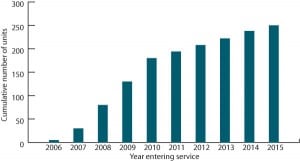
Since ratification of the Clean Air Act (CAA) in 1970, U.S. utilities have made steady efforts to install pollution control equipment to curb power plant stack emissions. The CAA Amendments of 1990 raised concerns at the time about the industry’s ability to install a large number of flue gas desulfurization (FGD) systems, or scrubbers, in […]
-
 O&M
O&MMercury Control: Capturing Mercury in Wet Scrubbers: Part II
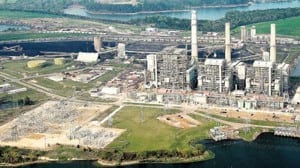
In Part I of this two-part report ( COAL POWER, July/August 2007, p. 22), we introduced the integrated R&D effort by the U.S. Department of Energy’s National Energy Technology Laboratory (DOE/NETL) to improve understanding of the mechanisms of mercury (Hg) capture and retention in flue gas desulfurization (FGD) systems and the fate of Hg in […]
-
 Coal
CoalThe Coal Pile: Steam Blast Rocks Big Apple
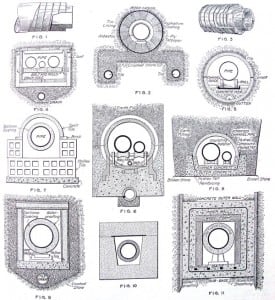
This July, an underground steam pipe near Manhattan’s Grand Central Terminal ruptured and spewed a scalding brown geyser of steam and debris higher than the nearby 77-story Chrysler Building. The blast, which injured 30 people, created a 40-foot crater at street level that swallowed a tow truck. A similar explosion in 1989 killed three people. […]
-
 Synfuel
Fueling around
Europeans didn’t know that corn existed before Columbus “discovered” America. It had been cultivated by indigenous North Americans for thousands of years before the Italian brought home what was to become a favorite food for many. The more adventuresome even figured out how to distill corn into something more to their liking. Fast-forward five hundred […]
-
 Gas
GasGlobal Monitor (August 2007)
PG&E mounts tidal power project / GE F-class turbine breaks record / Iowa welcomes ethanol-fed hog / NYPA upgrades pumped-storage plant / Bush blesses Browns Ferry 1 restart / Shearon Harris looks to live on / Nevada bets on solar thermal / Climate models questioned / POWER digest
-
Readers talk back and Corrections (August 2007)
Reaction to reactor comment On page 34 of your April article on nuclear power, the author mischaracterized the maturity of one of the new reactors that have been submitted for NRC approval. The statement, “None of the advanced reactors that the NRC has certified (by reviewing engineering documents) has a performance record,” is incorrect. GE’s […]
-
 O&M
O&MFocus on O&M (August 2007)
Stop valves from leaking money / Integrating plant and equipment models / Pricing priceless knowledge
-

Is ratepayer funding of utility R&D outdated?
Southern California Edison Co. (SCE) is requesting regulatory approval to recover over $50 million from ratepayers to analyze the feasibility and cost of a “commercial-scale” clean hydrogen power generation (CHPG) facility that would gasify coal to fuel a combined-cycle power plant and sequester the associated carbon emissions underground. If the study demonstrates the CHPG technology […]
-
 O&M
O&MMidAmerican’s Walter Scott, Jr. Energy Center Unit 4 earns POWER’s highest honor
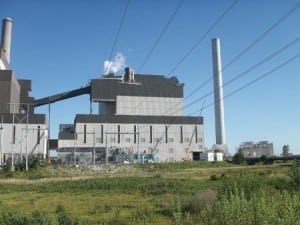
MidAmerican Energy Co. and its project partners are convinced that supercritical coal-firing technology’s inherently higher efficiency and lower CO2 emissions no longer come with a price: reduced reliability. Their Walter Scott, Jr. Energy Center Unit 4, the first major new supercritical plant in the U.S. in more than 15 years, is POWER’s 2007 Plant of the Year.
-
 Coal
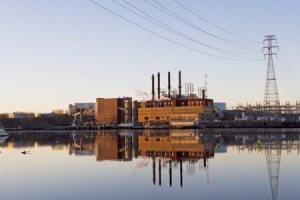
CoalPSNH’s Northern Wood Power Project repowers coal-fired plant with new fluidized-bed combustor
The Northern Wood Power Project permanently replaced a 50-MW coal-burning boiler at Public Service of New Hampshire’s Schiller Station with a state-of-the-art fluidized-bed wood-burning boiler of the same capacity. The project, completed in December 2006, reduced emissions and expanded the local market for low-grade wood. For planning and executing the multiyear, $75 million project at no cost to its ratepayers, PSNH wins POWER’s 2007 Marmaduke Award for excellence in O&M. The award is named for Marmaduke Surfaceblow, the fictional marine engineer/plant troubleshooter par excellence.