
Latest
-
 News
NewsAir Velocity Sensors
Degree Controls has introduced AccuSense F333 air velocity sensors, a series of low-cost airflow sensors designed for field systems. The AccuSense F333 provides air velocity measurements within the range of 0.2 m/s to 10 m/s (40–2,000 fpm) while maintaining a ±10% accuracy across a temperature range of 15C to 60C with a 2% or better […]
-
Commentary
WTE: Next-Generation Sustainable Energy
It is clear that energy use will expand in the future as our population and society’s standard of living increase. Meanwhile, the push toward a sustainable lifestyle requires that all resources be utilized efficiently and sparingly. The National Academy of Sciences has identified paradigm shifts from current processes to an ideal vision centered on renewable energy and an atom economy—defined as maximum incorporation of starting materials into final products. These seemingly disparate paths converge if one considers energy production from municipal solid waste (MSW).
-
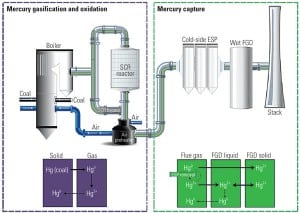 Environmental
Determining AQCS Mercury Removal Co-Benefits
The U.S. Environmental Protection Agency is expected to propose an emissions standard for mercury and other hazardous air pollutants emitted by coal- and oil-fired electric generating units in March of 2011. The anticipated rule would require emission control to meet the various standards using maximum achievable control technology, as determined by the prescriptive requirements of the Clean Air Act. In response to the expected rule-making, utilities will be required to make technology decisions in order to ensure compliance. One cost-effective approach to compliance may be the use of “co-benefits” from air quality control systems (AQCSs) already in service that are designed to remove other pollutants.
-
Legal & Regulatory
TREND: Fire Safety Again Tops Nuclear Agenda
The U.S. Nuclear Regulatory Commission puts fire at the top of its safety concerns, calculating that fire constitutes half of all reactor safety risks, and lately fire safety has again become a major industry issue. For example . . .
-
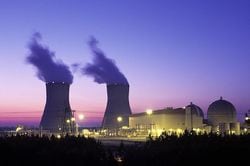 Commentary
The Politics and Perils of Pork
An "emergency war supplemental" appropriation bill that Congress was considering at this writing has implications for the power industry: The measure includes $9 billion each for new loan guarantees for nuclear power and renewable energy projects.
-
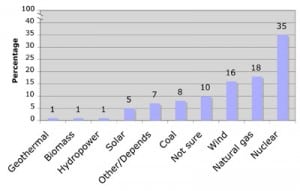 Legal & Regulatory
Regulators Embrace Nuclear—Awkwardly
A recent survey finds utility regulators contradicting themselves on the touchy subject of nuclear power. They say they like new nukes, but their actions belie their stated beliefs.
-
Supply Chains
DOE Helium Shortage Hits Nuke Security, Oil And Gas Industry
The Energy Department’s failure to recognize an impending supply squeeze for helium-3—a nonradioactive gas produced in the agency’s nuclear weapons complex—has created a national crisis requiring White House intervention and threatening key U.S. nuclear and homeland security programs, a wide range of medical and scientific research activities and development of U.S. oil and natural gas resources, according to testimony before a House subcommittee.
-
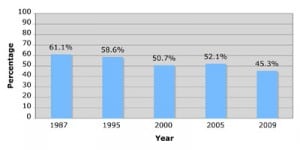 HR
HRWasting Time and Hating the Job
Does wasted work time equal job dissatisfaction? Two studies point in that direction.
-
 HR
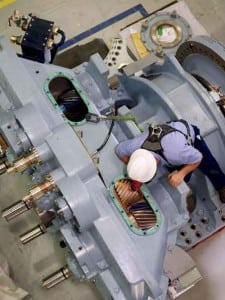
HRHow Clipper Windpower Jump-Started Itself . . . Big Time
Clipper Windpower didn’t have the luxury of a decade or more of product development. Instead, it started big—with a 2.5-MW wind turbine. Here’s the story of how they did it.
-
Finance
Bid Smartly . . . or Walk Away
With some industries reeling in today’s economy, future revenue growth is still uncertain in certain markets. The bright exception is the "new energy" arena of renewables and sustainables. But that’s a tough market, with lots of competitors for the business and lots of opportunities to misfire and miss the boat. A key to success is bidding smartly on contract opportunities. Otherwise, don’t bid at all.