The U.S. Department of Energy (DOE) maintains one of the richest and most diverse histories in the federal government. Although the department itself has only existed since 1977, its lineage traces back to the Manhattan Project—the massive scientific effort that developed the atomic bomb during World War II—and to various energy-related programs that were previously dispersed throughout multiple federal agencies. Today, the department oversees 17 National Laboratories that collectively represent the world’s preeminent network for scientific research and technological innovation.
Manhattan Project Origins
The story begins in 1939, when Albert Einstein wrote to President Franklin D. Roosevelt alerting him to the importance of nuclear research and the possibility that it might lead to the development of powerful weapons. Einstein noted that Germany had stopped the sale of uranium and that German physicists were actively engaged in uranium research. This letter set in motion a chain of events that would reshape both science and geopolitics.
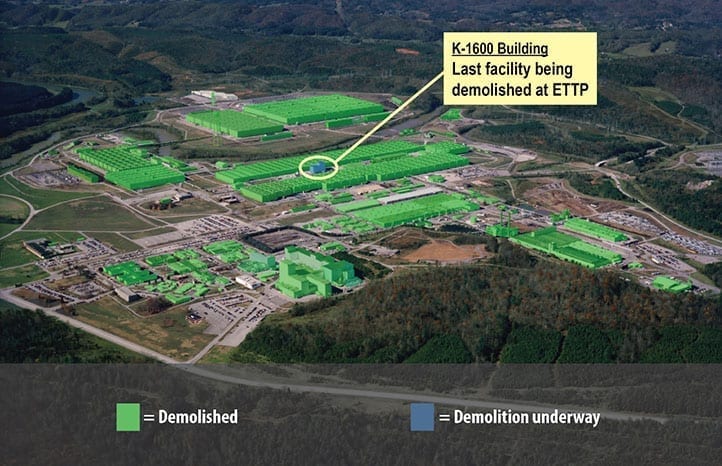
In 1942, the Army Corps of Engineers established the Manhattan Engineer District to develop and build the atomic bomb. Uranium isotope separation facilities were constructed at Oak Ridge, Tennessee; plutonium production reactors were built at Hanford, Washington; and a weapons laboratory was established at Los Alamos, New Mexico, under the direction of physicist Robert Oppenheimer. Reactor research at the University of Chicago’s Metallurgical Laboratory after the first controlled chain reaction led to the creation of Argonne National Laboratory.
The wartime laboratories were originally conceived as temporary creations. However, after the war’s conclusion and the atomic bomb’s decisive role in ending the conflict, the newly created Atomic Energy Commission (AEC) took over the management of these facilities, extending their lives indefinitely and establishing the foundation for what would become the national laboratory system.
From Atomic Energy to Energy Security
The AEC governed atomic research and development from 1946 until 1974, overseeing both the weapons complex and the development of civilian nuclear power. In 1954, President Eisenhower signed the Atomic Energy Act, which opened the way for civilian nuclear power programs. The laboratories’ mission began to expand beyond weapons to include fundamental research in physics, chemistry, materials science, and biology.
The 1973 oil embargo and subsequent energy crisis fundamentally changed America’s approach to energy policy. On Oct. 17, 1973, the Organization of Arab Petroleum Exporting Countries (OAPEC) declared an oil embargo that exacerbated what became known as the first “energy crisis.” This event catalyzed the formation of the Energy Research and Development Administration (ERDA) in 1975, which consolidated energy-related programs from across the federal government.

In This Issue
Full issueIn 1977, President Jimmy Carter signed the Department of Energy Organization Act, establishing the DOE and consolidating ERDA, the Federal Energy Administration, and several other agencies. The new department inherited not only the national laboratories but also responsibility for the Strategic Petroleum Reserve, energy conservation programs, and the power marketing administrations.
The National Laboratories Today
Today’s 17 National Laboratories constitute the backbone of American scientific leadership. These institutions tackle critical challenges ranging from combating climate change to discovering the origins of the universe, and they possess unique instruments and facilities found nowhere else in the world. The laboratories employ a multidisciplinary approach that emphasizes translating basic science into practical innovation.
The scientific achievements flowing from these laboratories are extraordinary. The DOE has recorded 118 Nobel Laureates affiliated with its programs and facilities. Berkeley Lab alone has seen 17 Nobel Prizes awarded to scientists who called the laboratory home, beginning with founder Ernest Orlando Lawrence, who won the 1939 Nobel Prize in Physics for inventing the cyclotron—the circular device that ushered in the era of giant “atom smashers.” Recent Nobel‑recognized advances in areas such as quantum information science, Clustered Regularly Interspaced Short Palindromic Repeats (CRISPR) gene editing, and protein structure prediction have involved scientists and facilities connected to DOE and its partner institutions.
In December 2022, scientists at Lawrence Livermore National Laboratory achieved fusion ignition—a major scientific breakthrough decades in the making. This milestone demonstrated that more energy could be released from a fusion reaction than was used to initiate it, marking a pivotal moment in the quest for clean, abundant energy.
Economic Impact and Technology Transfer
The National Laboratories’ contributions extend far beyond pure science. A 2021 economic impact study of Sandia National Laboratories’ technology transfer activities revealed that the lab had generated more than $95 billion in economic impact from 2000 to 2020, supporting approximately 21,000 jobs per year. The study documented $53.7 billion in total sales of new products and services resulting from Sandia’s innovations.
Technology transfer brings knowledge, intellectual property, and capabilities developed within the laboratories to private industry, academia, and government agencies. The DOE is one of the largest supporters of technology transfer in the federal government, with its Office of Technology Transitions working to expand the public impact of the department’s research portfolio. In 2013 alone, the laboratories participated in more than 3,000 contracts with the private sector, including more than 600 with small businesses, and supported 40 startup companies.
The spectrum of breakthroughs is astonishing—from basic science discoveries such as decoding DNA, detecting the neutrino, and probing the nature of dark matter to applied research that has unleashed an American energy renaissance, improved grid resiliency, and launched the LED lighting revolution. The laboratories have led the world in supercomputing, brought safer and cleaner water to millions, improved automotive materials, developed magnetic levitation train technology, ensured the integrity of the nuclear weapons stockpile, and revolutionized medical diagnostics and treatment.
Looking Forward
Today, the National Laboratories continue to address the nation’s most pressing challenges. They host some of the world’s most powerful supercomputers, advance quantum information science, support space exploration, conduct cancer research, develop biotechnology, and pursue the promise of fusion energy. Research into artificial intelligence (AI) is expanding across the laboratory system, with AI offering enormous potential for economic prosperity and national security.
For more than 75 years, the National Laboratories have offered unparalleled scientific service to the nation. They have spawned industries, saved lives, and sparked imaginations. They have strengthened national security and increased prosperity. As the challenges facing the nation evolve—from climate change to energy security to emerging technologies—the laboratories remain positioned at the forefront of discovery, continuing a tradition of excellence that began in the urgency of wartime and has grown into an enduring national asset.
The American people, through their representatives in Congress, have supported the work at the National Laboratories with investments that have built them into world-leading research facilities. That investment has been repaid many times over—in knowledge, in technology, in economic growth, and in security. The researchers serving at the National Laboratories have put a distinctly American stamp on the past century of science, and they continue to shape the scientific frontiers of the century ahead.
—Aaron Larson is POWER’s executive editor.