
Technology
-
 Commentary
The Next Five Years Will Define U.S. Nuclear’s Fate
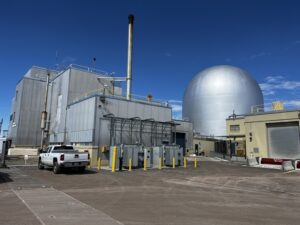
The U.S. stands at a critical juncture. We’re experiencing electric load growth for the first time in decades, as fierce global competition reshapes the energy landscape. Nuclear power, both the resurgence of fission and the promise of fusion, could secure our energy future and position the U.S. as the global leader in energy technology for […]
-
 Solar
SolarInnovation Continues to Drive Growth in Solar Power Sector
Energy experts think solar power still has a bright future, even as challenges impact the industry. Power generation from solar photovoltaic (PV) technology has increased dramatically over the past few years thanks to the need for less-costly power, and for cleaner forms of energy.
-
 Hydrogen
Hydrogen’s Power Play: What Comes After the Hype
As hydrogen production scales up, power professionals must weigh where—and when—it fits into a decarbonized grid. For now, experts say real progress may depend on addressing structural bottlenecks: project
-
 Electrification
How PG&E Is Supporting EV Growth Without Expensive Grid and Home Upgrades
As electric vehicles (EVs) surge in popularity, many American homeowners are discovering a hidden obstacle to the EV transition: the aging electrical infrastructure of the nation’s housing stock. While
-
 Nuclear
Groups Collaborate on Projects for Fusion Energy in Germany
Government officials in Germany are supporting development of a nuclear fusion pilot plant. Officials have said they want nuclear fusion to be a priority of the country’s energy agenda, barely two years after the country decommissioned its last three operating nuclear power plants in April 2023 at the direction of then-chancellor Angela Merkel.
-
 Renewables
POWER Digest [May 2025]
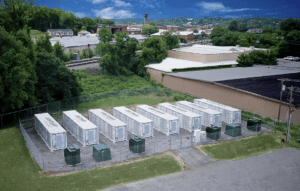
Major German BESS Project Closes Financing. Energy transition bank NORD/LB announced it has closed an €87 million ($94 million) financing package with Nofar Energy for construction of a 104.5-MW/209-MWh
-
 Connected Plant
Power in Unity: Strengthening OT Cybersecurity Through Collaboration
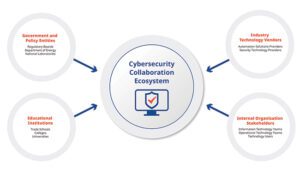
Cooperation across teams, technology, and institutions is the key to securing the world’s critical infrastructure. As the global industrial cybersecurity market grows toward a forecasted $41.4 billion in
-
 T&D
T&DDelivering on the Promise of Smart Grid — Transforming Grid Operations with Improved Intelligence and Action
Smart Grid technology arrived with a bang more than two decades ago, but the first implementations often overpromised and underdelivered. Smart Grid 2.0, however, integrates new technologies to provide
-
 Solar
SolarThe Solar Industry Is Getting Smarter About Storm Defense
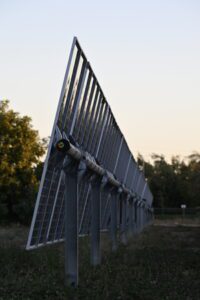
Stowing capabilities, tougher modules, and real-time data are the new frontline in solar’s fight against extreme weather. Alex Roedel and Jyoti Jain, Nextracker The global climate crisis is reshaping the way we think about energy resilience. As extreme weather increases, utility-scale solar projects face a new era of challenges. Advanced solar tracker systems, control and […]
-
 Interview
The POWER Interview: Innovation, Market Incentives Can Drive Electrification
Electrification is about offsetting energy coming directly from fossil fuels with electrons. And it’s a key strategy to support decarbonization across sectors. Depending on the generation mix providing the electrons, the amount of decarbonization may vary. But wherever a customer has electrified their energy usage, they stand to benefit from future deployments of clean generation resources.
-
 Data Centers
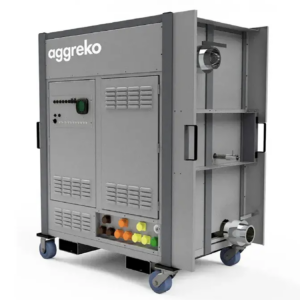
Aggreko Expands Data Center Solutions with Liquid-Cooled Load Bank
Aggreko said it has launched a 500-kW liquid-cooled resistive load bank, purpose-built for liquid-to-liquid data center commissioning and testing for North American customers. The energy solutions group said the load bank enables the testing of data center liquid cooling systems to ensure they will keep server racks within their optimal operating parameters, a key part […]
-
 Solar
SolarSolar and Steel Offer Resilience Against Breakage, Tariffs, Supply Chain Woes
The commercial solar industry, now more than 50 years old, is facing a pivotal moment. Years of rapid growth—driven by exponentially falling costs and rising demand—are running up against global supply chain instability, geopolitical tensions, and structural vulnerabilities in the latest module designs.
-
 Hydro
HydroModernizing Hydropower to Maximize Its Potential
As wind and solar dominate global investment in renewable energy, hydropower’s potential to enhance grid resilience and expand energy supply remains largely untapped, and that potential is only expanding with the integration of advanced technologies like artificial intelligence (AI).
-
 Press Releases
New Radio Modules Boost Energy Data Acquisition
Camille Bauer Metrawatt AG, a member of the GMC-Instruments Group, extends the functionality of its mains analyzers, introducing the new PME radio modules 3P and 3PN, which make full-fledged energy centers out of all SINEAX AM, SINEAX DM5000, CENTRAX CU, or LINAX PQ units. The radio modules transmit over 10 meters on 2.4 GHz as […]
-
 Press Releases
SEL Introduces the LINAM UGFI Underground Fault Indicator
Schweitzer Engineering Laboratories recently announced the release of the LINAM UGFI Underground Fault Indicator, a product of the E. O. Schweitzer Manufacturing facility in Lake Zurich, Illinois. The innovative device offers several key features that help distribution system operators reduce the duration of outages by streamlining underground fault locating. The LINAM UGFI is rugged, submersible, […]
-
 Gas
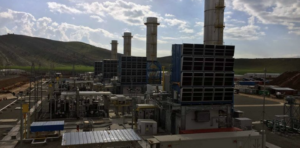
GasGE Vernova Boosting Gas Turbine Capacity with Technology Upgrade
GE Vernova will install new equipment at a power plant in Iraq, its first use of the company’s upgraded AGP XPAND technology. The latest version is an evolution of GE Vernova’s Advanced Gas Path (AGP) system introduced more than a decade ago on the company’s 9E.03 fleet to boost gas turbine capacity.
-
 Hydrogen
Utility Global, Hanwha Collaborate on Hydrogen Production Using Biogas
Utility Global, a clean hydrogen production group, announced it will partner with Hanwha Corp. E&C Division to carry out a preliminary front-end engineering (pre-FEED) and design study for the deployment of its proprietary H2Gen system at wastewater treatment plants in South Korea.
-
 Commentary
Funding the Power Surge: Navigating the Trillion-Dollar Investment in the U.S. Power Sector
The U.S. power sector stands at a juncture, facing a confluence of factors that are poised to trigger an era of unprecedented growth and necessitate a large influx of capital. Driven by the increasing demand from data centers, the reshoring of manufacturing, and electrification across transportation, heating, and industry, the demand for electricity is rising at a pace unseen in recent decades.
-
 Solar
SolarNext-Generation Panels Recharge Utility Solar Economics
A massive surge in energy demand is about to reshape the U.S. power landscape, presenting an opportunity for forward-thinking utilities. The nation’s energy demands are poised to explode, as everything from the enormous data centers powering the artificial intelligence (AI) boom to broad electrification efforts increase the need for electricity.
-
 Gas
GasDuke Energy, GE Vernova Strike Major Gas Turbine Deal to Support Explosive Demand Growth
Duke Energy has signed a sweeping partnership with GE Vernova for the supply of advanced gas turbines and associated equipment—potentially securing up to 11 of GE Vernova’s flagship 7HA units to advance specific projects in line with the utility’s integrated resource plans (IRPs). Duke Energy on April 24 said the “arrangement” would help the company […]
-
 Solar
SolarShedding Light on Solar Incentives—Why Property Owners Remain in the Dark
As the world grapples with climate change and seeks sustainable energy solutions, solar energy has emerged as a front-runner in renewable energy sources. Despite the numerous benefits associated with solar power, many property owners remain unaware of the federal, state and utility incentives available to them for installing solar panels. There are also many grant […]
-
 Geothermal
Geothermal Energy Growing as Renewable Energy Resource
Want to learn more about geothermal energy? POWER has published a series of articles related to geothermal power, ranging from the importance of geothermal as a power generation resource, to technologies supporting the development of geothermal.
-
 Nuclear
Group Projects 100-GW Rise in Global Nuclear Power Capacity Across Next Decade
A new report from GlobalData, a data and analytics group, projects global nuclear power capacity will hit 494 GW by 2035. The group said capacity gains will be tied to advancements in deployments of small modular reactors (SMRs), along with the continuing worldwide shift to cleaner forms of energy.
-
 Hydrogen
Plug Power Group Commissions Hydrogen Liquefaction Plant in Louisiana
Hidrogenii, a joint venture between Plug Power and Olin Corp., said it has commissioned a 15 metric-ton-per-day (TPD) hydrogen liquefaction plant in St. Gabriel, Louisiana. Plug Power on April 17 said the facility is among the largest electrolytic hydrogen liquefaction plants in North America.
-
 Electrification
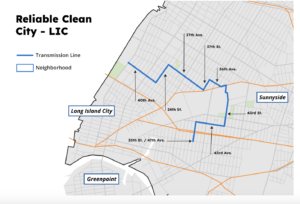
Con Edison Building New Transmission Line for NYC Borough
Con Edison has said it is investing $125 million to build a new transmission line that will support economic development and the electrification of buildings and vehicles in Queens, New York. The Reliable Clean City—Long Island City project will connect the Vernon and Newtown substations in Long Island City.
-
 Electrification
Why Utility Fleets Still Struggle to Harness True TCO Intelligence
In an era where grid modernization, decarbonization, and electrification dominate utility agendas, fleet management strategies are lagging behind. Many utility and power generation providers continue to rely on outdated vehicle management platforms that lack the advanced total cost of ownership (TCO) analytics needed to support today’s evolving operational and sustainability goals.
-
 Press Releases
EM-Power Europe: Start-Ups Provide Smart Solutions for Smart Grids
The flexibility market is gaining ground within the electricity industry. The reasons for this are twofold. Firstly, there is more and more electricity generated from volatile renewable sources of energy that has to be integrated into the grid. And secondly, the increasing digitalization of power grids means that even decentralized market players can use flexibility […]
-
 Gas
GasKentucky Energy Group Breaks Ground for New RICE Power Plant
A Kentucky energy provider has broken ground for a new 75-MW power plant that will use reciprocating internal combustion engine (RICE) technology from Wärtsilä.
-
 Interview
The POWER Interview: Electrification Key to Total Decarbonization
The transition toward electrification has challenges, such as the need for more infrastructure to support charging of electric cars and trucks, and other transport vehicles. The residential and commercial and industrial sectors must consider the cost of new technologies for heating and cooling.
-
 Data Centers
Innovative Solutions Imperative to Meet Data Center Energy Demand
Today’s data centers, the workhorses of our digital economy, face a paradox. While they are asked to fuel the rapid advancement of generative AI, they must do so under increasingly tight energy budgets, with sustainability mandates and power constraints threatening to slow innovation. The question isn’t whether AI will transform industries—it already is—but whether our infrastructure can keep up without buckling under the weight of AI’s energy appetite.