
Sustainability
-
 Legal & Regulatory
Measure Twice, Cut Once—A Roadmap for Enabling VPPs Through Policy and Program Design
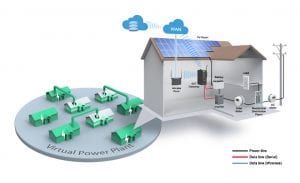
Virtual power plants (VPPs), as aggregations of dispatchable distributed energy resources (DERs), can deliver grid services ranging from resource adequacy to reliability at scale—all while making energy more affordable. Yet, despite their merits, the U.S. utility industry is yet to leverage the full potential of these readily available, affordable, customer-sited resources to add flexibility to the grid. Of course, the decision to incorporate […]
-
 Sustainability
UK’s Drax Eyes U.S. for Bioenergy CCS Expansion Drive
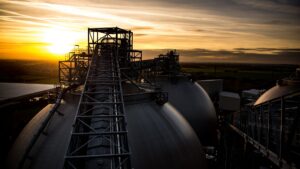
The 2.6-GW Drax Power Station in northeastern England—once Western Europe’s largest coal-fired power plant—is poised to pioneer bioenergy with carbon capture and storage (BECCS), a negative emissions
-
 Legal & Regulatory
EPA Rolls Out Final, More Stringent PM2.5 Standard
The U.S. Environmental Protection Agency (EPA) in February issued a final rule imposing tighter restrictions on fine particulate matter (PM2.5) or soot. The final rule, issued on Feb. 7, strengthens the nation’s National Ambient Air Quality Standards (NAAQS) by lowering the level of the primary (health-based) annual PM2.5 standard from 12.0 micrograms per cubic meter […]
Tagged in: -
 Sustainability
Clearing the Air: Is Direct Air Capture a Savior, Distraction, or a Trojan Horse?
Direct air capture (DAC) holds promise to extract carbon dioxide from the atmosphere, potentially becoming a crucial tool in the battle against climate change. Amidst heated debates over its feasibility, cost, and effectiveness, this comprehensive analysis dissects DAC’s potential through energy modeling and policy discussion. Can DAC truly fulfill its promise and play a significant […]
-
 Commentary
The Possibilities of Recycling Nuclear Fissile Waste
Nuclear energy has long been a topic of debate due to concerns about its environmental impact and the disposal of nuclear waste. However, a paradigm shift is underway that could revolutionize how we view nuclear waste. Not only could recycling nuclear fissile waste reduce the waste generated by current nuclear power plants, but it also […]
-
 Commentary
The Clean Energy Balancing Act
Energy is the lifeblood of our economy. It powers our phones, homes, offices, and transportation. As our energy consumption has evolved, so too has our electricity system to adapt to the demands of a changing world. Today, renewable energy from solar and wind dominates new electricity generation. Utilities are grappling with rising demand from electric […]
Tagged in: -
 Commentary
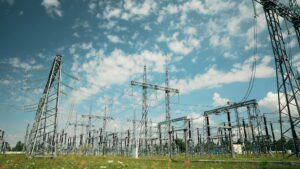
5 Ways to Ensure Grids Don’t Become Bottlenecks in the Energy Transition
Meeting ambitious climate targets while transitioning from fossil fuels remains a key priority for businesses, policymakers, and society in general. The good news is that the grid can play a pivotal role in helping us achieve this. With less dependency on more harmful energy sources such as oil and coal, and increased electrification, we are […]
-
 Sustainability
GE Vernova, IHI Developing Novel Ammonia-Capable Gas Turbine Combustor
GE Vernova will collaborate with Japanese integrated heavy industry group IHI Corp. to develop a retrofittable 100% ammonia-capable gas turbine combustion system that would be compatible with GE’s 6F.03, 7F, and 9F models, targeting a potential commercially available product by 2030. The companies on Jan. 24 signed a joint development agreement (JDA) that formally launched […]
Tagged in: -
Sustainability
Responsive Economic Dispatch: Meeting a New Goal for Power
Customization is what we expect from our coffee order, not something we associate with an electricity plan. But like other industries influenced and motivated by the Internet of Things (IoT) age, the energy industry is having a renaissance that is changing customers’ relationship with power. Customers want their electricity to do more than keep the […]
-
 Sustainability
PGE Leans into an All-of-the-Above Strategy to Decarbonize Its Power System
Climate change has led many states and countries to set targets for reducing greenhouse gas (GHG) emissions from power systems. Oregon, for example, has set targets for all power sold to retail customers in the state to have GHG emissions cut by 80% by 2030, 90% by 2035, and 100% by 2040. It’s a challenging […]