
Plant Design
-
 O&M
O&MWet Booster Fans Optimize Power Station Performance with FGD and Wet Stack
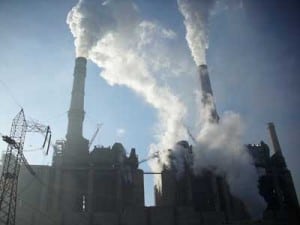
A Romanian lignite-fired power station wanted to minimize the operating cost of the flue gas desulfurization (FGD) system by placing the booster fans in the "wet position," between the wet FGD scrubber and the wet stack, where they would consume significantly less power. A number of combined environmental effects must be considered in this design.
-
 O&M
O&MEnhanced Capture of Mercury Using Unique Baghouse Filter Media
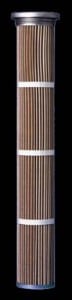
Several states have already instituted mercury emission limits in expectation of tightening mercury emission rules that will require reductions of up to 91%. Coal-fired plants searching for an economical way to meet the new limits may need to look no further than replacing their baghouse filter elements.
-
 O&M
O&MPulverizers 101: Part II
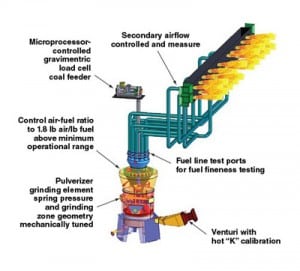
Pulverizers prepare the raw fuel by grinding it to a desired fineness and mixing it with the just the right amount of air before sending the mixture to boiler burners for combustion. In Part I of this three-part report, we examined the essentials of pulverizer design and performance. In the second part, we discuss the importance of fuel fineness. In the final article, we will discuss the importance of air and fuel measurement.
-
 O&M
O&MImproved Coal Fineness Improves Performance, Reduces Emissions
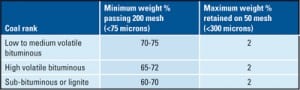
Utilizing engineering ingenuity and today’s developing computational fluid dynamics tools, a new classifier design is now available that significantly improves fineness from pulverizers without the heavy costs associated with dynamic classification or any downsides on pulverizer capacities, maintenance, and parasitic power. Instead, operational flexibility and improved emission control options are enhanced.
-
 Coal
CoalInnovations in Air Heater Design Produce Performance and Reliability Improvements
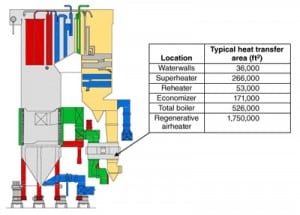
The regenerative air heater on a typical steam generator usually accounts for over 10% of a coal-fired plant’s thermal efficiency. A poorly performing air heater will cause an increase in the gas outlet temperature, often reducing the electrostatic precipitator collection efficiency and baghouse reliability. Recent design innovations enable restoration of this lost performance.
-
 O&M
O&MPulverizers 101: Part I
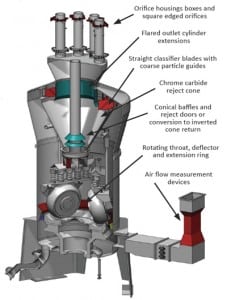
Pulverizers prepare raw fuel by grinding it to a desired fineness and mixing it with the just the right amount of air before sending the mixture to boiler burners for combustion. In Part I of three parts, we’ll examine the essentials of pulverizer capacity, what should be done after a coal pulverizer fire or other incident, and how to tune up pulverizer performance. In future articles we’ll discuss measuring pulverizer performance and performance optimization.
-
 O&M
O&MNatural Gas Conversions of Existing Coal-Fired Boilers
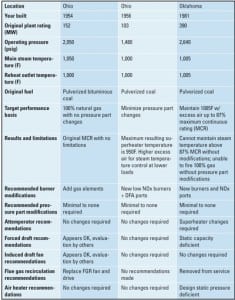
Why should utilities consider converting existing coal-fired plants to burn gas? We explore the rationale for fuel switching, some of the options available for the conversion of coal-fired units, technical considerations related to conversion, and some of the financial considerations that will impact the final decision.
-
Coal
Biomass Boiler Market Remains Unpredictable
Utilities struggling to meet renewable portfolio standards requirements have studied the conversion of existing coal-fired boilers to burn biomass. The results of those studies have been mixed, although test burns continue; the results of one such test are included. Overall, the market is tending toward smaller biomass projects, and the low price of natural gas is perhaps the biggest reason utility-scale projects are now few and far between.
-
 O&M
O&MApplying CFD to Optimize Furnaces Cofiring Biomass, and the Impact of Cofiring on SCR
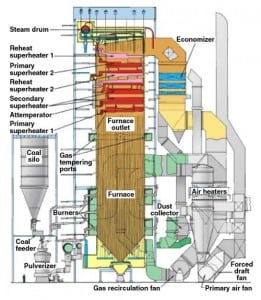
The international policy framework regulating the emissions of greenhouse gases from industrial and utility boilers is in flux. Meanwhile, most boiler owners are evaluating potential strategies for when, not if, more stringent emissions reduction regulations are put in place. One of the most attractive compliance options is the cofiring of biomass in existing coal-fired boilers.
-
Coal
Duke, Progress Energy Merging into Biggest U.S. Power Utility
Duke Energy and Progress Energy announced January 10 that they are combining to create the nation’s biggest electric utility. The $13.7 billion deal is likely to draw tough scrutiny from federal and state regulators—and some protests from big power buyers—given the companies’ overwhelming market dominance in North Carolina and more modest operational overlap in South Carolina.
-
Coal
Illinois Lawmakers Block Clean Coal Plant
Ringing what may be the death knell for the $3.5 billion Taylorville IGCC project, the Illinois Senate voted 33-18 in early January against authorizing construction of a coal gasification and power generating plant proposed in the state by Tenaska.
-
 Coal
CoalEPA Regulations Accelerate Industry Shift from Wet to Dry Bottom Ash Solutions
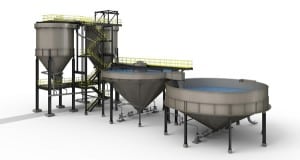
Energy efficient and environmentally responsible dry bottom ash technologies will soon be required by regulation. Progressive companies will bring their plants into compliance early because it’s a good business strategy. Here are your compliance options.
-
 Coal
CoalComparing the Value of Single- and Double-Layer Insulation on Boiler Walls
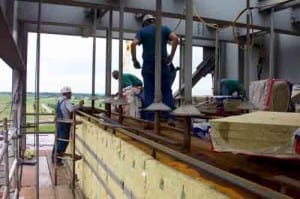
Boiler insulation practices have moved from using a single layer to a double layer of the same total thickness in recent years. However, this dual-layer trend has a downside: higher installation costs and the opportunity for contractors to cut corners when installing insulation. It’s time to return to using single-layer insulation on power boilers.
-
 O&M
O&MPower 101: Flue Gas Heat Recovery in Power Plants, Part I
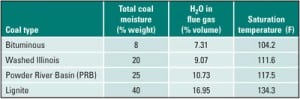
Every power engineer must have a firm grasp of the rudiments of how fuel is processed to produce electricity in a power generation facility. With this article, we begin a series of Power 101 tutorials that present these fundamentals in a clear and concise way. First up are the essentials of recovering heat from flue gas.
-
Coal
New York Proposes Costly Retooling of Power Plant Cooling
In a move that could cost the state’s electricity generators an estimated $8.5 billion, New York regulators [have] issued a draft policy that would require the installment of closed-loop cooling systems at two dozen large power plants in the state, including oil, coal, nuclear and natural gas generators, to reduce fish kills and other harmful effects to wildlife in the water bodies that supply the plants’ cooling water.
-
 O&M
O&MConveyor Upgrades Increase Plant Availability, Reduce Airborne Dust
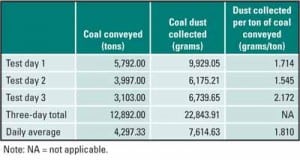
The loading and discharge of conveyor belts is the area where many, if not most, of the problems in solids conveying occur. Fortunately, a new technology provides chutes to accomplish conveyor loading and discharge without blockages while minimizing the dust generated: engineered-flow transfer chutes.
-
 O&M
O&MWorld’s Largest Circulating Fluidized Bed Boiler Begins Commercial Operation
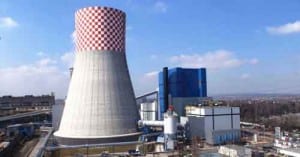
When the Åagisza power plant began commercial operation in late June 2009, it marked the beginning of a new era in the evolution of circulating fluidized bed (CFB) technology. At the heart of this 460-MW plant is the world’s largest CFB boiler, which is also the world’s first once-through unit supercritical CFB boiler.
-
O&M
Leading-Edge Conveyor Technologies Reduce Dust Emissions
Reducing dust from coal conveyors has moved from a housekeeping chore to a safety challenge, especially with Powder River Basin coals. Here’s what you need to know about the latest coal-handling system design.
-
Coal
UK Sets Binding Carbon Cuts; Requires CCS at Coal Plants
The UK has all but doomed new coal-fired capacity by simultaneously setting binding carbon reduction goals and by requiring carbon capture and sequestration (CCS) of carbon emissions from new mid-size coal-fired power plants. Existing plants will also be required to retrofit their plants when CCS technology is demonstrated, now estimated to happen by 2020.
-
 Coal
CoalFirstEnergy Retools Coal Plant to Burn Biomass
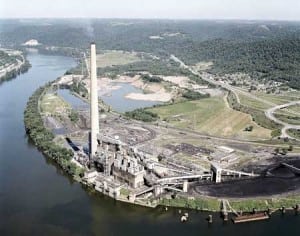
FirstEnergy has announced plans to repower two coal-fired units at the R.E. Burger plant to burn biomass. Conversion of the two units, expected to be completed by 2012, gets the utility off the hot seat with the EPA for alleged Clean Air Act violations.
-
 O&M
O&MA New Era in Power Plant Control Performance
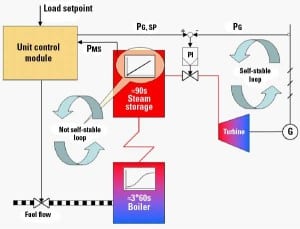
Recent improvements in the performance of steam power plants have been achieved with advanced computerized controls. These new control schemes not only reduce fuel consumption and make the plant much more responsive, but they also can significantly decrease start-up commissioning time and cost.
-
 O&M
O&MDominion Solves Mt. Storm’s Fuel-Handling Problems with Improved Coal Silo Design
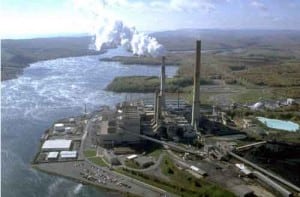
Many coal-fired power stations built before 1980 were designed for handling relatively easy-handling lump coal. If your plant’s bins, bunkers, and silos aren’t up to dealing with today’s range of more variable coal properties, this case study shows one way to minimize coal flow problems.
-
 Coal
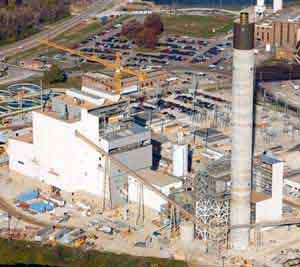
CoalDesigning New Composite Stack Liners
The 200-MW Dallman Unit 4 under construction in Springfield, Ill., is expected to cost approximately 20% less to operate per megawatt-hour than the most efficient of the three existing Dallman units. A composite stack liner is one element enabling that cost savings.
-
 Coal
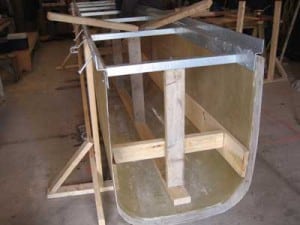
CoalCustom FRP Trench Drains Speed Up FGD System Installation
The flue gas desulfurization process requires the use of aggressive liquids that significantly shorten the life of typical construction materials such as metals and concrete. That makes fiberglass-reinforced plastic (FRP) the material of choice for many components in a typical flue gas desulfurization (FGD) system.
-
 Coal
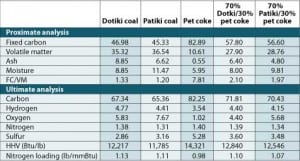
CoalLow-NOx Retrofit for Firing Coal/Petroleum Coke Blends
Replacing existing, older-generation controlled-flow split-flame burners on Unit 1 at the Seminole Generating Station with Foster Wheeler’s new low-NOx burners and overfire air additions reduced NOx emissions. This case study provides all the details and post-installation test results.
-
 Coal
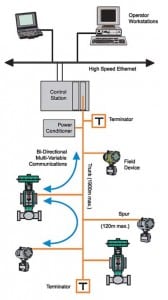
CoalA Fieldbus Primer
Many automation engineers are coming face to face with real fieldbus applications for the first time. Fieldbus (the use of digital communications networks for distributed instrumentation and control) is a wonderful technology with many benefits, but fieldbus installation requires some additional considerations over and above normal 4-20 mA projects. In this article, I present some of those issues and show you how to deal with them.
-
Coal
Designing Material-Handling Systems for FGD Projects
Reducing NOx, SO2, and other air pollutants continues to be a challenge for the power generation industry. The technologies are well-understood, but the devil is always in the details, especially when a complex treatment system is retrofitted to an existing plant.
The most common method for reducing SO2 from plant emissions is the conventional lime- and limestone-based flue gas desulfurization (FGD) system. Material-handling systems for limestone and gypsum present specific challenges and opportunities that differ from those of coal-handling systems. This article looks at factors to consider before and during the design of a new material-handling system. The choices you make about these many variables will determine the cost and longevity of your system.
-
Coal
From Plan to Plant: The Struggle to Make “Clean Coal” a Reality
In early June, New York Gov. David Paterson proclaimed that his state would commit $6 million to buttress a carbon capture and sequestration (CCS) viability study for the development of a new 50-MW clean coal plant in Jamestown, in western New York. The circulating fluidized-bed (CFB) project, which would use pure oxygen to combust coal and subsequently capture and sequester 90% of emitted carbon dioxide (CO2), would be “the first of its kind in the world” and could potentially enable New York firms to launch exports of the technology worldwide, Paterson promised.
-
 Coal
CoalThe Future of Coal Power: Development and Siting Obstacles for New Coal Plants
In recent years, Sargent & Lundy has evaluated many potential sites for new coal-fueled generation. Some of the sites studied were lands adjacent to existing power plants (brownfield sites); others were undeveloped greenfield sites. The numerous technical, environmental, economic, and regulatory issues that bear on power plant siting generally apply to both brownfield and greenfield […]
-
 Coal
CoalThe Coal Patrol: Growth in PRB Coal Use Will Be Fueled by New Projects
Production from Wyoming Powder River Basin (PRB) coal mines ended last year with a increase of only about 1.1%, reflecting a record 451.3 million tons, according to the Department of Energy’s Energy Information Administration. Production of PRB coal spiked with a record 10% growth in 2006 following two derailments on the PRB’s main triple-track line […]