
News
-
Solar
New Batteries and Energy Storage Hub Aims to Improve Grid and EV Performance
U.S. Secretary of Energy Steven Chu announced on Oct. 30 that a multi-partner team led by Argonne National Laboratory in Illinois has been selected for an award of up to $120 million over five years to establish a new Batteries and Energy Storage Hub.
-
Coal
NRDC Urges EPA to Cut GHGs from Existing Fleet via Flexible Approach
The Natural Resources Defense Council (NRDC) on Monday made public a proposal that calls for the Environmental Protection Agency (EPA) to use its authority under the Clean Air Act (CAA) to set greenhouse gas (GHG) emissions standards for existing power plants. The NRDC approach would have the EPA create “systemwide standards” rather than ones based on individual generating units.
-
Coal
Report: LNG Exports to Have Net Economic Benefits, Impact Domestic Power Sector
Allowing unlimited U.S. exports of liquefied natural gas (LNG) would increase marginal costs of supply and raise domestic natural gas prices, but it would have "net economic benefits" across a range of scenarios ranging from relatively normal conditions to stress cases with high costs of producing natural gas in the U.S. and exceptionally large demand for U.S. LNG exports around the world, a report prepared for the Department of Energy and released on Wednesday suggests.
-
Nuclear
Enel Drops Participation in Flamanville EPR as Project Costs Soar by $2.6B
A day after French utility EDF released a cost update for its Flamanville EPR reactor under construction in Normandy, France, claiming increases of a stunning $2.6 billion—bringing overall estimated costs for the advanced reactor to $10.5 billion—Italian power giant Enel formally withdrew its participation from that project and five other French EPR projects.
-
Coal
NRG Abandons Plans to Build New 744-MW Coal Unit at Limestone Plant
NRG Energy has given up a $1.2 billion plan to add a 744-MW pulverized coal unit to its Limestone Electric Generating Station near Jewett, Texas, saying low natural gas prices had rendered the project uneconomic.
-
Coal
Coal Ash Recycling Rate Is Lagging, Says Industry Group
Regulatory uncertainty concerning the disposal of coal ash has stalled coal ash recycling in the U.S. and kept levels below those reported in 2008 for a third consecutive year, suggests a new report from the American Coal Ash Association (ACAA).
-
Coal
EIA Projects Faster Growth of Natural Gas Production, Gas Generation
Compared to projections from last year, an Early Release Overview of the Energy Information Administration’s (EIA’s) Annual Energy Outlook 2013 (AEO2013) released on Wednesday foresees higher gas production and, with it, a higher share of gas generation by 2040. The outlook also projects a growing share of renewable and nuclear power, but dampened future coal use.
-
Wind
DOI Unveils First-Ever Competitive Lease Sales for Wind Energy Along Atlantic Coast
The Department of the Interior (DOI) on Friday announced that the nation’s first competitive lease sales on the Outer Continental Shelf (OCS) for wind energy will be held next year. The lease sales cover 277,550 acres in two wind energy areas (WEAs) over federal waters along the Atlantic Coast that have a high wind resource potential.
-
News
Under Siege
As I write this column on Election Day 2012, the polls are still open and both presidential candidates are predicting victory. The next dozen hours or so will prove only one candidate correct. Regardless of the outcome, wind power remains a loser.
-
 News
NewsLIDAR and 3D Modeling Produce Precise Designs
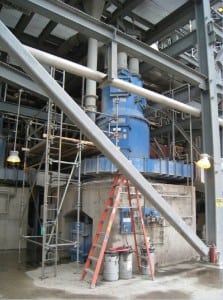
Retrofit projects are often very time-consuming, both for the engineers who must take numerous field measurements to produce drawings and for the contractor that must fabricate each assembly on site. A more cost-effective approach is to begin with a highly accurate set of as-built 3D models produced by laser scanning technology.
-
 News
NewsPipe Clamp for Vibration Sensing
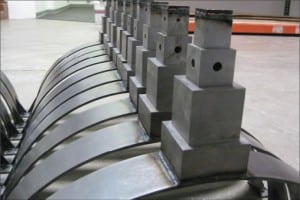
Fauske & Associates LLC (FAI) recently patented a specialized pipe clamp to seat vibration-sensing equipment. A beam attached to the clamp protrudes through the pipe insulation. The beam is partially hollow and vented to promote cooling so that accelerometers can be installed on the tip of the beam outside the high-temperature and/or radiation area for […]
-
 News
NewsRotary Peristaltic Pump
The new portable, nonmetallic Flex-I-Liner rotary peristaltic pump from Vanton Pump and Equipment Corp. evacuates drums and totes containing acids, caustics, salts, chlorides, and reagent grade chemicals, without corrosion of the pump or contamination of the fluid. The self-priming design has no seals to leak or valves to clog and can run dry for extended […]
-
 News
NewsElectric Screen Vibrators
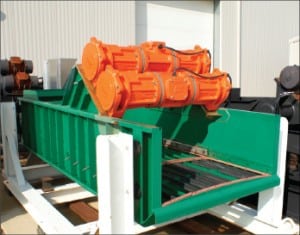
Martin Engineering introduced a new family of electric screen vibrators for regular duty and hazardous environments. Designed to deliver up to 16,500 pounds of centrifugal force for efficient material separation, Martin screen vibrators are built to withstand the rigors of industrial applications and continuous use, and can run 24/7, as needed. With a traditional screen […]
-
Wind
Massachusetts Approves Second PPA for Offshore Cape Wind Farm
The Massachusetts Department of Public Utilities (DPU) on Wednesday approved a 15-year Power Purchase Agreement (PPA) between Cape Wind and NSTAR for 27% of power generated by the Cape Wind project, the nation’s first offshore wind farm.
-
Nuclear
Babcock & Wilcox Team Gets Unspecified DOE Award for SMR Development
The U.S. Department of Energy (DOE) has announced an award to support a new project to design, license, and help commercialize small modular reactors (SMR) in the U.S. The project supported by the award will be led by Babcock & Wilcox (B&W) in partnership with the Tennessee Valley Authority and Bechtel.
-
Coal
GAO: Coal Power Sector Poised for “Significant” Change
A report released on Wednesday by the Government Accountability Office (GAO) surveying the U.S. coal-fired power sector says that retirements of older units, retrofits of existing units with pollution controls, and the construction of some new coal-fueled units are expected to significantly change the coal-fueled electricity generating fleet, but that coal will likely remain a key fuel source through 2035.
-
Coal
Report: Mississippi Power’s Kemper Project Will Be Over-Budget and Behind Schedule
A new report from the Institute of Energy Economics and Financial Analysis (IEEFA) challenges claims by Mississippi Power Co. (MPC) that its 582-MW Kemper Integrated Gasification Combined Cycle (IGCC) plant under construction in Kemper County, Miss., is 70% complete, and suggests that the project is over budget and behind schedule in several respects.
-
Coal
DOE Approves Advanced Testing for MTR’s Polymeric Membrane Carbon Capture Technology
A post-combustion polymeric membrane system that promises to separate and capture 90% of the carbon dioxide emitted from a pulverized coal plant has been successfully demonstrated and last week received approval from the Department of Energy (DOE) to advance to a larger-scale field test.
-
O&M
As Cybersecurity Bill Dies, Newly Declassified Report Underscores Grid Vulnerabilities
Despite growing concern about cybersecurity both in and outside of Washington, the Senate’s cybersecurity bill died a second time on Nov. 13. The apparent inability of Congress to pass legislation designed to protect critical U.S. infrastructure could lead to President Barack Obama implementing some of the bill’s provisions via executive order. A day after the bill failed to gain 60 votes for passage, a recently declassified report was released that finds the U.S. power grid is vulnerable to attacks that could be more destructive than natural disasters such as Hurricane Sandy.
-
Coal
Ohio State Develops CO2 Capture Membranes to Lower Energy Penalty Costs
In a project funded by the U.S. Department of Energy’s (DOE’s) Office of Fossil Energy (OFE), researchers at The Ohio State University have developed what they call a groundbreaking new hybrid membrane that combines the separation performance of inorganic membranes with the cost-effectiveness of polymer membranes. The breakthrough technology has vast commercial potential for use at coal-fired power plants with carbon capture, utilization, and storage (CCUS), a key element in national efforts to mitigate climate change.
-
Hydro
Hawaii’s Largest Wind Project Online as State Struggles to Integrate Renewables
On Monday, as First Wind announced its 69-MW Kawailoa Wind Project had gone into commercial operations on Oahu, other news underscored the difficulty the island state faces in trying to substitute renewables for expensive, imported fossil fuels.
-
News
Happy Thanksgiving from POWER
This week’s issue of POWERnews is coming to you earlier than usual because of the U.S. Thanksgiving holiday. We want to take this opportunity to thank all of our readers, contributors, advertisers, and other business partners for their continued support. As our industry continues to face an increasing number of challenges, our goal is to remain your most trusted source for information.
-
Coal
EPA Proposes Slightly Modified MATS for New Power Plants
A reconsidered proposal issued by the U.S. Environmental Protection Agency (EPA) on Friday sets out slightly weakened emission limits for mercury, particulate matter (PM), acid gases, and certain individual metals for future coal- and oil-fired power plants.
-
Coal
Arizona Protests EPA-Imposed Regional Haze Limits at Three Coal Plants
A decision by the Environmental Protection Agency (EPA) to impose new pollution limits on three coal-fired power plants in Arizona on Friday drew criticism from state officials, who said that the costly measure, which overrides the state’s regional haze plan, is designed to protect visibility, not public health.
-
Solar
European Solar Initiative to Source Power from North Africa Hits Blocks
The Desertec Industrial Initiative (Dii) oversees a $508 billion initiative to establish 6,500 square miles of concentrated solar power plants in the vast African and Middle Eastern deserts. Those plants are expected to furnish a fifth of Europe’s power needs by 2050, but in recent weeks the Dii has seen the exit of two of its 57 partners from 16 countries and a project held up by the Spanish government.
-
News
Briefs: Energy Policy in the Lame Duck Session
With the election over, Congress has reconvened for a seven-week lame duck session. Among the energy measures expected to be tackled is legislation that would establish a framework for coal ash regulation. Meanwhile, the Environmental Protection Agency (EPA) is expected to begin releasing pending rules again, and the wind industry continues pleading to extend the expiring production tax credit (PTC).
-
News
$1.2B Australian Solar Thermal Project Shelved on Funding Concerns
A $1.2 billion concentrated solar thermal project in Australia has been shelved after developers failed to secure a supply agreement and forfeited $500 million in federal and state funding.
-
News
Cuomo Orders Investigation of N.Y. Utilities’ Storm Preparation and Response
An executive order signed by New York’s Gov. Andrew Cuomo (D) on Monday establishes a commission to investigate the response, preparation, and management of New York’s power utility companies during recent major storms that have hit the state of the past two years, including Hurricanes Sandy and Irene, and Tropical Storm Lee. The mandate seeks to reform overlapping responsibilities of the state’s regulatory bodies, state agencies and authorities, and quasi-governmental bodies, which the governor’s office alleges have “contributed to a dysfunctional utility system.â€
-
Environmental
California Debuts Cap-and-Trade Program Amid Legal Challenge
Despite a last-minute lawsuit filed by California’s Chamber of Commerce, the state on Wednesday held its first auction of carbon emissions permits, kicking off the nation’s first state-implemented cap-and-trade program that limits the amount of greenhouse gases (GHGs) emitted by power plants, oil refineries, and other entities.
-
News
Using EV Car Batteries for Power Generation
General Motors and Zurich-based ABB on Tuesday unveiled what they called “the next stage in battery reuse”: repackaging five used Chevrolet Volt batteries into a modular unit that has a power generation capacity of 25 kW for two hours. The companies said the unit could extend the life of electric vehicle (EV) batteries while being used as community energy storage.