Legal & Regulatory
-
 Legal & Regulatory
State AGs Join Forces to Ramp Up Investigations of Climate Change Financial Disclosures
A handful of attorneys general want to join forces on ongoing and potential investigations into whether fossil fuel companies misled investors and the public about the impact of climate change on their businesses. New York Attorney General Eric T. Schneiderman announced the joint effort on March 29, during a one-day climate change conference for attorneys […]
-
 Legal & Regulatory
Clean Power Plan Backers Petition Court in Support of EPA
A diverse coalition of major investor-owned utilities, public power authorities, and one of the largest independent power producers, as well as a combination of cities and states, clean energy groups, and environmental groups, filed briefs with the D.C. Circuit Court of Appeals in support of the Environmental Protection Agency’s (EPA’s) Clean Power Plan. The involved […]
-
 Legal & Regulatory
Is Nuclear Energy “Toast”?
“My sense as I speak to you here today is that nuclear energy is toast,” said New York Times Reporter Eduardo Porter, as he opened a panel discussion titled “Nuclear Energy and the Clean Energy Future” held at the New York University School of Law on March 23. “Despite the challenge from climate change that […]
-
 Legal & Regulatory
A Review of Supreme Court Nominee Merrick Garland’s Power-Related Cases at the D.C. Circuit
Merrick Garland, chief judge of the U.S. Court of Appeals for the District of Columbia, is President Obama’s nominee to the U.S. Supreme Court. Here’s a roundup of Garland’s more recent power sector rulings. July 2015: On Backup Generators Chief Judge Garland and senior circuit Judges Williams and Randolph repealed part of the Environmental Protection […]
-
Legal & Regulatory
Chief Justice Roberts Rejects Bid to Suspend MATS Rule
U.S. Supreme Court Chief Justice John Roberts rejected the plea of 20 states to stay the Environmental Protection Agency’s (EPA’s) Mercury and Air Toxics Standards (MATS) rule while the agency works to comply with a previous ruling. Michigan Attorney General Bill Schuette had requested the stay to pause any further action to implement the rule […]
-
 Legal & Regulatory
Oregon Legislature Passes Bill to Eliminate Coal from State Power Supply
The Oregon Senate passed a bill on March 2 that will require electric companies in the state to eliminate coal-fired resources from their electrical supplies by January 1, 2030. The bill—which passed in the senate by a 17–12 vote—had already been passed by the Oregon House of Representatives (38–20). It now heads to Gov. Kate […]
-
 Legal & Regulatory
A Brief History of U.S. Coal Ash Since the Kingston Spill
The disposal of coal ash, a combustion byproduct from coal-fired power plants, was propelled into the national conversation on December 22, 2008, when the Tennessee Valley Authority (TVA) Kingston power plant suffered one of the largest coal ash spills in history. Calls for regulatory action shifted pitch again after the Duke Energy Dan River spill […]
-
 Legal & Regulatory
Belo Monte Hydro Plant Stunned, Revived Again
Legal battles to stall the 11-GW Belo Monte hydroelectric dam—being built on the Xingu River in Amazon forest for one of the world’s largest power plants—are raging on in Brazil (Figure 1). In January
-
Legal & Regulatory
Coal Ash Hits the Big Time
Regulatory attention is rarely welcome in the best of times. When the attention is focused on a practice that has been standard operating procedure for more than a century—especially a practice that has left
-
 Legal & Regulatory
Germany’s Energiewende at a New Turning Point
Germany’s Energiewende (energy transition) was adopted as policy beginning in September 2010, some six months before the disaster at Japan’s Fukushima nuclear plant, and full legislative support was
-
 Legal & Regulatory
Zero-Discharge Pozzolanic Brine Solidification: Another Option for Treating FGD Wastewater
In late 2015, the U.S. Environmental Protection Agency (EPA) published new regulations governing wastewater discharge from steam electric power plants. These new regulations, or effluent limitation guidelines
-
 Legal & Regulatory
New Reports Say CPP and Renewable Tax Credits Have Big Implications for the Power Sector
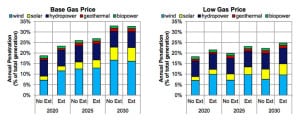
New reports released this week see big growth in renewables from the recently extended federal tax credits, but big uncertainty due to the possible end of the Clean Power Plan (CPP). New York-based consulting firm Rhodium Group says investment plans in the power sector will be radically different if the Clean Power Plan doesn’t happen. […]
-
 Legal & Regulatory
Did the D.C. Commission Issue a Stealth Exelon-Pepco Merger Approval?
The District of Columbia Public Service Commission (PSC) on Friday (Feb. 26) rejected a restructured $6.8 billion merger proposal between Exelon and local electric utility Pepco, but offered a counter proposal with conditions that the two companies are likely to approve easily, according to local opponents of the merger. The commission turned down the merger […]
-
Legal & Regulatory
Twenty States Call on Supreme Court to Stay EPA Mercury Rule
Rallied by the Supreme Court’s unprecedented stay of the Environmental Protection Agency’s (EPA) Clean Power Plan, a coalition of 20 states has asked the high court to stay another disputed agency rule: the Mercury and Air Toxics Standards (MATS). The states are: Alabama, Alaska, Arizona, Arkansas, Idaho, Iowa, Kansas, Kentucky, Michigan, Mississippi, Missouri, Nebraska, North […]
-
 Legal & Regulatory
U.S. Power Sector Carbon Emissions See Fractional Increase
Power generators consumed 34% of total U.S. energy uses from fossil fuels and accounted for 39% of the nation’s carbon emissions from fossil fuel combustion in 2014—a fraction of a percent more than in 2013—the Environmental Protection Agency (EPA) said in its newly released Greenhouse Gas Inventory report. In 2014, 2,054.8 million metric tons […]
-
 Legal & Regulatory
EPA Chief: Clean Power Plan to Win on Merits
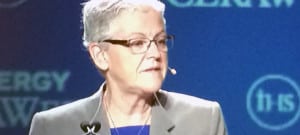
Despite the unprecedented stay by the Supreme Court, the Environmental Protection Agency’s (EPA’s) Clean Power Plan will withstand legal challenges “based on its merits,” predicted the agency’s head, Gina McCarthy, at the IHS CERAWeek conference in Houston. McCarthy discussed the plan and other recent initiatives to stem greenhouse gas emissions—including recently announced rules to curb […]
-
Legal & Regulatory
A Rollercoaster Week for the Clean Power Plan
In the week since the highest court in the U.S. issued an unprecedented ruling to stay the Clean Power Plan—as at least two states suspended compliance efforts—the passing of Supreme Court Justice Antonin Scalia may have boosted the odds that the Obama administration’s efforts to stem power plant carbon emissions will pass judicial review. The […]
-
 Legal & Regulatory
Seventeen U.S. Governors Sign Clean Energy Accord
The governors of 17 U.S. states on February 16 signed a landmark agreement to cooperate on expanding clean energy, energy efficiency, and modernizing energy infrastructure. The Governors’ Accord For A New Energy Future makes the case that “new energy solutions” can “provide more durable and resilient infrastructure, and enable economic growth, while protecting the health […]
-
Legal & Regulatory
Supreme Court Stays Implementation of Clean Power Plan
Dealing a major blow to the Obama administration’s climate agenda, the U.S. Supreme Court by a 5-4 vote stayed implementation of the Environmental Protection Agency’s (EPA’s) Clean Power Plan (CPP) pending a decision on its legality in the D.C Circuit Court of Appeals. The one-page order gives no explanation for the court’s action, but issuance […]
-
 Legal & Regulatory
Duke Energy Fined $6.6 Million for Dan River Coal Ash Spill
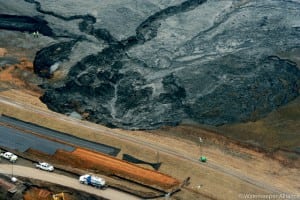
The North Carolina Department of Environmental Quality (NCDEQ) issued a $6.6 million fine to Duke Energy on February 8 for environmental violations related to the February 2014 coal ash spill from the Dan River power plant near Eden, N.C. Although the fine is not insignificant, it pales in comparison to the $102 million the company […]
-
 Legal & Regulatory
EPA, DOE Experts Upbeat on Regulatory Agenda
The Environmental Protection Agency’s (EPA’s) acting administrator of the Office of Air and Radiation, and the Department of Energy’s (DOE’s) head of clean coal and carbon management gave upbeat assessments of the Obama administration’s regulatory agenda and power sector priorities speaking at the EUEC 2016 conference in San Diego on February 3. Janet McCabe of […]
-
Legal & Regulatory
Challenges of Increasing Dependence on Gas-Fired Generation
Use of natural gas for power generation in the U.S. is skyrocketing. From 2005 to 2015, the share of energy produced from gas has increased over 80%, with gas now comprising about 35% of the fuel mix. This
-
 Legal & Regulatory
CHP and Other Technologies Could Breathe New Life into U.S. Coal-Fired Power Plants
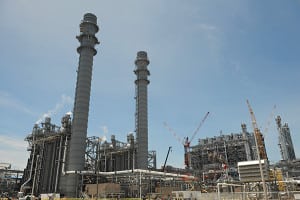
Since the U.S. Environmental Protection Agency (EPA) released its “new source performance standard” on August 3, 2015, requiring new coal power plants in the U.S. to emit no more than 636 kg (1,400 lb) of
-
 Legal & Regulatory
Navigating Legal Implications of Power Industry Regulations
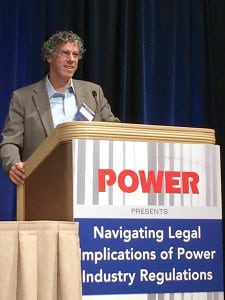
A summary of POWER’s legal affairs conference on power industry regulations.
-
 Legal & Regulatory
TransAlta Plays Defense with Coal Out, Renewables In
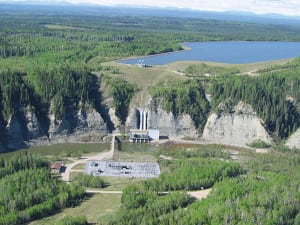
When it comes to a transition away from coal, TransAlta Corp. is playing political defense. The Canadian province of Alberta contains among the richest fossil energy resources in the world, including oil (and
-
Legal & Regulatory
New York Launches $5B Clean Energy Fund
The New York State Public Service Commission on January 21 approved a 10-year, $5 billion Clean Energy Fund that is expected to address climate change and strengthen resiliency in the face of extreme weather. It will also bolster Gov. Andrew Cuomo’s aggressive Clean Energy Standard, which calls for the state to meet 50% of its […]
-
Legal & Regulatory
[UPDATED] Halt the EPA’s Clean Power Plan Now, 26 States Urge Supreme Court
Following the D.C. Circuit’s denial of motions for stay, 26 states have petitioned the U.S. Supreme Court to immediately block the Environmental Protection Agency’s (EPA’s) contentious Clean Power Plan from taking effect. The January 26 application, directed to Chief Justice John Roberts Jr., notes that the states filed petitions for review of the carbon rule […]
-
 Legal & Regulatory
Supreme Court Revives FERC Order 745 on Demand Response
By a 6–2 vote, the U.S. Supreme Court on January 25 ruled that the Federal Energy Regulatory Commission (FERC) had authority under the Federal Power Act (FPA) to issue rules requiring equal market participation by demand response (DR) resources. FERC Order 745, issued in 2011, required the nation’s Independent System Operators (ISOs) and Regional Transmission […]
-
 Legal & Regulatory
Senate’s Failed Veto Override Leaves WOTUS Rule Intact
Congressional efforts to block the Environmental Protection Agency’s (EPA’s) contentious rule asserting federal authority over small bodies of water were derailed on Jan. 21. Senate Republicans voted 52–40, failing to override the president’s veto of the so-called “Clean Water Rule”—also “Waters of the United States” (or WOTUS) well short of the 60 necessary votes. Clean […]