
Hydro
-
Hydro
UK Government Again Stuns $45B Severn Barrage
A proposal to build a $45.8 billion fixed barrage across the Severn estuary, between Brean in England and Lavernock Point in Wales, suffered another blow in June as an influential UK parliamentary committee deemed a high-profile privately financed proposal unsatisfactory for environmental and economic reasons.
-
Coal
Comprehensive Diagram Charts Nation’s Energy Use and Waste
An updated energy flow chart released by the Lawrence Livermore National Laboratory (LLNL) that visually depicts the relative size of primary energy resources and end uses in the U.S., with fuels compared on a common energy unit basis, shows the nation consumed more natural gas and renewables but less coal in 2012.
-
Coal
EIA Projects Massive Growth for Renewables, Nuclear Power Through 2040
The U.S. Energy Information Administration’s (EIA’s) International Energy Outlook 2013 (IEO2013) released today projects that renewable energy and nuclear power will each increase 2.5% per year through 2040, but fossil fuels will continue to supply almost 80% of world energy use by 2040.
-
 Coal
CoalTHE BIG PICTURE: Parched
Water scarcity as it relates to energy use is becoming a major concern.
-
 Coal
CoalWater Issues Challenge Power Generators
Drought and competing uses for water continue to challenge power plant operators worldwide. In response, innovative approaches for reducing water use are being explored from South Africa to China.
-
 Coal
CoalIndonesia: Energy Rich and Electricity Poor
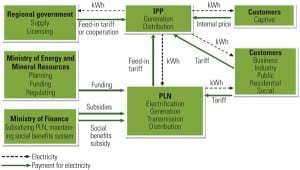
Even though it enjoys sizeable coal and natural gas reserves, Indonesia struggles to provide electricity to its growing economy. Geography is its most obvious challenge. Others include evolving international markets and an energy sector that remains highly politicized.
-
Coal
Your Guide to the White House Climate Action Plan
President Obama’s highly anticipated Climate Action Plan (CAP) released today outlines a wide variety of executive actions founded on three pillars: slashing U.S. carbon pollution through stringent rules for new and existing power plants while doubling renewables deployment and promoting fuel switching from coal to natural gas; preparing the U.S. for impacts of climate change; and leading international efforts to combat global climate change.
-
Gas
IEA: Renewable Generation Could Surpass Global Natural Gas Share, Double Nuclear by 2016
Driven by the booming growth of generation from hydro, wind, and solar photovoltaics (PV), generation from renewables on a terawatt-hour basis is set to surpass that from natural gas and double nuclear’s share by 2016, becoming the world’s second-most important global electricity source after coal, according to a new report from the International Energy Agency (IEA).
-
 Hydro
HydroOntario Completes New Niagara Tunnel to Increase Output from Hydro Complex
A massive eight-year construction feat to bore a 41-foot-wide, 6.3-mile-long tunnel deep beneath hard rock under the City of Niagara Falls in Ontario, Canada, was successfully completed this March.
-
 Hydro
HydroOTEC Gets Boost with Possibility of 10-MW Plant in China
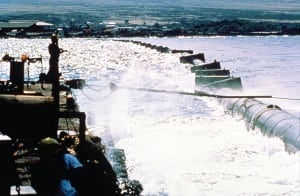
A 10-MW ocean thermal energy conversion (OTEC) pilot plant is being planned off the coast of southern China by global security and aerospace firm Lockheed Martin and Beijing-based cleantech firm the Reignwood Group.
-
Coal
Hearing Panelists Assess Grid Reliability Challenges Posed by Nat. Gas, Renewables
Panelists at a House hearing today refuted varied claims concerning if and how increased natural gas and renewables generation pose widespread challenges to the reliability of the electric grid. Some pointed to ineffective rules in the restructured wholesale power market and the failure of conventional power plants as being more of a threat to grid reliability.
-
Coal
Oregon Utility Weighs Gas Power Options as Coal Exports Loom
It’s not all coffee and hydropower in the Northwest, as Oregon’s largest utility looks toward natural gas to help it navigate the shifting shoals of regulation and renewable mandates. -
 Hydro
HydroFirst Power for 1-MW Tidal Stream Turbine
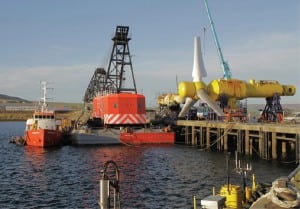
In a milestone for the fledgling marine power sector, Alstom’s 1-MW tidal turbine (Figure 6) generated power for the first time at the European Marine Energy Centre’s tidal test site in Orkney, Scotland.
-
 Hydro
HydroSmall Hydro, Big Opportunity
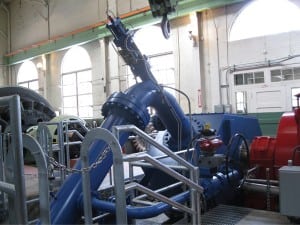
Small-scale hydro generation stands to benefit from recent congressional action aimed at streamlining what historically has been a challenging federal approvals process. That action, along with technology innovations, could make it easier to develop hydro generating capacity in sources as diverse as navigable rivers, man-made conduits, and water distribution systems.
-
Coal
Lawmakers Push for Financing Parity for Renewable Projects
Bipartisan legislation introduced on Wednesday by a bicameral group of lawmakers seeks to give renewable energy project investors access to an existing corporate structure whose tax benefits are now only available to investors in fossil fuel–based energy projects.
-
Hydro
Report: Global Renewable Investments in 2012 Tumble 11% as Market Shifts from West to East
Public and private investment in solar, wind, and other renewables worldwide declined 11% in 2012 from an adjusted 2011 record of $302 billion, a new survey from Pew Charitable Trusts shows. Yet the global renewable sector still registered a record 88 GW of new nameplate capacity last year, and China reclaimed the lead in global renewables investments from the U.S., it says.
-
Hydro
FERC, Coast Guard to Cooperate on Hydro as New Hydro Bill Is Introduced in Senate
The Federal Energy Regulatory Commission (FERC) and the U.S. Coast Guard within the U.S. Department of Homeland Security on Tuesday signed a memorandum of understanding (MOU) to cooperate with each other on the development of projects that generate power from waves, tides, ocean currents, and the flow of rivers. A group of bipartisan senators, meanwhile, introduced a companion bill to a recently passed House bill that seeks to expand hydropower in the U.S.
-
Renewables
The Spotlight on a Mexican Success Story
Energy demand in Mexico, according to the Secretary of Energy (SENER), will increase by approximately 4% each year for the next ten years, and with it the potential for private sector growth in the industry. Download the report.
-
Hydro
Brazil Drought Threatens Power Supplies
A pervasive drought in northeast Brazil has dried up power supplies from the region’s hydropower facilities, making the area prone to blackouts and crippling economic growth in one of the country’s emerging agricultural havens.
-
Coal
Senators Introduce “Carbon Fee” Bill, House Dems Call for Blue Ribbon Climate Panel
Boosted by President Obama’s inaugural address commitment to mitigate climate change, congressional Democrats have initiated several more climate measures. A legislative packet that seeks to mitigate climate change by enacting a carbon "fee" of $20 per ton of emitted carbon or methane equivalent was introduced last week by Sens. Bernie Sanders (I-Vt.) and Barbara Boxer (D-Calif.). In the House, as several Democratic amendments for climate change hearings were voted down, more than 40 lawmakers urged President Obama to create a panel that would help communities deal with climate change events.
-
Hydro
House Unanimously Approves Hydro Bill, Prospects for Passage Are Positive in Senate
The U.S. House voted 422–0 last week, approving a bill that could facilitate the development of small hydropower and conduit projects and direct the Federal Energy Regulatory Commission (FERC) to consider streamlining its two-year permitting process.
-
Coal
Murkowski’s Energy Blueprint Presses All Measures for OPEC Oil Independence
An energy blueprint released on Monday by Sen. Lisa Murkowski (R-Alaska), the ranking minority member of the Senate Energy and Natural Resources Committee, calls for complete independence from OPEC oil by 2020.
-
Hydro
Report: U.S. Has Lost Edge in Global Renewables Race
Once a world leader in innovation and manufacturing of clean energy technologies, the U.S. now faces significant competitive challenges from Europe and Asia, and it lags behind other nations on measures that include renewables deployment, manufacturing, and innovation, a new report suggests.
-
Hydro
House Committee Advances Two Hydro Bills to Streamline Permitting Process
The first official day of committee activity in the 113th Congress saw the advancement of two hydropower bills with bipartisan support in the U.S. House Energy and Commerce Committee.
-
Hydro
FERC Proposes Reforms to Diminish Barriers to Small Generator Interconnection
The Federal Energy Regulatory Commission (FERC) on Thursday proposed four reforms intended to reduce the time and cost to process transmission interconnection requests from generating facilities of 20 MW or smaller. The reforms would boost reliability by increasing energy supply and remove hurdles in the development of new renewable power sources, FERC said.
-
Coal
Virginia Moves to Repeal Incentives for Renewable Power
An agreement reached between the Virginia Attorney General’s office, Dominion Virginia Power, and Appalachian Power proposes to reduce financial incentives associated with the utilities’ generation of renewables and construction of new fossil fuel–fired power plants.
-
 Coal
CoalSlow Growth Ahead—with Unexpected Flares of Activity
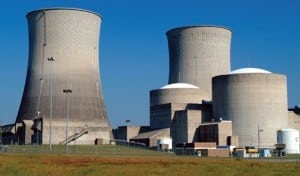
North American shale gas was supposed to realign the generation fleet here and abroad (thanks to anticipated exports) far into the future. Turns out, that’s not exactly how the near term is shaping up. Despite stagnant (and even putrid) economies and legislative bodies in the U.S. and EU, there promises to be sufficient market volatility to keep everyone alert.
-
 History
The Russian Power Revolution
Exports of natural resources have given Russia increased global political and economic clout. But domestically, the world’s fourth-largest generator of electricity has had to embark on the most ambitious reforms ever undertaken to modernize dilapidated Soviet-era power infrastructure and incentivize a massive capacity expansion to support a revived economy.
-
Coal
Report: Fuel for Power Generation to Lead Energy Growth Through 2040
Fuel for power generation will account for about 55% of demand-related energy growth through 2040, ExxonMobil forecasts in its freshly released annual energy forecast. Like several other forecasters, the Irving, Texas–based oil and gas company also predicts that natural gas will emerge as the leading source of electricity generation by 2040. Among key findings in […]
-
Coal
EIA Projects Faster Growth of Natural Gas Production, Gas Generation
Compared to projections from last year, an Early Release Overview of the Energy Information Administration’s (EIA’s) Annual Energy Outlook 2013 (AEO2013) released on Wednesday foresees higher gas production and, with it, a higher share of gas generation by 2040. The outlook also projects a growing share of renewable and nuclear power, but dampened future coal use.