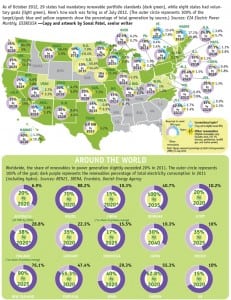
Geothermal
-
 Coal
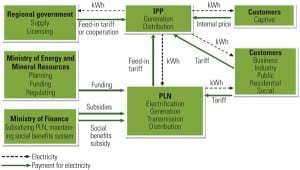
CoalIndonesia: Energy Rich and Electricity Poor
Even though it enjoys sizeable coal and natural gas reserves, Indonesia struggles to provide electricity to its growing economy. Geography is its most obvious challenge. Others include evolving international markets and an energy sector that remains highly politicized.
-
Gas
IEA: Renewable Generation Could Surpass Global Natural Gas Share, Double Nuclear by 2016
Driven by the booming growth of generation from hydro, wind, and solar photovoltaics (PV), generation from renewables on a terawatt-hour basis is set to surpass that from natural gas and double nuclear’s share by 2016, becoming the world’s second-most important global electricity source after coal, according to a new report from the International Energy Agency (IEA).
-
 Geothermal
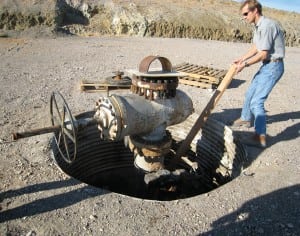
U.S. EGS Project Adds 1.7 MW Grid-Connected Output
One of the first enhanced geothermal systems (EGS) was connected to the U.S. electric grid this April, marking a major milestone for the fledgling technology that seeks to tap the enormous terrestrial heat potential deep within Earth’s crust using directional drilling and pressurized water.
-
Coal
Hearing Panelists Assess Grid Reliability Challenges Posed by Nat. Gas, Renewables
Panelists at a House hearing today refuted varied claims concerning if and how increased natural gas and renewables generation pose widespread challenges to the reliability of the electric grid. Some pointed to ineffective rules in the restructured wholesale power market and the failure of conventional power plants as being more of a threat to grid reliability.
-
Coal
Lawmakers Push for Financing Parity for Renewable Projects
Bipartisan legislation introduced on Wednesday by a bicameral group of lawmakers seeks to give renewable energy project investors access to an existing corporate structure whose tax benefits are now only available to investors in fossil fuel–based energy projects.
-
Hydro
Report: Global Renewable Investments in 2012 Tumble 11% as Market Shifts from West to East
Public and private investment in solar, wind, and other renewables worldwide declined 11% in 2012 from an adjusted 2011 record of $302 billion, a new survey from Pew Charitable Trusts shows. Yet the global renewable sector still registered a record 88 GW of new nameplate capacity last year, and China reclaimed the lead in global renewables investments from the U.S., it says.
-
Renewables
The Spotlight on a Mexican Success Story
Energy demand in Mexico, according to the Secretary of Energy (SENER), will increase by approximately 4% each year for the next ten years, and with it the potential for private sector growth in the industry. Download the report.
-
Geothermal
Two Geothermal Energy Bills Reintroduced in Senate
Two bills seeking to rapidly expand geothermal energy resources in the U.S. were reintroduced in the Senate last week.
-
Hydro
Report: U.S. Has Lost Edge in Global Renewables Race
Once a world leader in innovation and manufacturing of clean energy technologies, the U.S. now faces significant competitive challenges from Europe and Asia, and it lags behind other nations on measures that include renewables deployment, manufacturing, and innovation, a new report suggests.
-
Hydro
FERC Proposes Reforms to Diminish Barriers to Small Generator Interconnection
The Federal Energy Regulatory Commission (FERC) on Thursday proposed four reforms intended to reduce the time and cost to process transmission interconnection requests from generating facilities of 20 MW or smaller. The reforms would boost reliability by increasing energy supply and remove hurdles in the development of new renewable power sources, FERC said.
-
 Coal
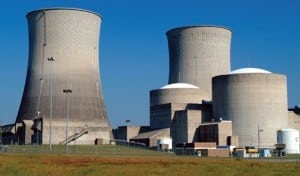
CoalSlow Growth Ahead—with Unexpected Flares of Activity
North American shale gas was supposed to realign the generation fleet here and abroad (thanks to anticipated exports) far into the future. Turns out, that’s not exactly how the near term is shaping up. Despite stagnant (and even putrid) economies and legislative bodies in the U.S. and EU, there promises to be sufficient market volatility to keep everyone alert.
-
Coal
Report: Fuel for Power Generation to Lead Energy Growth Through 2040
Fuel for power generation will account for about 55% of demand-related energy growth through 2040, ExxonMobil forecasts in its freshly released annual energy forecast. Like several other forecasters, the Irving, Texas–based oil and gas company also predicts that natural gas will emerge as the leading source of electricity generation by 2040. Among key findings in […]
-
Coal
EIA Projects Faster Growth of Natural Gas Production, Gas Generation
Compared to projections from last year, an Early Release Overview of the Energy Information Administration’s (EIA’s) Annual Energy Outlook 2013 (AEO2013) released on Wednesday foresees higher gas production and, with it, a higher share of gas generation by 2040. The outlook also projects a growing share of renewable and nuclear power, but dampened future coal use.
-
Hydro
Hawaii’s Largest Wind Project Online as State Struggles to Integrate Renewables
On Monday, as First Wind announced its 69-MW Kawailoa Wind Project had gone into commercial operations on Oahu, other news underscored the difficulty the island state faces in trying to substitute renewables for expensive, imported fossil fuels.
-
 Coal
CoalChile’s Power Challenge: Reliable Energy Supplies
Droughts, unreliable gas imports, and protests against proposed projects have hampered the Chilean power sector and its largest economic driver, the copper-mining industry. Recent policies designed to foster more reliable supplies are a move in the right direction, but remaining obstacles are formidable.
-
 Hydro
HydroMajor Developments for Solid Oxide Fuel Cells
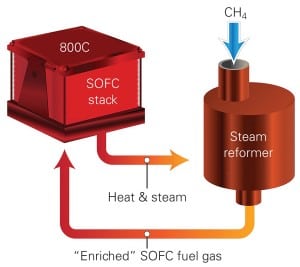
Solid oxide fuel cells (SOFCs), which oxidize a fuel to produce electricity, have received much attention of late for the technology’s myriad benefits, including high efficiency, long-term stability, fuel flexibility, and low carbon emissions—all at a relatively low cost.
-
Hydro
FERC Rule 1000: What Does It Mean?
The Federal Energy Regulatory Commission (FERC) has the responsibility for ensuring just and reasonable rates and preventing undue discrimination by public utility transmission providers. Last year FERC defined a new framework for public utilities and regional transmission organizations planning new transmission networks. The framework is provided in Order No. 1000—Transmission Planning and Allocation by Transmission Owning and Operating Public Utilities. The Final Rule was issued on July 21, 2011, and reaffirmed by Order No. 1000-A on May 17, 2012.
-
 Hydro
HydroUtility Perspectives on Ramping Up Renewable Power
Panelists at ELECTRIC POWER discussed how U.S. utilities choose renewable power generation technologies based on their geographic locations, state requirements, economics, and other criteria—including reliability and federal regulations.
-
 Coal
CoalVietnam Works Hard to Power Economic Growth
For the past 15 years, Vietnam has enjoyed enviable gross domestic product increases, averaging 7% annually. That kind of economic growth increases power demand, but financing new capacity remains a challenge. Reaching its ambitious capacity growth goals will require Vietnam to expand its financing and vendor base, attract foreign investment, and ensure future fuel supplies in a region thick with competition for those resources.
-
 Nuclear
The Big Picture: DOE Loan Guarantees
Of the $35.9 billion in loan guarantees awarded by the U.S. Department of Energy (DOE) since 2009, roughly $26.5 billion have financed nuclear and renewable power projects across the nation through the Section 1703 and 1705 loan guarantee programs.
-
 O&M
O&MEPRI Bridges Industry R&D Gaps
The technologies used to generate and distribute electricity will be radically transformed during the coming decade. Amid that change, the power industry must continue to meet customer reliability, safety, and cost-of-service expectations. Achieving the right balance among these often-conflicting goals is the primary focus of every utility. The Electric Power Research Institute is helping utilities achieve that balance with R&D programs for many new and emerging technologies.
-
 Geothermal
Can U.S. Geothermal Power Fulfill Its Potential?
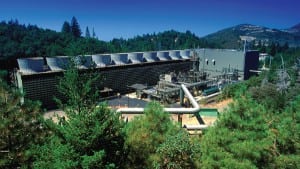
Geothermal power and conventional fossil fuel–powered technologies have similar power production cycles, and both generation types can be dispatched. Geothermal power’s primary advantage is its renewable fuel. Its primary disadvantage is that its fuel requires large investments over many years to characterize uncertain sources. Enhanced recovery techniques that use fracking may be the future of this renewable resource.
-
 O&M
O&MApplying Acoustic Pulse Reflectometry in a Geothermal Plant
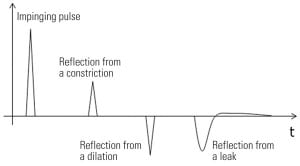
Acoustic pulse reflectometry (APR) is a tube inspection method that has been gradually gaining acceptance as a tool for heat exchanger inspection. Different types of heat exchangers operating in different operating environments have different failure mechanisms, making some of them more suited than others for inspection by APR. Finned tube heat exchangers are a typical example of heat exchangers particularly conducive to APR inspection.
-
Commentary
Geothermal Projects Race to Meet Incentives Deadlines
At the close of 2009, the U.S. geothermal industry had seen seven new geothermal power plants come online in the previous 12 months. In 2010, only one new power plant was completed.
-
 Geothermal
Geologists Tap Magma for Energy Production
Geologists drilling an exploratory well in Iceland’s Krafla volcano in search of supercritical geothermal resources in 2009 unexpectedly uncovered a new way to harness energy from deep within Earth’s crust. It involves accessing shallow bodies of molten rock, which the geologists say could likely be found elsewhere in Iceland and around the world, wherever young volcanic rocks occur.
-
 Geothermal
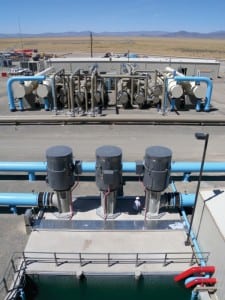
Top Plant: Blue Mountain Faulkner 1 Geothermal Power Plant, Humboldt County, Nevada
Completed in 2009 and partially funded under the American Reinvestment and Recovery Act, the 50-MW Blue Mountain Faulkner 1 Geothermal Power Plant is harnessing large amounts of renewable energy by tapping into an underground geothermal reservoir in northern Nevada. This subterranean source of heat allows the binary plant to generate pollution-free baseload electricity.
-
 Solar
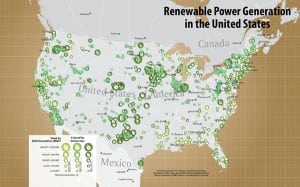
SolarMap of Renewable Power Generation in the United States
For a full-size map, contact Platts. Courtesy: Platts Data source: POWERmap All rights reserved. No reproduction allowed.
-
 Hydro
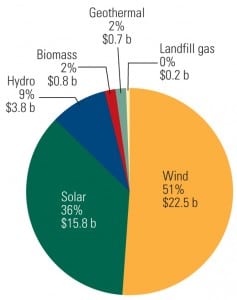
HydroThe Rush to Renewables
In 2010 investment in wind power continued to accelerate, particularly in California and Texas. California also entered several solar projects in the race for financing. The finish line that renewable power developers and their partners are racing to meet is a December 31 deadline to qualify for federal cash grants.
-
 Solar
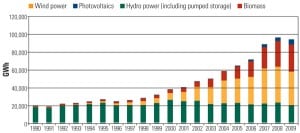
SolarThe Feed-in Tariff Factor
Most countries are trying to increase the percentage of their electricity supply that comes from renewable sources. But because capital costs for renewable generation still, in most cases, are higher per kilowatt-hour than for fossil-fueled power, governments are looking at all options for encouraging the development of greater renewable capacity. Feed-in tariffs (FITs) are one policy tool that has been used, most notably in Europe. Now North America is testing FITs as well.