
Gas
-
Gas
The Other Gas Power
Source: NREL The shale gas boom in the United States has upended energy planning not just in this country, but also around the world. Shale gas extraction is what business theorists refer to as a disruptive innovation, one that changes existing markets and creates new ones. Disruptive innovations are typically not new technologies so much […]
-
Coal
Replacing Coal in a Small Town
Courtesy: NRG When a new power plant is proposed, traditional battle lines are often drawn: The utility or plant owner on one side, usually with business interests in support, and concerned citizen and environmental groups on the other. Observers of NRG’s drive to replace its aging coal-fired Dunkirk Generating Station on the western shore of […]
-
Gas
Fuel Cells Can Replace Shore Power, Auxiliary Diesel at Ports, Says Study
Source: EPA It’s a solution that POWER’s legendary troubleshooter Marmaduke Surfaceblow, the six-foot-four marine engineer with a steel brush mustache and a foghorn voice, might have appreciated. Regulators across the country have begun to recognize that a significant source of pollution in major coastal cities arrives from over the horizon. Along with shipping containers, bulk […]
-
Gas
The Risks and Rewards of Surging Mexican Demand for U.S. Gas
Courtesy: Pemex Rapid growth in U.S. gas exports to Mexico already is having profound effects north of the border, and things will only get more interesting. Gas producers in the Eagle Ford and other Texas shale plays are finding the new buyers they need. But gas consumers in the Southwest—caught with a losing hand of […]
-
O&M
Hybrid Inlet Chilling for Small Gas Turbines
Like any internal combustion engine, the power output and efficiency of a combustion turbine decrease as ambient temperatures rise. This loss of power and efficiency is caused by a reduction in ambient air density at higher temperatures. Since turbines are mass flow machines with a volumetrically limited intake, less-dense intake air results in degradation of […]
-
 Gas
GasEIA: Non-Shale Gas Resources Add Significantly to Recoverable Global Estimates
An updated estimate of technically recoverable global shale gas resources by the U.S. Energy Information Administration (EIA) puts them at 7,299 trillion cubic feet (tcf)—10% higher than estimated in 2011.
-
 Gas
GasRepowering South Mississippi Electric Power Association’s J.T. Dudley, Sr. Generation Complex
Repowering two units at the J.T. Dudley, Sr. Generation Complex added 180 MW of high-efficiency capacity to South Mississippi Electric’s portfolio. Now the cooperative can self-produce more than 50% of its electricity needs.
-
Coal
Comprehensive Diagram Charts Nation’s Energy Use and Waste
An updated energy flow chart released by the Lawrence Livermore National Laboratory (LLNL) that visually depicts the relative size of primary energy resources and end uses in the U.S., with fuels compared on a common energy unit basis, shows the nation consumed more natural gas and renewables but less coal in 2012.
-
Coal
EIA Projects Massive Growth for Renewables, Nuclear Power Through 2040
The U.S. Energy Information Administration’s (EIA’s) International Energy Outlook 2013 (IEO2013) released today projects that renewable energy and nuclear power will each increase 2.5% per year through 2040, but fossil fuels will continue to supply almost 80% of world energy use by 2040.
-
Gas
EPA Rule Transparency, Natural Gas Pipeline Energy Bills Advance in House Committee
A bill approved by the House Committee on Energy and Commerce on Wednesday could prevent the Environmental Protection Agency (EPA) from finalizing new rules that cost more than $1 billion if the Energy Department determines they will hurt the economy.
-
Coal
Hawaii Power Companies to Deactivate Oil Plants, Ramp Up Renewables
Three Hawaiian power companies plan to deactivate a total of 226 MW of oil-fired generating units, convert remaining baseload plants to cycling duty, and substantially ramp up use of renewables by 2016.
-
 Gas
GasE.ON Avoids Shuttering Ultramodern German Combined Cycle Units Despite Profit Concerns
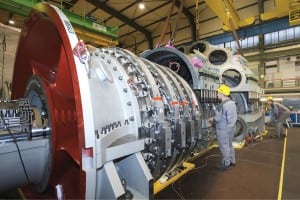
German energy giant E.ON in late April narrowly averted idling its Irsching 4 and 5 units in Bavaria, Germany—its most technologically advanced gas-fired generating units that began operations just three years ago at a cost of €400 million.
-
Legal & Regulatory
Exporting Natural Gas
The transformative increases in current and expected future domestic natural gas production have spawned yet another energy debate: Should the U.S. should export natural gas?
-
 Coal
CoalWater Issues Challenge Power Generators
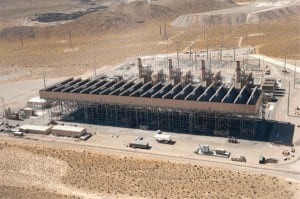
Drought and competing uses for water continue to challenge power plant operators worldwide. In response, innovative approaches for reducing water use are being explored from South Africa to China.
-
 Coal
CoalIndonesia: Energy Rich and Electricity Poor
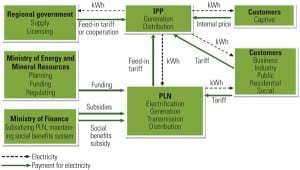
Even though it enjoys sizeable coal and natural gas reserves, Indonesia struggles to provide electricity to its growing economy. Geography is its most obvious challenge. Others include evolving international markets and an energy sector that remains highly politicized.
-
 Coal
CoalGas-Electric Integration “Swamps” All Other Issues
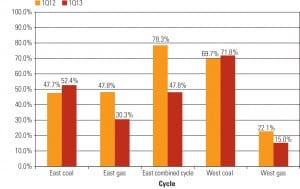
Panelists at the ELECTRIC POWER 2013 Keynote and Roundtable Discussion in Chicago in May were consumed by the need to ensure future reliability by more closely integrating the gas and electricity markets. Acknowledged less directly were distortions created by renewable energy subsidies and mandates, onerous regulations affecting coal, and “irreversible” demand destruction caused by the success of energy efficiency and demand management programs. The elephant in the room was the continued demise of electricity markets.
-
 Gas
GasIs Gas Getting Too Hot to Handle?
With ever-increasing demands for fast ramping and flexibility, natural gas–fired plants are grabbing a bigger share of the generation pie. But uncertainty about future prices and concerns about overreliance on a single fuel are dampening enthusiasm during what may be the most exciting time for gas ever. Natural gas is hot—but will generators and the market get burned?
-
 Gas
GasWhat Does the Market Expect from Gas Plants?
With the country awash in natural gas and new construction dominated by gas-fired plants, one would think that integrating these plants into the grid would be simple. Like politics, integration problems appear to be local.
-
Coal
Supreme Court Agrees to Review Vacated Cross-State Pollution Rule
The Supreme Court today granted a petition by health and environmental groups, 15 states, and the Environmental Protection Agency (EPA) and agreed to review the Cross-State Air Pollution Rule (CSAPR), a Bush-era rule that a federal appeals court had previously vacated.
-
Coal
Your Guide to the White House Climate Action Plan
President Obama’s highly anticipated Climate Action Plan (CAP) released today outlines a wide variety of executive actions founded on three pillars: slashing U.S. carbon pollution through stringent rules for new and existing power plants while doubling renewables deployment and promoting fuel switching from coal to natural gas; preparing the U.S. for impacts of climate change; and leading international efforts to combat global climate change.
-
Coal
Obama: Climate Strategy to Be Driven by Natural Gas, Renewables
President Barack Obama’s landmark speech on Tuesday outlining executive actions to combat and prepare for climate change backed the growth of natural gas and renewable power in lieu of carbon-heavy coal power, but he mentioned nuclear power only once—and only in the context of energy security.
-
Coal
Reactions to Obama’s Climate Action Plan Swift and Varied
Amid the deluge of reactions to President Obama’s June 25 speech announcing wide-ranging executive actions to curb carbon emissions and prepare for climate change effects were some unexpected statements.
-
Gas
IEA: Renewable Generation Could Surpass Global Natural Gas Share, Double Nuclear by 2016
Driven by the booming growth of generation from hydro, wind, and solar photovoltaics (PV), generation from renewables on a terawatt-hour basis is set to surpass that from natural gas and double nuclear’s share by 2016, becoming the world’s second-most important global electricity source after coal, according to a new report from the International Energy Agency (IEA).
-
Coal
Energy and Water Spending Bill Proceeds with Deep Cuts for Renewables, ARPA-E
The fiscal year 2014 Energy and Water Appropriations Bill released by the U.S. House Appropriations Committee this week slashes $1.4 billion in funding to Department of Energy renewable energy and scientific research programs, including an 80% spending cut on the Advanced Research Projects Agency-Energy (ARPA-E) program.
-
Coal
House Energy Committee Advances Coal Ash Bill, Hears Moniz Testimony
The House Energy and Commerce Committee on Wednesday advanced a set of four bills that it said would "improve" environmental regulations and increase state authority, including legislation that would task states—not the Environmental Protection Agency (EPA)—with the responsibility to set up coal ash disposal rules.
-
Gas
DOE-Sponsored Gas Turbine Airfoil Manufacturing Technology Goes Commercial
An airfoil manufacturing technology that could improve the performance of a wide range of next-generation natural gas turbines has been commercialized through research sponsored by the Department of Energy.
-
Coal
CRS Report: U.S. Energy Policy Debate Centers on Energy Security, Costs, and Environment
A report recently released by the Congressional Research Service (CRS) identifies policy goals—and their fundamental differences—identified in the 2012 presidential election and as highlighted in recent energy-related legislation. Among the nation’s energy priorities are to stabilize oil and gas markets, create natural gas pipeline infrastructure, dispose of nuclear radioactive waste, and replace conventional energy resources with renewables.
-
Coal
FERC Staff: Coal Generation Could See Comeback on Pricier Natural Gas This Summer
A much greater coal power burn is expected this summer in reaction to an anticipated rebound in natural gas prices, suggests a recent reliability assessment from staff at the Federal Energy Regulatory Commission (FERC). Among other key aspects of the new report is that while electric reliability for the rest of the nation will be adequate, Texas could see a significant chance of an energy emergency.
-
 O&M
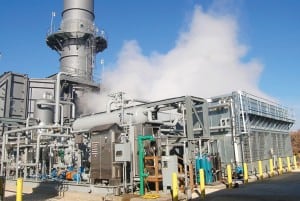
O&MImproving Warm Weather Performance of the LM6000
The LM6000 is the most widely used aeroderivative combustion turbine (CT) in the world, with more than 1,000 installations. As with all CTs, power output and heat rate degrade markedly during warm weather. The ARCTIC (Absorption Refrigeration Cycle Turbine Inlet Conditioning) system eliminates this deficiency.
-
 Gas
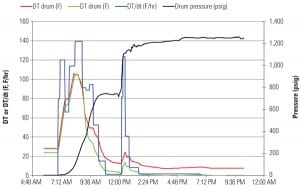
GasFast-Start HRSG Life-Cycle Optimization
Modern heat recovery steam generator (HRSG) design must balance operating response with the reduction in life of components caused by daily cycling and fast starts. Advanced modeling techniques demonstrate HRSG startup ramp rates can be accelerated without compromising equipment life.