
Gas
-
 Gas
GasMISO Sees Growing Role for Natural Gas in Midwest
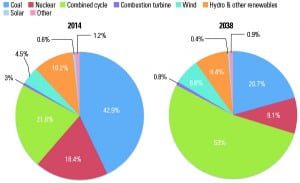
Lower gas prices, expanding infrastructure, and coal retirements are likely to drive a much greater role for natural gas in the Midwest, according to a new study by the Midcontinent Independent Service Organization (MISO). The study, released Dec. 6, is the third phase of ongoing assessment that MISO initiated in 2010 after recognizing the impending […]
-
 Gas
GasFracking May Cut Total Water Use From Increase in Gas-Fired Power
Those enormous amounts of water used in hydraulic fracturing may not be the environmental headache they appear to be. That’s because of the downstream effects of more abundant, less expensive natural gas unlocked by the process, known as “fracking,” according to a new study from the Bureau of Economic Geology (BEG) at the University of […]
-
 Gas
GasEIA: Natural Gas to Overtake Coal by 2035
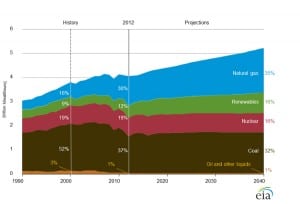
The latest projections from the Energy Information Administration (EIA) are unlikely to quell concern in the coal industry, as the EIA has increased its projections for natural gas production and power burn, while continuing its gloomy outlook for coal. The EIA’s Annual Energy Outlook Early Release, posted Dec. 16, boosts its estimates of natural gas […]
-
 Renewables
FERC Addresses Industry Change in House Hearing
“No industry stays static over time. Change is inevitable,” said the Federal Energy Regulatory Commission’s (FERC) John Norris in a house subcommittee hearing today. For the electric sector, he said in prepared remarks, “The time of incremental change is clearly over.” The Dec. 5 hearing before the House Energy & Commerce Committee, Subcommittee on Energy and Power was […]
-
 Gas
GasEIA: Gas Power Burn Down from 2012—But Coal Hasn’t Recovered
According to the latest data from the Energy Information Agency (EIA), while gas power burn is down from its peak last year, generation from coal has not recaptured much of what it lost. EIA estimates show that electric power sector gas consumption was, on average, down 13% through November compared to the same period in […]
-
Gas
California Builds a High Efficiency CHP Plant for Its Capital Complex
When the State of California needed a new Central Utility Plant (CUP) to provide electricity, steam, chilled water, and compressed air to its 5.5 million square foot, 23-building campus in downtown Sacramento, the requirements were stiff. The original CUP was sending as much as 15 million gallons of heated water per day to a spray […]
-
Gas
Coal-Fired Power Continues Dramatic Decline in Southeast
Once the dominant fuel in the southeastern U.S., coal has been hammered by plummeting gas prices and more efficient gas-fired plants, according to the most recent figures from the Energy Information Administration (EIA). Though the region has seen a steady increase in gas-fired capacity over the past decade, as recently as 2008, coal still provided […]
-
Commentary
Defining the Future: Time to Get Real
Christoph Frei The global energy environment is increasing in complexity and uncertainty. We are in a much more challenging world than previously envisaged. The World Energy Council’s (WEC) analysis has
-
Renewables
POWER Digest (December 2013)
First Kundankulam Unit Synchronized to Grid. The state-owned Nuclear Power Corporation of India Limited (NPCIL) on Oct. 22 synchronized to the grid the first of two units at the Kundankulam Nuclear Power
-
 Coal
CoalTVA to Retire More Coal Units, Banks on Nuclear Future
The Tennessee Valley Authority (TVA) will retire more than 3 GW at eight coal units in Alabama and Kentucky to address “challenging trends” that point to lower power demand, a slow economy, uncertainty in commodity pricing, and tougher air pollution rules. The U.S. corporate agency’s board of directors on Nov. 14 approved plans to retire all […]
-
 Gas
GasConference Presenters: World Shale Gas Growth Is Aloft on Uncertain Dynamics
Presenters provided several perspectives on the emerging shale gas sector in North America and around the world at the World Shale Oil & Gas Conference & Exhibition in Houston, Texas, last week. One general takeaway is that a number of unpredictable factors could widely alter the sector’s “game-changing” outlook. Several forecasts, including the International Energy […]
-
 Gas
GasSalem Harbor Station to Swap Coal for Fast-Start Gas
It’s official: The coal- and oil-fired Salem Harbor Station north of Boston, scheduled to be retired next year, will be replaced with a fast-ramping natural gas combined cycle plant. The four-unit, 720-MW plant, which was built on the site of an existing coal terminal in the 1940s, was sold by previous owner Dominion Resources to […]
-
 Gas
GasNorth Dakota Oil Companies Sued for Flaring Natural Gas
For the past few years, the North Dakota oil boom has run far ahead of the state’s ability to ship its oil and gas out of producing areas because of a lack of gathering pipeline infrastructure. While excess oil can be shipped by rail, the low price of natural gas has led producers to flare […]
-
 Coal
CoalEPA, EIA: Power Plant Carbon Emissions Saw Drastic Drop in 2012 (UPDATED)
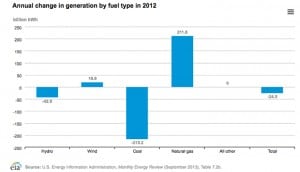
Greenhouse gas (GHG) emissions from power plants plunged 10% in 2012 largely due to the coal-to-gas switch and a slight decrease in power production, the Environmental Protection Agency (EPA) said on Wednesday. Earlier this week, the Energy Information Administration (EIA) reported similar findings. The EPA’s 2012 data from its GHG Reporting Program, which collects annual […]
-
 Gas
GasKorean Utility Plans First Underground Combined Cycle Power Plant
The oldest power plant in South Korea is making way for something so new that no one has even attempted it before. Korea Midland Power Corp. (KOMIPO) announced earlier this year that Seoul Thermal Power Station, built in the 1930s, would be replaced with a new 800-MW two-unit combined cycle power plant—one that will be built […]
-
 Coal
CoalSupreme Court to Weigh Power Plant GHG Regulation Question
The U.S. Supreme Court has agreed to hear a narrow challenge to the Environmental Protection Agency’s (EPA’s) authority to regulate greenhouse gas (GHG) emissions from stationary sources, including power plants. In a mixed bag for groups fighting the EPA’s GHG regulation, the high court on Tuesday accepted for review six petitions—which were consolidated for oral […]
-
Legal & Regulatory
Natural Gas and Electricity Don’t Mix (Yet)
The cost of producing electricity by natural gas and coal finished 2012 in a dead heat and future cost trends are very difficult to predict. One can read the projections (not predictions) by the U.S. Energy Information Administration and find evidence that coal is disadvantaged based on the rising cost of environmental compliance but the […]
-
 Legal & Regulatory
Federal Court Blocks Maryland Order to Build New CCPP
A federal court on Sept. 30 shot down Maryland’s drive to spur construction of a new combined cycle power plant outside of PJM’s capacity auctions. Ruling in favor of various entities that had sued to block the plan, the U.S. District Court for the District of Maryland found that the state’s order last year for […]
-
Renewables
California Boosts Grid Flexibility with Another Fast-Start Plant
California’s drive to add flexibility to its grid in response to expanding renewable generation took another step forward in September as NRG Energy commissioned two new fast-start units at its El Segundo Energy Center near Los Angeles. The two units, with a combined 550 MW capacity, represent the second Siemens Flex-Plant to go into commercial […]
-
Renewables
How Top Gun Eased Wind, Solar Integration
As variable generation from wind and solar power increases and peak loads grow and become more volatile, the U.S. electric grid will rely more and more on gas-fired power to maintain system flexibility. Often at the core of these gas-fired power plants are aeroderivative turbines, whose fast-start and cycling capabilities allow for frequent on-again, off-again […]
-
 Gas
GasPractical Considerations for Converting Boilers to Burn Gas
Many utilities have taken advantage of relatively low-cost natural gas to address environmental pressures and upgrade their power generation portfolio in one of three distinct ways—replace, repower, or
-
 Gas
GasReciprocating Engines Continue to Be Flexible Workhorses
Gas Power Reciprocating gas engines find work in multiple power generation applications, from providing fast-start backup generating capacity for intermittent renewable resources to offering scalable and
-
 Renewables
New Power-to-Gas Plant Inaugurated in Germany
A new 2-MW power-to-gas (P2G) plant inaugurated by Germany’s E.ON in late August will convert excess wind energy into synthetic natural gas that can then be fed into the regional gas grid, where it can be
-
 Coal
CoalUtility Options for Leveraging Natural Gas
Table 1. Change in furnace and air heater temperature as a function of the ratio of coal and gas fuel use in a typical steam plant. If natural gas supply prices fall below the delivered cost of coal, a unit
-
 Renewables
Challenging Power Market Hurting Plant Valuations
Pressures on competitive power markets have fueled substantial declines in plant valuations over the past five years, with coal plants taking the brunt of the damage. That’s the conclusion of a new report from financial services firm Fitch Ratings released on Wednesday. The report, which calculated the net present value of plants across the country […]
-
 Coal
CoalEIA: Gas-Fired Generation Falls from 2013 Levels But Still High
The Energy Information Administration (EIA) reported Wednesday that although natural gas use for power generation through the first seven months of 2013 is down 14% from historic highs last year, it remains above the 2009–2011 average across the U.S. The drop is the result of higher gas prices relative to coal compared to 2012. However, […]
-
 Renewables
NREL Finds Greater Cycling from Renewable Penetration Does Not Significantly Increase Emissions
Much attention has been devoted recently to the increased cycling that is necessary in fossil plants as more renewable capacity is added to the grid, but data on the precise impacts has been slight. Now, a new study from the National Renewable Energy Laboratory (NREL) aims to correct that. The key findings: While cycling would increase […]
-
 Renewables
EPA Proposes Revised Carbon Standards for New Power Plants (UPDATED)
The Environmental Protection Agency (EPA) on Friday issued a revised proposal to curb carbon emissions from new power plants that sets separate standards for new gas-fired and coal-fired power plants. The agency also revealed it is developing new carbon standards for existing power plants. Separate Standards for Coal and Gas and Forthcoming Existing Plant Standards […]
-
 Gas
GasAnalysts: Power Sector to Drive Most Growth in North American Natural Gas Demand
Natural gas demand in the U.S. is poised to grow strongly over the next two decades, and there’s no mystery where all that gas will be going. Analysts at the recent LDC Mid-Continent Gas Forum in Chicago agreed that the biggest growth potential—as much as 15 Bcf/d—is in gas-fired power. “It’s clear the majority of […]
-
 Renewables
California Set to Enact Major Revisions to Utility Ratemaking Structure
Ending a tumultuous battle over the future of electricity in the state, the California Legislature passed a wide-ranging revision of its ratemaking structure last week. Despite the contentious subject, the bill, AB 327, was approved by a broad bipartisan majority and garnered widespread support from the state’s three investor-owned utilities, the residential solar industry, and […]