
Finance
-
Finance
Trend—M&A on the Move
Despite a quiet 2011, this year promises to be one of the biggest for power industry mergers in quite some time—if FERC lets it happen.
-
Finance
Buying and Selling Energy Trading Portfolios
The energy trading business is changing as Wall Street adjusts to the requirements of the Dodd-Frank Wall Street Reform and Consumer Protection Act. What does that mean to you?
-
Finance
Public Power Challenges Moody’s Proposed New Metrics
Public power utilities depend upon access to capital at favorable rates. So the munis pay special attention when Wall Street rating agencies talk about tinkering with how they establish bond ratings for municipal utility projects. Thus, recent moves by Moody’s Investors Service has drawn some fire from public power.
-
Finance
Solar Power’s Elephant in the Living Room
Understanding the reliability and failure mechanisms of photovoltaic modules is crucial to understanding how well they will perform over time. But today there are no test standards in place to judge this crucial issue.
-
Finance
TREND: Geothermal Heats up after Fukushima
While the vast power of one form of energy below Earth’s crust (tectonic plate shifts) doomed the Fukushima nuclear power plant in Japan last March, using another form—heat and steam—is getting renewed attention in the wake of the Japanese meltdown.
-
Legal & Regulatory
Utility Managers Ponder Rules, Money, People
What’s on the agenda for the utility industry today and into the future? Platts and Capgemini asked the industry leadership in their latest survey. The answers revolve around regulation, finance, and human resources.
-
Legal & Regulatory
Japan, Critical Materials, and Weak Links in Supply Chains
The devastation in Japan has focused new attention on supply chain issues and the impact of the partial collapse of that country’s manufacturing infrastructure on both Japanese imports and exports.
-
Legal & Regulatory
Renewables Face Chills and Thrills in Project Financing
The winter of 2010-2011 has been a cold one for financing renewable energy projects. That’s the weather report from a recent project financing meeting in New Orleans, a survey of developers and builders done by a large Minnesota construction company, and accounts from those in the financial trenches.
-
Finance
TREND: Hydro on the Rise
Although it doesn’t get much attention, the world’s first and largest source of renewable electricity, water power, is still a major player on the world stage. Though viewed as politically incorrect by some folks, mostly in the developed world, and despite its well-known environmental impacts, using water to turn turbines to generate electricity represents an attractive way to generate electricity with no fuel costs, even in the U.S. Here’s what’s being talked about in the U.S., India, Turkey, Nigeria, and China.
-
Legal & Regulatory
Postmortem: U.S. Electric Transmission Siting Policy
Despite high-powered congressional legislation in 2005, the U.S. is still unable to site high-voltage interstate transmission lines in a timely fashion. Two new reports suggest ways out of the gridlock.
-
Finance
MIT: Uranium Supplies Adequate
Uranium remains plentiful around the world, says a new resource study from MIT, obviating the need to "close" the nuclear fuel cycle by reprocessing and developing breeder reactors.
-
Finance
The Pitfalls of Pollution Allowance Trading
The process of banking allowances under the existing schemes for creating markets for pollution reductions has created a set of difficult problems as those programs have changed, wiping out significant value from the allowances.
-
Legal & Regulatory
TREND: Smart Grid Complications
Despite a trendy moniker and lots of hype and interest, the smart grid has been facing some major setbacks of late, as regulators and customers begin challenging some of the claims for what interconnected smart meters will deliver in the way of tangible benefits.
-
Legal & Regulatory
Uranium Enrichment: Boom or Bust?
The prospects of a worldwide nuclear power renaissance have spawned many plans for increasing uranium enrichment capacity. Could those plans swamp the world in SWUs?
-
Legal & Regulatory
Dodd-Frank: Legislation and Magical Misdirection
Here’s how, with almost no attention, recent financial reform legislation changes how business must deal with whistleblower employees and affects other seemingly nongermane issues.
-
Finance
Bid Smartly . . . or Walk Away
With some industries reeling in today’s economy, future revenue growth is still uncertain in certain markets. The bright exception is the "new energy" arena of renewables and sustainables. But that’s a tough market, with lots of competitors for the business and lots of opportunities to misfire and miss the boat. A key to success is bidding smartly on contract opportunities. Otherwise, don’t bid at all.
-
Legal & Regulatory
Rethinking Revenue Assurance for Utilities
Should utilities take a new look at their approaches to maximizing profit margins?
-
 Finance
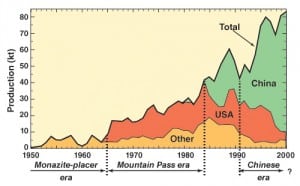
Rare Earth and Lithium Supplies Cloud Renewables
Ensuring an adequate supply of rare earth elements and minerals may be a hurdle in the renewable energy supply chain. The metals and their compounds are used in battery technologies, windmills, catalysts, and communications technologies. Add lithium (not a rare earth) to that mix, as Latin American politics could cloud the prospects for new lithium supplies.
-
Legal & Regulatory
Computing in the Clouds, Part II: It’s About Security
What do Gmail, YouTube, Twitter, and Facebook have in common? All are examples of cloud computing. All present serious data security challenges.
-
 Legal & Regulatory
Power Owners in Strong Position to Collect Liquidated Damages
Although law varies by jurisdiction, a recent case demonstrates arbitration panels’ willingness to uphold liquidated damages clauses in power plant engineering, procurement, and construction contracts.
-
Finance
U.S. Wind Capacity Soars, Manufacturing Doesn’t
Wind generating capacity hit new highs in 2009, but that didn’t mean much for the wind power manufacturing sector, meaning fewer “green” jobs than the Obama administration hoped to see.
-
Legal & Regulatory
An Economist Looks at Climate Policy
An economist scratches his head in consternation as he looks at the discussion about climate change and energy conservation. Take his quiz to learn why commonly accepted assumptions make poor economic sense.
-
Legal & Regulatory
Where Are the New Engineers?
The U.S. isn’t producing the workforce it needs for the future of energy generation. And forget about “green jobs,” an undefined concept.
-
Legal & Regulatory
Addressing the Intraday Trading Position Conundrum
Power traders need to get faster, more accurate information on how markets are working and how they are swinging. They should look to telecommunications and manufacturing markets for solutions.
-
Legal & Regulatory
TREND: Coal in a Hole
While pundits opine that the U.S. economy is in recovery, that doesn’t show up in the world of coal-fired electric power plants (perhaps lagging economic indicators). For proof, see these recent stories.
-
-
Legal & Regulatory
Falling Demand Leads TVA to Trim New Reactor Plans
TVA scales back plans to revitalize new nuclear construction at its Bellefonte plant, suggesting that it will scrap plans for new units at the site and perhaps focus on its unbuilt unit that has been mothballed for 25 years.
-
Finance
TREND: Wind Power Becalmed?
U.S. wind power appears becalmed, partially stymied by transmission constraints, and also by financing difficulties in the current recession. Read the details.
-
Legal & Regulatory
Flipping the Switch: Why Utilities Need to Shed Light Now on Carbon Risk
Carbon is poised to become an auditable and verifiable reporting requirement for American business. Because utilities are among the organizations with the most at stake in a carbon-constrained economy, they should proactively tackle carbon management and carbon accounting in spite of uncertainties about the precise formulation of the final regulatory framework. In short, whether a carbon accounting requirement is legislative, administrative, or driven by business partners and consumers, now is the time for utilities to act.
-
Legal & Regulatory
DOE Mission Support
The National Academy of Public Administration faults the U.S. Department of Energy on human resource management, contract controls, and financial management.