Distributed Energy
-
 Legal & Regulatory
How U.S. Power Generators Are Preparing for 2015
In mid-November, members of the POWER Generating Company Advisory Team responded via email to the following set of questions. Their comments have been edited for style. POWER: What changes in your fleet’s
-
 Renewables
Pilot Launched to Convert Olive Oil Waste to Power
A pilot plant in Andalucía, Spain, built by a consortium of multinational European partners, is converting toxic waste from olive oil production into electricity using an innovative three-part process
-
 Renewables
[UPDATED] Viewpoints on the EPA’s Clean Power Plan Abridged
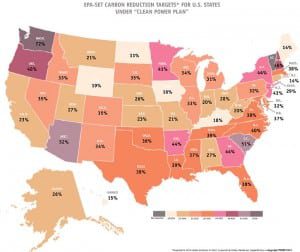
The Environmental Protection Agency’s (EPA’s) proposed carbon rules for existing power plants amassed more than 1.6 million remarks before the public comment period ended on Monday. Here’s a snapshot of what states, regulators, industry groups, and environmental alliances told the agency about its Clean Power Plan. States Connecticut, Delaware, Maine, Maryland, Massachusetts, New Hampshire, New York, […]
-
 Distributed Energy
SCE Signs Contracts for Record Amount of Energy Storage
Southern California Edison (SCE) signed contracts for more than 260 MW of energy storage resources on Nov. 5, among them what will be the largest grid-connected battery system in the world, a 100-MW facility supplied by AES Energy Storage. Under its mandate from the California Public Utilities Commission (CPUC), SCE was required to sign contracts […]
-
 Infographics
THE BIG PICTURE [INFOGRAPHIC]: A Generation Freeze
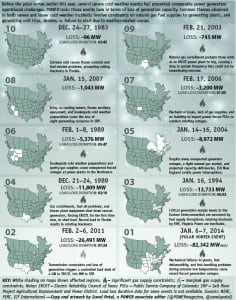
Before the polar vortex earlier this year, several severe cold weather events had presented comparable power generation operational challenges. POWER ranks those events here in terms of loss of generation capacity. Common themes observed in both severe and lesser cold weather incidents involve constraints on natural gas fuel supplies to generating plants, and generating unit […]
-
 Gas
GasMHI Develops High-Efficiency 2-MW Gas Engine
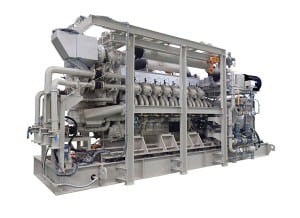
Mitsubishi Heavy Industries (MHI) in August revealed that it had developed a 2-MW 16-cylinder high-speed gas engine that potentially offers a power generation efficiency (lower heating value) of more than
-
 Distributed Energy
DOE Announces $8M to Improve Grid Resiliency
The Department of Energy (DOE) will designate $8 million for seven microgrid projects to help cities and towns better prepare for extreme weather events and other power disruptions. The funding will help develop advanced microgrid controllers and system designs for microgrids of less than 10 MW. Each projects includes a company cost-share, ranging from 20% […]
-
 Renewables
10 Energy Takeaways from the U.S.-Africa Summit
The Aug. 4–6 U.S.-Africa Leaders Summit shed light on the power plights faced by sub-Saharan African countries, but it also highlighted their massive power potential and the array of solutions under consideration to resolve Africa’s energy crisis. Here are a number of key insights gleaned from discussions at the summit—the first a U.S. president has […]
-
 Legal & Regulatory
Texas and Germany: Energy Twins?
Geographically and politically, Texas and Germany are on opposite sides of the world, but both believe strongly in competitive energy markets, and both have largely deregulated their power industries. Now both are reconsidering their market designs. Its easy to think that Germany and Texas could not be more different. One is northern, cold, and Old […]
-
 Distributed Energy
CPUC Opens Rulemaking for Distributed Energy Integration
Regulators in California last week initiated rulemaking to push the state’s three investor-owned utilities to incorporate distributed energy resources (DERs) into the planning and operation of their electric distribution systems. The California Public Utilities Commission’s (CPUC’s) Aug. 14 Order Instituting Rulemaking establishes rules, policies, and procedures to guide Pacific Gas and Electric, Southern California Edison, […]
-
Renewables
Bright Future for Energy Storage
California has set an ambitious target of connecting 1.3 GW of energy storage to the grid by 2020. In October 2013, the California Public Utilities Commission (CPUC) mandated that 200 MW of this goal come in
-
 Renewables
A Spanish Island’s 100% Wind-and-Water Power Solution
El Hierro, the smallest island on Spain’s Canary archipelago, in June became what developers say is the first energy-isolated territory to power itself solely with renewables. The project, which was
-
Renewables
Effects of Urbanization on Generation in China
Zeng Ming, Duan Jinhui, Wang Liang, Gu Shanshan In 2013, urbanization in China reached 53.73%. Urbanization has become an important field for national reform. On the one hand, urbanization is effective for
-
 Renewables
DOE Issues $4B Renewables Loan Guarantee Solicitation, Cuts Application Fees for Fossil Energy Program
Over the past week, the Department of Energy (DOE) made available $4 billion in additional loan guarantees for U.S. renewable energy and energy efficiency projects as it slashed application fees by more than a third for its $8 billion Advanced Fossil Energy Projects Loan Guarantee Solicitation. The agency on July 3 issued a loan solicitation to […]
-
 Renewables
RWE’s Thomas Birr on Corporate Strategy in a Changing German Electricity Ecosystem
RWE AG is Europe’s third-largest electricity and fifth-largest gas marketer, with holdings in upstream oil and gas production, power grids, and energy trading. Its German power subsidiary has been the utility poster child for the effects of the Energiewende, the transformation of the Germany power system away from nuclear and coal toward renewable energy and […]
-
 Renewables
The EEI’s Campaign for Electric Utility Industry Supremacy
At the Edison Electric Institute (EEI) annual meeting this week in Las Vegas, the tone was one of collaboration with partners from Washington to distributed generation companies. Those partnerships will be needed as the investor-owned utility (IOU) industry fights not so much a war on coal as a war for mindshare and wallet share in […]
-
 Distributed Energy
Blurring the Line Between Temporary and Permanent Power
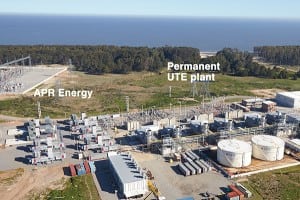
Temporary power may be the most widely distributed “distributed” generation worldwide, and its distribution is spreading, thanks to its ability to quickly meet urgent needs not only for event, construction, and post-disaster emergency power but also for fast-growing economies and stressed grids. That’s making it a serious competitor for “permanent” power in some situations. When […]
-
 Solar
SolarMilitary Microgrids: Wanted and Needed but Tough to Deploy
Anyone who follows either the energy industry or the military knows that all branches of the U.S. military have aggressive goals for renewable energy and for improving energy security and independence. Microgrids are a key part of that plan. When I wrote about military microgrids in “The Military Gets Smart Grid” back in January 2012, […]
-
 Solar
SolarInterest Growing in Commercial and Community Microgrids
Aside from places where microgrids have a track record—educational, industrial, and commercial campuses—commercial and community microgrids are still the domain of early adopters, but the number of people wanting to travel the trail they are blazing is increasing. A microgrid is any collection of interconnected loads and distributed energy resources within clearly defined electrical boundaries […]
-
 Solar
SolarIslands Are the Low-Hanging Fruit for Microgrids
If you’re looking for the easiest place to deploy microgrid technology, look at islands. That was the general consensus of presenters at the 4th Military & Commercial Microgrids Summit in Washington, D.C., held June 17-19. In addition to a presentation about a microgrid being developed for Necker Island—owned by Sir Richard Branson, founder of the […]
-
 Solar
SolarThe State of the Microgrid Market: Promise and Present Realities
If, as Navigant Research suggests, the global microgrid market will exceed $40 billion annually by 2020, where is all the capacity going, and what’s fueling it (literally and figuratively)? Peter Asmus, a long-time researcher of smart grid technologies at Navigant, shared that market projection and others at the 4th Military & Commercial Microgrids Summit in […]
-
 Distributed Energy
Federal Court Throws Out FERC Effort to Boost Demand Response
In a major setback for efforts to support demand response, the U.S. Court of Appeals for the District of Columbia Circuit threw out Federal Energy Regulatory Commission (FERC) Order 745, finding that the rule overstepped state authority to regulate retail electricity markets. FERC Order 745, issued in 2011, required the nation’s Independent System Operators (ISOs) […]
-
 Distributed Energy
David Crane and the Coming Electric Utility Apocalypse
Several years ago, Jean and Bob Galey of Catoctin Creek Farm in rural western Maryland installed solar photovoltaic (PV) panels on the south-facing roof of one of their outbuildings. Since then, they’ve
-
 Solar
SolarOklahoma Allows Infrastructure Cost Recovery for Distributed Generation
Oklahoma’s Gov. Mary Fallin (R) on Monday signed into law a measure that would allow regulated electric utilities to recover revenues needed to pay for transmission infrastructure as the number of distributed generation users increases. Senate Bill 1456, which drew strong opposition from environmental and distributed generation groups, reversed a 1977 law that prohibited public […]
-
Renewables
DOE to Open $4B More in Loan Guarantees for Renewables, Energy Efficiency Projects
The Department of Energy (DOE) plans to make an additional $4 billion in loan guarantees available to help commercialize U.S. renewable energy and energy efficiency technologies that avoid, reduce, or sequester greenhouse gases. The DOE on Wednesday issued a draft loan guarantee solicitation under Title XVII of the Energy Policy Act of 2005 (through Section […]
-
 Legal & Regulatory
Industry Leaders, Experts Testify on How to Keep the Lights On
Ten witnesses from federal and state regulatory agencies, a public power entity, environmental groups, and power companies today outlined a number of threats to the bulk power system’s reliability in a Senate hearing to assess whether enough was being done to keep the lights on. General measures to address day-to-day issues affecting reliability—such as tree […]
-
 Renewables
APS: Arizona to See Dramatic Changes in Energy Mix Within 15 Years
By 2029, renewable sources in Arizona’s energy mix will double and natural gas’s share will surpass coal’s and nuclear’s, the state’s largest utility, Arizona Public Service (APS) projects in its newly released “Integrated Resource Plan.” The report, which foresees that the state’s energy needs will grow 52% while peak demand will surge 60% compared to […]
-
 Solar
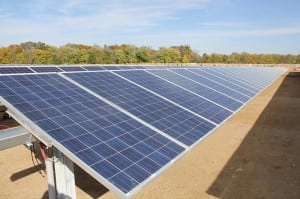
SolarFPL Proposes Voluntary Community-Based Solar Partnership
Florida Power and Light (FPL) on Wednesday asked the Florida Public Service Commission (PSC) to approve a unique pilot program through which the company will build new solar facilities and participating customers will fund them via voluntary contributions. During the next three years, depending on customer participation, FPL projects that the program could support the […]
-
 Legal & Regulatory
GE Executive Markhoff Talks About the Water/Energy Nexus
Source: POWER During IHS CERAWeek in Houston in early March, POWER Editor Gail Reitenbach sat down with Heiner Markhoff, president and CEO of GE Power & Water’s Water & Process Technologies, to ask him about several issues of concern to power plants. Though the “water/energy nexus” theme has gained prominence recently, Heiner Markhoff’s comments underscored […]